For many high schoolers across Minnesota, spring brings the promise of college announcements and dorm room packing lists. But for the state’s population of boys hockey players, joining a college roster anytime soon is an increasingly far off dream.
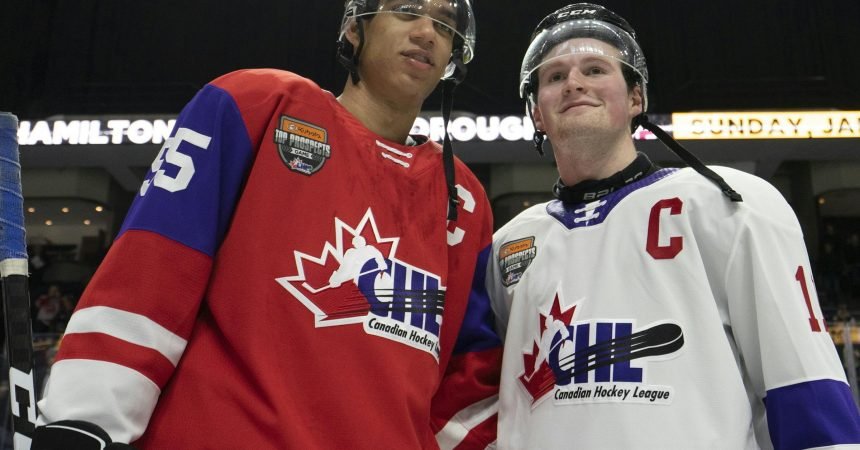
In Nov. 2024, the NCAA announced major junior hockey players competing in the Canadian Hockey League (CHL) — an umbrella term for the Ontario Hockey League, Western Hockey League and Quebec Maritimes Junior Hockey League — would be eligible to play Division I men’s college hockey in the U.S. starting Aug. 1, 2025.
Formerly considered professionals ineligible for amateur hockey, a wave of CHL players flooded college rosters and created what Warroad head coach Jay Hardwick described as a “bottleneck” in the path from high school and junior hockey to D-I programs in just one year.
“There are only so many teams and so many spots in D-I,” Hardwick said.
The number of U.S. hockey players on D-I rosters plummeted by 147 between the 2024-25 and 2025-26 seasons. Meanwhile, Canadian players in D-I hockey increased by 97.
After CHL players’ first season in college hockey and with competition for limited D-I roster spots rising, high school coaches across the state are beginning to untangle what the future holds for their players and for Minnesota, the nation’s top producer of D-I hockey talent — in the 2024-25 NCAA men’s hockey season, there were a record 249 Minnesotans on D-I rosters across the nation’s 63 D-I programs.
Some coaches are seeing a clear trend of fewer Minnesotans who are D-I commits and are concerned what it will mean for college hockey hopefuls who no longer have a guaranteed roster spot.
Since the NCAA announced the eligibility change, 297 players across the WHL, OHL and QMJHL committed to D-I college hockey programs, making up 38% of all D-I commitments as of April 9, 2026, according to College Hockey Inc.’s commitment tracker.