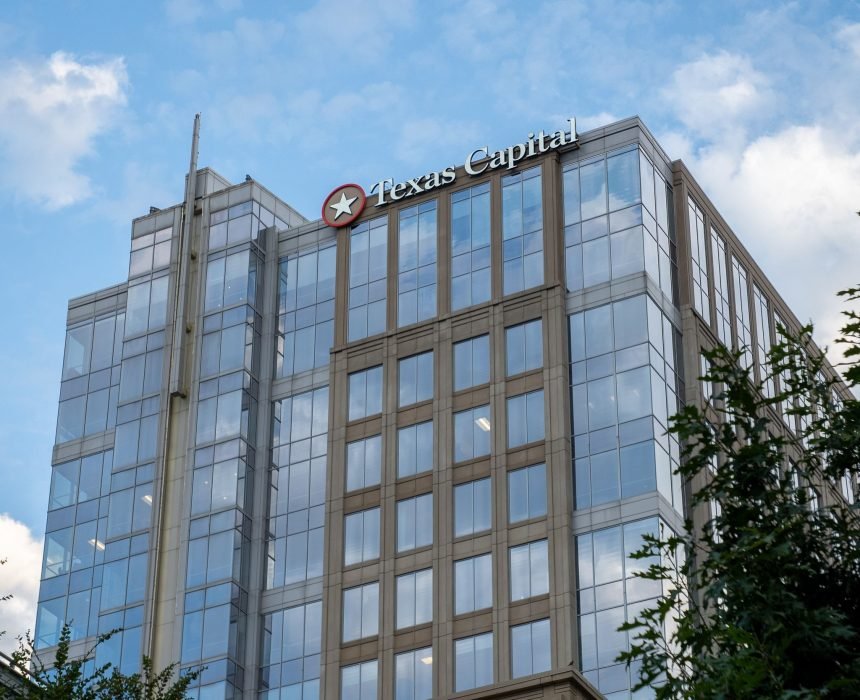
Texas Capital Bancshares would have become the latest company to join the “Dexit” trend, but shareholders said no.

The Dallas-based parent company of Texas Capital Bank put forth a proposal to move its corporate charter to Texas and leave Delaware. However, its shareholders voted against redomiciling in Texas Capital’s annual meeting on Tuesday, per filings with the U.S. Securities and Exchange Commission.
Article continues below this ad
“We are obviously disappointed and believe it’s in large part because of ISS’ and Glass Lewis’ ill-informed influence and recommendation against the firm re-domiciling to its home state. The board will convene and consider next steps,” the company said in a statement late Thursday.
“Dexit” is the small but growing phenomenon of companies incorporated in Delaware exiting in favor of more laissez-faire states, and Texas has positioned itself to be a major benefactor. Two-thirds of Fortune 500 companies call Delaware their corporate home, and the state’s Chancery Court has stood as the U.S.’s preeminent business court for a century.
However, Gov. Greg Abbott helped create Texas’ own Texas Business Court to compete in 2023, and in 2025, the state legislature signed several laws designed to further incentivize companies to redomicile here.
Tesla, SpaceX, Dillard’s and Coinbase are among companies that have made the jump, and Exxon Mobil’s board recently unanimously recommended redomiciling from New Jersey to Texas, to be voted on by shareholders in May.
Article continues below this ad
“[The proposal] aligns the [Texas Capital’] legal framework with its culture and strategic ambition to be the flagship, full‑service financial institution headquartered in Texas, and provides a tighter alignment among its identity, legal regime, regulatory environment, and strategic footprint, which can streamline governance and reduce friction in interactions with Texas regulators, courts, and business partners,” reads Texas Capital’s proxy statement.
“The Board believes the change may also enhance long‑term stockholder value by providing a clearer, more predictable, and more business‑supportive governance environment.”
Reasons for recommending the move includes Texas Capital’s extensive operational and managerial presence in Texas, and the potential benefits of local judges and litigators familiar with the business. The proposal also specifically cited last year’s Senate Bill 29, which codified the business judgment rule, and a shareholder suit over Elon Musk’s 2018 Tesla compensation package. The suit resulted in Musk’s compensation package being rescinded by a Delaware judge in 2024 before being reinstated in December, and is often considered the catalyst for Dexit.
Article continues below this ad
Per the proxy statement, Texas Capital paid $200,000 in franchise taxes to the State of Delaware last year, money it expected to save annually if the proposal had passed.
Glass Lewis and ISS, the two largest proxy advisory firms in the country, have taken a reserved approach to reincorporation proposals. Both firms’ 2026 decision guidelines state that they evaluate such proposals on a case-by-case basis, with Glass Lewis heavily weighing shareholder rights and ISS specifying it would vote in favor of reincorporation, “when the economic factors outweigh any neutral or negative governance changes.”
The State of Texas has recently taken an antagonistic posture towards the advisory firms, part of broader complaints over the firms’ outsized influence on public companies and perceptions of prioritization of non-financial social agendas. In 2025, the Texas legislature sought to regulate proxy advisors with a bill that was passed but eventually enjoined, and the pair were sued by Attorney General Ken Paxton in September.

By signing up, you agree to our Terms Of Use and acknowledge that your information will be used as described in our Privacy Policy.
Texas Capital’s board first considered redomiciling in a July 15, 2025 meeting, according to the filing, and after several more meetings, approved a resolution to redomicile on February 10. The change was expected to go into effect on June 1 upon approval.
Article continues below this ad
However, the proposal narrowly failed to pass, with 22 million votes against to 18 million votes for. Another proposal contingent on redomestication that would have raised the ownership threshold for shareholder proposals, in alignment with Texas Senate Bill 1057, also failed, with only 5 million votes for to 35 million against.
Neither is likely to be reconsidered anytime soon. A final proposal also failed that would have allowed Texas Capital to adjourn the annual meeting and reschedule in case of earlier proposals getting voted down. Texas Capital’s board had unanimously recommended in favor of all three proposals.