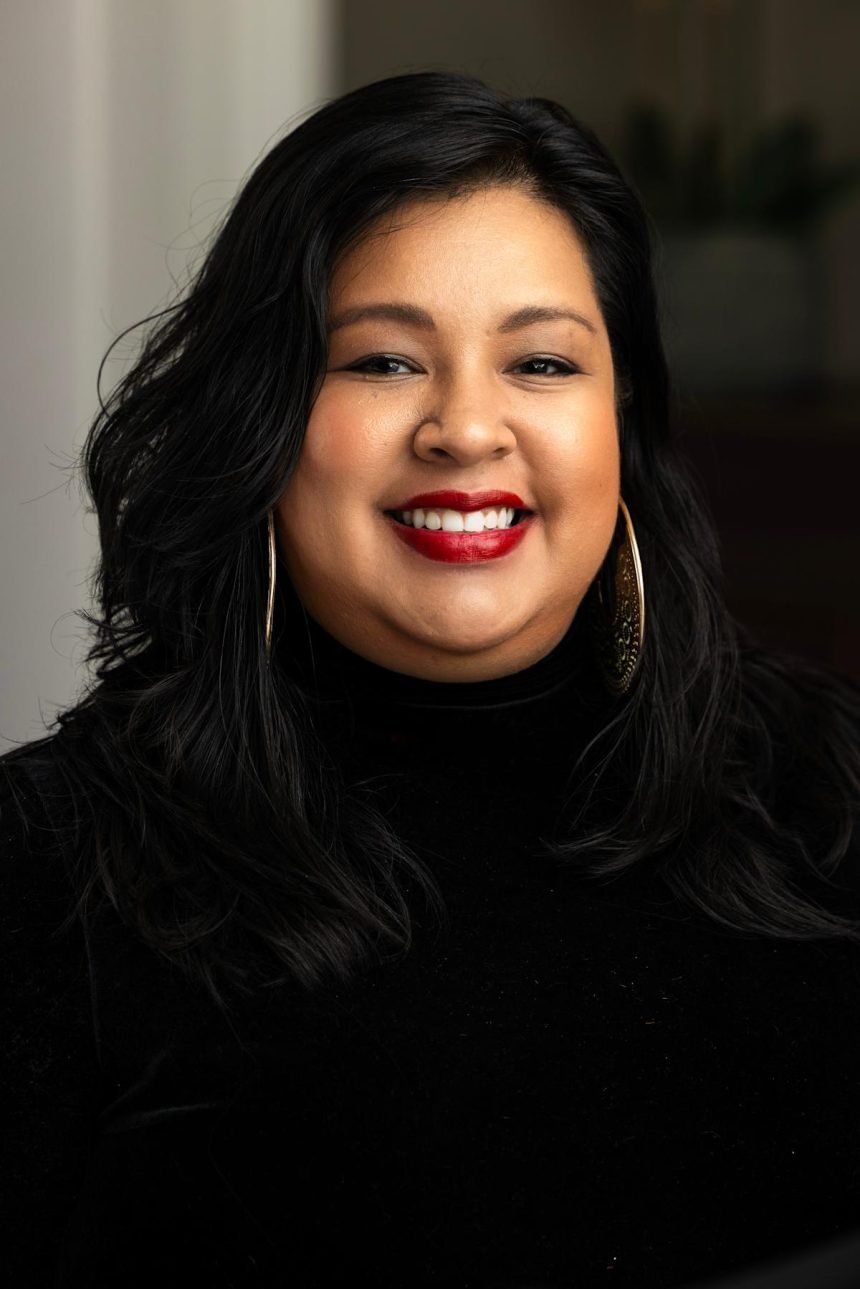
As Ohio’s Latino population continues to grow, one former Stark Countian is working to increase their awareness regarding higher education.
Maria Sanchez, 40, is the founder and chief education officer of Latino Educational Solutions, a Columbus-based company she founded in 2016 that specializes in resources and outreach programs for families, other organizations and public school districts serving Latino students.
Sanchez, a 2003 graduate of McKinley High School, earned bachelor’s degrees in Spanish and French from Ohio State University, and a master’s degree in higher education/student affairs. Her experience includes working as a substitute teacher and with Upward Bound and is currently a community coordinator for the office of diversity and inclusion at Ohio State.
The U.S. Census Bureau’s American Community Survey estimates that there are more than 560,000 Hispanics and Latinos living in Ohio, or 5.2% of the total population. The current median age for them in the state is 25, with 30% being 15 years or younger. In comparison, the average age for non-Latino and Hispanic Ohioans is 40.
There are 117,000 Hispanic and Latino children enrolled in Ohio public schools.
In spite of it being a relatively young population, just 27% of Ohio Latinos and Hispanics over 25 has a college degree.
The Canton Repository spoke with Sanchez about her business and education:
How did Latino Educational Solutions come about?
I think a lot of the work that I do is passion-project work, and so that’s been my entire educational career. I think the idea behind my company is not to make a lot of money necessarily; it’s to build social capital for a whole generation of Latino students.
The company really started off with the Iroquoian principal which says that every decision that you make should be thought ahead for seven generations. So, when I started my company, I decided what would be the best business model? An organizational structure that will allow me to have the most impact on the greatest number of Latinos within the state of Ohio. I really want to help students understand the power of education.
Ultimately, while the company is called Latino Educational Solutions, it’s not just about Latino education. It’s really about finding and reaching teens and teaching that education is a universal right for all.
How does the 27% in degree attainment among Latinos compare with other demographic groups?
It’s lagging behind, but we’re not the lowest group. … You can definitely see higher-education trends, trends higher among Latinas versus Latino males. They have higher achievement and a shorter achievement gap, versus Latino males.
What I’m finding when I’m in the community is the idea of higher education in general — and I’m not talking about just college, but trade school and everything else — is really kind of being re-thought in terms of return on investment, but that’s not holding true for the Latino population.
The Latino population still believes college is an access to better economic status and better civic access. It doesn’t really come out in the data, but it’s the American Dream that a lot of people hold near and dear, which is why they come.
What are some of the biggest obstacles for Latinos pursing higher education?
Access points. I mean, there’s no roadmap to college, nor should there be.
I’m not saying write a plan and do it, but I’m saying it could be a lack of inspiration, a lack of conversations happening around the dinner table. Normal conversations are social capital.
There are two questions my company looks to answer: How do we help them in college, and how to do we get Latinos through college?
How many students do you think you’ve helped?
Probably about 1,500. Some of the groups that I’ve worked with include Rising Youth, which is a group in Columbus. I’ve worked with Big Brothers/Big Sisters on a mental health campaign. I was part of Impact 60, which is a community organization but really, the vast majority of my working with students has been very informal.
So, I’m doing free presentations at libraries and now I’m also trying to work with school systems, including Canton City Schools. I’m also involved in an outreach project which is called Latinos GoTo College.com that has some free bilingual resources for students and parents.
My aim is to eventually make money, but for the past 10 years, this has been self-funded. I really want to provide people access to that information and not be another barrier to hide behind the paywall. I don’t want access to me or access for payment to be a barrier as to why students don’t get at least some of their questions answered.
How was your own experience?
Oh, I’ve been so lucky in that I’ve had some really great mentorship. I have a friend who works for UNICEF, and she helped me develop some of the ideas for the program, even the name of the organization.
I have a sorority sister who works as a graphic designer whenever I need her. So, I really do have a support system, but it’s been really kind of from the ground up in a really grassroots effort for this organization because, as I said before, it’s really about moving an entire generation forward, so I’ve had to be really creative and innovative.
I’m a first-generation migrant. I was born in Mexico and my family came to Canton in 1984-85. I came up a year later. We got amnesty in 1990 through the Reagan administration.
My sister Kavumi actually started the ESL program for Canton City Schools. Tiffany Harmon was really active in the school system at that point in time — her name’s Tiffany Carter, now and she’s in the Atlanta area — but she was the one who really spearheaded with my family to get that program started.
So, we’ve had some really big support systems even since I was little. I’ve had these wide ranges of experiences that I want to translate and multiply for as many students as I can, so they can see all of these different access points.
If I could put a message out there to anyone whether or not they’re looking to go to college, keep going for your education because education is a gamechanger.
To learn more visit https://www.latinoeducationalsolutions.com.
This article originally appeared on The Repository: Latino Educational Solutions helps students gain access to college