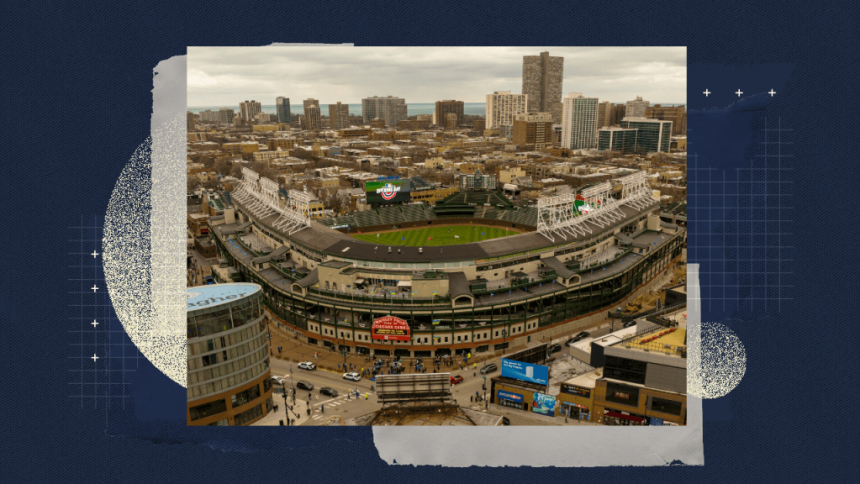
The Chicago Cubs are one step closer to proving that Wrigley View Rooftop is breaking the law by selling access to a rooftop building where fans can watch Cubs games in person without actually paying the Cubs.
The case presents intriguing legal questions about the scope of a sports teams’ rights to live sports beyond their stadium’s property lines and into the private property of others.
Last Friday, U.S. District Judge Sharon Johnson Coleman denied a motion on the pleadings by Wrigley View Rooftop and owner Aidan Dunican. She concluded the Cubs’ claims are plausible and can take another step toward a potential trial. While the case can proceed, there is not currently an injunctive order barring Wrigley Rooftop from selling tickets, and as of Monday its website continues to do so.
The Cubs sued Wrigley View Rooftop and Dunican in 2024 for misappropriating the team’s property rights and unjust enrichment. The Cubs’ basic legal theory is that selling rooftop seats from an adjacent building free-rides off the team’s billion-dollar investment in producing games and other events at Wrigley Field.
According to Spotrac, the Cubs’ payroll in 2026 is $249.8 million. The team spends millions more on managers, coaches, scouts, front office personnel and various other employees. The team has also spent hundreds of millions of dollars in restoring and improving the ballpark, which opened in 1914, making it the second-oldest MLB stadium behind Fenway Park. The production of each game involves myriad costs, too, including for electricity, technology, utilities, sanitation, marketing and equipment.
To recoup their investment, the Cubs sell tickets to games at Wrigley Field, where fans can also buy merchandise, memorabilia and concessions. The team also sells sponsorships and licenses its intellectual property, including the streaming, television and radio distributions of games.
Wrigley View Rooftop is a venue located across the street from Wrigley Field that accommodates up to 200 guests through individual and group tickets. The facility is marketed as offering a Skydeck that provides a “bird’s-eye view of the ballpark” and “breathtaking views of historic Wrigley Field and the iconic scoreboard.” Other amenities include plasma TVs and food and drink.
Prior to 2024, the Cubs and Wrigley View Rooftop (and other companies that offered rooftop seats near Wrigley Field) had a licensing arrangement where about 17% of revenue from out-of-stadium rooftop seats and 11% of billboard revenue were shared with the Cubs. Those arrangements contractually ended, and the Cubs informed Wrigley View Rooftop it could no longer sell tickets to view Cubs games, concerts and other live events held at Wrigley Field.
Wrigley View Rooftop, however, kept selling tickets and, as Judge Coleman wrote, “even sold out all available space … on several dates.” Presumably some of the revenue earned by Wrigley View Rooftop would have flowed to the Cubs in the form of additional ticket sales if Wrigley View Rooftop could not sell tickets.
But Wrigley View Rooftop insists the Cubs misunderstand the scope of their legal rights.
Wrigley View Rooftop stresses the Cubs don’t own the building in question and argues it has a right to conduct business on the rooftop as it sees fit. Even if the Cubs have a property right in the experience of live Cubs games, Wrigley View Rooftop says the Cubs failed to protect it by playing in a stadium in a city where there are tall buildings around it from which people can look in.
Judge Coleman concluded the Cubs have an established property right in the product of live Cubs games produced at Wrigley Field. She emphasized a ruling from 1938 in Pittsburgh Athletic Co. v. KQV Broadcasting Co. The case involved a radio station paying “observers” to watch Pirates games from the rooftop of a building adjacent to Forbes Field.
Through those observers, the radio station provided a play-by-play of Pirates home games, which was a practice that undermined the Pirates’ exclusive broadcasting deal with a different radio station. A court ruled that the Pirates and other MLB teams possess “right, title and interest in and to the baseball games played within the parks,” and the use of observers violates those property rights.
Since that 1938 decision, other courts “have affirmed the holding that sports teams have a property right in profits from their live games.”
Judge Coleman acknowledged that Wrigley View Rooftop “may be entitled to enjoy the views around their own property,” but that entitlement enters a problematic space in law when Wrigley View Rooftop uses it to profit off Cubs games. The Cubs claim that Wrigley View Rooftop only sells tickets when there are games or other live events at Wrigley Field. The company also allegedly provides refunds when the line of sight into Wrigley Field is obstructed.
“It is reasonable to infer from these facts,” Judge Coleman wrote, “that much of Defendants’ profit comes from the ‘experience’ of watching live games from their rooftop.”
As a result, Judge Coleman surmised, the Cubs can credibly argue the franchise misses out on ticket, concessions and merchandise revenue they otherwise would have obtained if Wrigley View Rooftop couldn’t sell tickets.
Last year, the Cubs scored another pretrial win in the litigation when Judge Coleman denied a motion by Wrigley View Rooftop to send the case to arbitration. At any time, the case could end in a settlement but for now is marching toward an eventual trial.
(This story has been updated in the third paragraph with further detail on the status of ticket sales.)