SALT LAKE CITY (KUTV) — The federal government is expected to begin issuing refunds this week on about $166 billion in tariffs after the U.S. Supreme Court ruled the emergency tariffs imposed during President Donald Trump’s administration were illegal.
Trump imposed the tariffs by invoking the International Emergency Economic Powers Act, or IEEPA.
Businesses that applied for reimbursement through a federal process launched in April could begin receiving payments as early as mid-May.
MORE | Eye On Your Money
Eye On Your Money. (Graphic: KUTV)
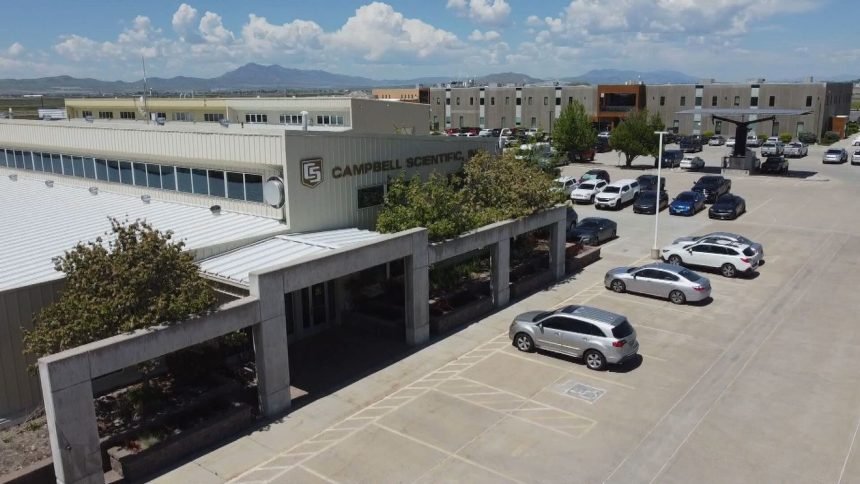
For Utah-based manufacturer Campbell Scientific, a refund could return money paid on exported products and on parts or materials imported to make those products. But CEO Rob Campbell said he is more concerned about another cost of the tariffs: trust lost with customers.
“Refunds are good in terms of dollar recovery, but they don’t restore relationships lost along the way,” he said.
Campbell said the up-and-down nature of recent tariffs makes it difficult to quote customers a firm price on projects that can span months.
“Our international customers want certainty and reliability, and that’s something we’ve worked very hard to build over five decades,” Campbell said.
Based in Logan, Utah, Campbell Scientific designs, engineers and manufactures high-tech monitoring equipment. Its products monitor building safety, weather and environmental conditions.
Campbell weather stations are used to track conditions around the world, from Utah highways to near the summit of Mount Everest.
The company has 400 employees in Utah and 350 in other parts of the world. It was started in the basement of Rob Campbell’s grandparents’ in 1974.
Campbell said while his midsize company does not have a large legal team to help navigate changing trade policy, it plans to seek reimbursement and find a way to pass that money along to customers.
At this point, he said, he would prefer the government establish a firm trade policy so the company can plan ahead and provide clients with the level of service they expect.
“If you could tell us what the trade or tariff policy is going to be today, and we had some certainty, we could figure out the rest of it,” he said.
Campbell urged Utah’s congressional delegation to help local businesses.
“We’d like to see them step up. The number one thing they can do is give us trade stability,” he said.
Attorney Troy Keller, trade policy advisor at World Trade Center Utah, said Utah companies should not assume tariffs are gone for good.
“The federal government is not super excited about returning the money,” Keller said.
He said businesses should prepare for another round of tariffs later this year because the Trump administration already has a plan to make up for refunding the IEEPA tariffs.
“Watch for the next shoe to drop in the summer,” Keller said.
Still, Keller encouraged Utah businesses of all sizes to seek refunds if eligible, saying tariffs are likely to remain a long-term reality.
He said smaller companies that do not have the benefit of an in-house legal team can seek guidance from World Trade Center Utah on navigating tariffs and other trade issues.
_____