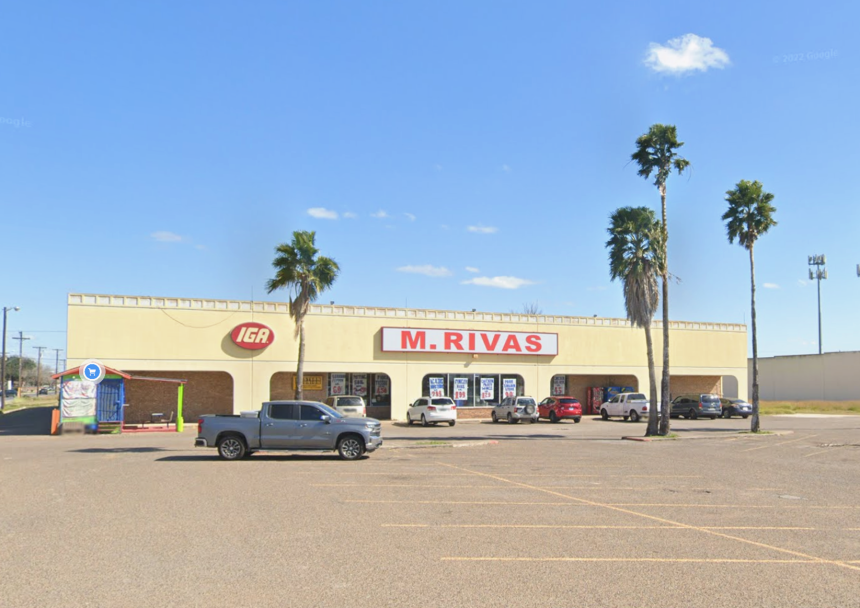
A beloved family-owned grocery chain with nearly a century of history in deep South Texas will soon shutter its last remaining location.
M. Rivas Supermarket, the Rio Grande Valley grocer that once operated nine stores in the region, will permanently close its last store at the end of June, store officials announced on social media on Wednesday, June 24.
“As some of you may have noticed, our shelves have slowly begun to clear. It is with heavy hearts that we share that we have made the difficult decision to close our doors at the end of this month,” officials said on the store’s official Facebook page.
“For nearly 100 years, the Rivas family has had the privilege of serving families across the Rio Grande Valley. What began as a small family business grew into something far greater than we ever could have imagined,” the post further reads.
M. Rivas was founded in the 1930s by Magin Rivas in Donna in what is known as the Mid-Valley. Eventually, his sons joined the family business, which, at its height, boasted nine stores across Hidalgo County. Perhaps the best-known were stores located in Edinburg and South McAllen. But today, a single store remains open at 836 N. Cage Blvd., Pharr, TX 78577.
Even as fellow Texas chain, H-E-B, began making inroads in the Rio Grande Valley — even going as far as headquartering the future grocery empire in Harlingen for nearly a decade — M. Rivas became a household name among many Valley shoppers. The chain was known for its low-priced fresh meat markets, abundant stalls filled with produce from local growers, and a deep sense of community fostered by employees who knew their customers by name.
“The Rivas family didn’t set out to build an empire. They built… a local grocery chain that understood Valley families because they were a Valley family,” Hector Treviño wrote of the grocery chain in April on a Facebook page called Magic Valley Chronicles that is dedicated to documenting the Valley’s history.
M. Rivas was where shoppers went for the best prices on fajitas for their weekend barbecues. It was the type of small business that still offered shoppers “credit tabs” built on trust and the promise of a handshake in a working-class community that often makes headlines for being one of the nation’s poorest. And it was a company that understood the binational culture that defines the Valley.
“Their stores reflected comfort by being bilingual, offered fair prices, and personal service after getting to know one another,” Treviño’s post further reads.
It was that community that M. Rivas officials thanked as they bid their customers farewell.
“Whether you stopped in for a quick purchase, a friendly conversation, or simply a smile, you became part of the history and heart of this business,” the store said.
“From the bottom of our hearts, thank you for allowing us to serve this community for generations,” store leaders further said.