BECMA filed a federal civil rights complaint in 2021 alleging the city discriminated against Black and Latino businesses. The complaint led to a more diverse slate of city contractors. The council also pushed state legislators to create benchmarks and pilot programs that benefited employers of color, and rallied Black business owners to testify about the need for more affordable housing.
In addition to its advocacy and policy work, the nonprofit has raised $13 million to support 700 Black businesses, offering grants, loans, and professional services. Since BECMA’s inception, there has been a surge in Black entrepreneurs, and more Black leaders are running corporations and foundations, local leaders say. Boston businesses run by and for Black residents have also popped up beyond the communities of Roxbury, Dorchester, and Mattapan, where they’ve historically been concentrated.
“We are in places and spaces where we have influence and a little bit of power,” said Segun Idowu, the first president of BECMA, who went on to become the city’s chief of economic opportunity and inclusion before stepping down earlier this year.
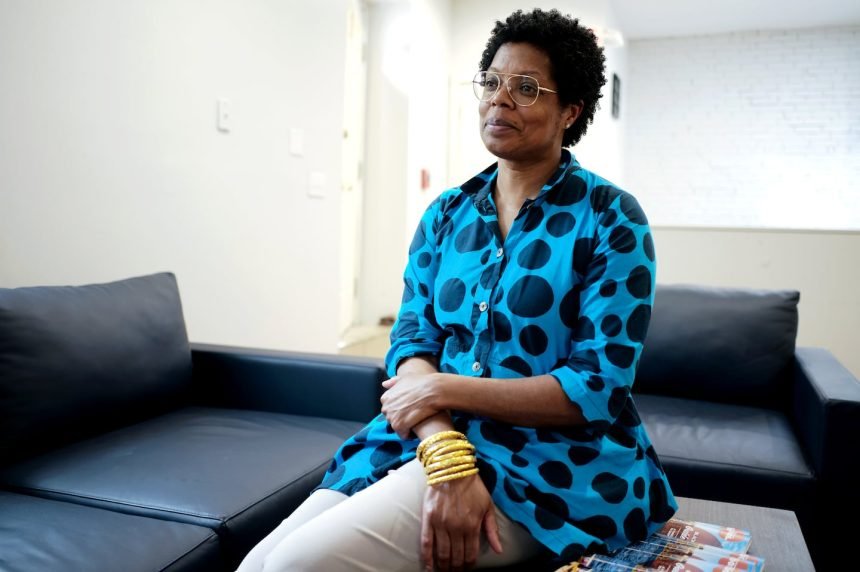
Current president Nicole Obi has experienced the difference first hand. In the early 2000s, she ran a strategy consulting firm in Boston, flying around the country to serve major clients such as Visa and Volvo. But in those seven years, she got just one consulting job in Massachusetts, at an organization run by another Black woman.
“People outside of the place where I live can see the value of what I do, but I can’t work here,” Obi, who has two master’s degrees from MIT, remembers thinking at the time.
Now Obi leads an organization dedicated to making sure the local business community recognizes the value Black entrepreneurs bring.
Statewide, there are roughly 3,100 Black-owned businesses with employees, and increasing that number is key to building wealth, Obi said. The median wealth of Black employers is 10 times greater than that of all employed Black adults, according to Brookings Institution research.
Before BECMA, “the Black community was only viewed as a philanthropic opportunity and not as an economic engine,” said Teri Williams, president of OneUnited Bank and a BECMA cofounder. “It took us 400 years to get where we are, so 10 years is not a long time, but I do think that we’re on the right path.”
That path has become more difficult to navigate, however, as the country grapples with what Obi calls a “national retreat from equity,” since President Trump started ordering the elimination of DEI practices and cutting references to Black history.
Corporate and societal support for equity has been a roller coaster for much of BECMA’s tenure, starting with the COVID pandemic upending the economy, especially in communities of color, and the racial reckoning after the killing of George Floyd that led to a flood of support for Black-serving organizations.
When Obi took over in January 2022, support for the council’s work was at its peak. But the following year, when the US Supreme Court struck down affirmative action and the Heritage Foundation published Project 2025, support began to wane.
Today, with economic uncertainty gripping much of the country and a DEI backlash in full swing, conditions for Black business owners and nonprofits are as grim as they were during COVID, Obi said: “Things are bad.”
BECMA’s revenue dropped from $5 million to $4 million last year, due to a decrease in corporate donations, philanthropic gifts, and public funding. The nonprofit laid off a handful of staffers but managed to offer the same level of support to businesses by using the efficiencies of AI, Obi said, and has since gotten back up to 15 employees.
The nonprofit is also looking to use its new headquarters in Roxbury — its first permanent home — as an anchor for a “microgrid” to store solar power being generated around the neighborhood. This would allow BECMA, which has been zeroing in on clean energy, to generate revenue by selling power to the utility grid while lowering energy costs for those connected to the microgrid.
The support the council provides to businesses is crucial. Nationwide, firms owned by people of color are twice as likely as white-owned businesses to be denied loans at small banks and finance companies, according to a 2022 Federal Reserve report. BECMA found that for nearly 60 percent of the organizations it serves, BECMA is its sole source of support.
Businesses need to be “at the table” in order to fully benefit from the opportunities that exist, said Pratt Wiley, president of The Partnership in Boston, which cultivates the careers of professionals of color. But for centuries, that wasn’t the case.
“What BECMA does so well is making sure that the interests of Black businesses across Massachusetts are being advanced and are part of the agenda,” he said.
And this is good for everyone. BECMA has been an “invaluable partner” in spurring equitable economic growth and making Massachusetts more competitive, said Eric Paley, the state’s economic development secretary.
Nationwide, the number of Black employers in the United States grew by 62 percent between 2017 and 2023, according to the Brookings Institution. The number of overall employers increased by just 3 percent over the same period.
Still, the share of Black employers remained disproportionately low relative to their population size, accounting for only 3 percent of all employers despite making up more than 14 percent of the population.
Jeanette Velasquez joined BECMA after being laid off from a nonprofit during the pandemic and launching an accounting firm in Cambridge. In addition to helping her get a grant from National Grid, BECMA gave her a platform to promote her services and meet other local business owners, which opened the door to a bigger grant. Velasquez also has a contract with BECMA to provide financial services to child-care providers, hair salons, and property management companies that reach out for help.

“It has opened up many doors,” Velasquez said.
Despite all the progress, there’s still a long road ahead.
The share of contract awards going to businesses of color rose to 11.6 in fiscal year 2023, after BECMA filed its complaint, but it has fallen every year since, down to 6.4 percent so far in 2026.
BECMA members also tend to have less generational wealth than their white counterparts, Obi said, and the struggle to access capital and contracts has been amplified in this uncertain economic and political moment. At the same time, the traditional funding sources for BECMA and similar organizations have contracted.
To unlock the true potential of the Black business community, people need to understand that investing in it spurs economic development, Obi said. Last year, businesses supported by BECMA generated $11.70 for every $1 invested and created 146 jobs.
“It’s not charity,” Obi said. “It’s true value.”
This story was produced by the Globe’s Money, Power, Inequality team, which covers the racial wealth gap in Greater Boston. You can sign up for the newsletter here.
Katie Johnston can be reached at katie.johnston@globe.com. Follow her @ktkjohnston.