The FIFA World Cup wrapped up last week with Spain defeating Argentina in the final. For more than a month, the tournament captivated millions of fans across the United States and beyond.
For many Latino and immigrant families, soccer is more than a game. It’s a tradition that connects generations, cultures and identities.
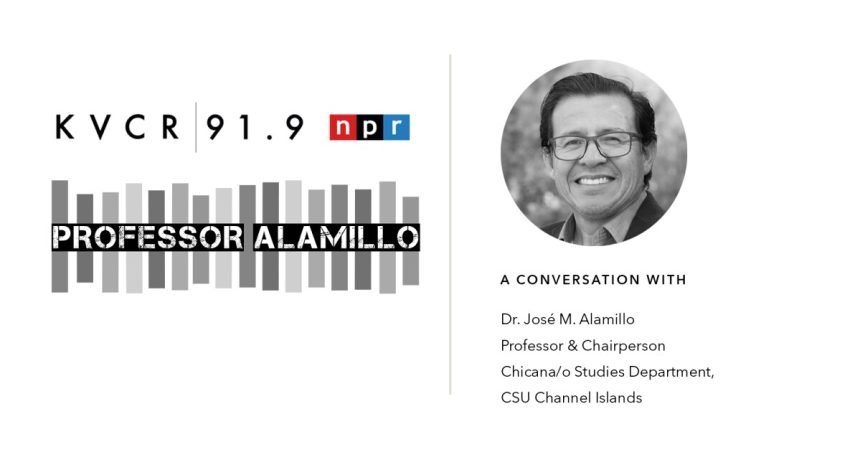
I spoke with Jose Alamillo, a professor of Chicano and Chicana studies at CSU Channel Islands, about soccer’s enduring role in Latino and immigrant communities. Alamillo has spent years researching how the sport has grown and evolved across generations.
VICTORIA: Professor, how has soccer been instrumental for Latino and immigrant communities here in the inland empire and California?
ALAMILLO: “I think you know soccer has a strong, you know, foundation in Latino communities because it’s a sport that they could bring with them, right? It’s unlike other sports where they come in as newcomers to a foreign land. They bring that tradition with them, and because many who are immigrants or sons or daughters of immigrants, you know, they’re kind of raised with that sport within the family. It becomes a way in which identity and family and community are sort of interrelated.”
I mean we’re talking about like entire neighborhoods that are sort of shutting down in terms of like block parties, watch watch parties that we’re seeing right right now, right? We’re we’re really witnessing kind of what has always been the case when we think about football and its following in Mexican American communities in the U.S.So we see that kind of phenomenon that you know soccer it is very much here to stay, and I like to see. I like to say that, like in the future, we’re going to see our own producing our own Leo Messi coming from these communities. But we have to, I think, change the structure of soccer and the way it’s set up.
VICTORIA: You bring up an interesting point. The pay to play system is a big topic right now. People say that type of system benefits affluent families…and not those in working class communities. Is that true? How do you view this?
ALAMILLO: I think it does. if you think about like immigrant parents, right? They’re going to defer to teachers, right? They’re the experts. They’re going to defer to coaches, right? And so, it does impact in terms of impacts immigrant families in the sense that you know, with the with the expenses that are essentially levied at them, like you know, it’s really hard, right, to maintain that consistency
I think that the fact that they rely on volunteer coaches is a problem. I mean, if we had a system where coaches were well paid and supported, you know, then I think it it would definitely offset some of those economic hardships, right?
I think giving more opportunities to immigrant families to allow their sons and daughters to get into soccer in a way that it doesn’t like, you know, give them like make them like you know make such a huge sacrifice,
think that there has to be a way in which it’s more publicly subsidized. And so I know some have called for, you know, for example, you know maybe the public schools having a more role as well, or maybe even MLS teams really doing more with developing youth soccer teams.
VICTORIA: The World Cup brought a lot of attention to the us back in 1994 when they first hosted. There was a lot of pride during that tournament and many people still look back on it fondly.
Despite what’s happening in our country, how do you think the 2026 tournament has impacted the diversity of the sport here?
ALAMILLO: I think that I think this World Cup definitely has made a huge impact. I mean, I was around in ’94, and I remember, you know, how because it was very it was the first time we were kind of just getting used to what it meant to be a host. But I think this this one in particular is bigger and more global in a sense that we’re finding a lot more people coming together in ways in which they weren’t in the ’94, and so I’m thinking of like, for example, like the different fans that are descending in particular communities and kind of taking over, and in a good way, right? Like really, kind of, you know, sharing a little bit about who they are and their culture. And I think you know a lot of Americans are welcoming that in many ways. And I see that too with just how you know, in many ways, we’re seeing how even like followers of Mexico’s team, we’re seeing easier for Mexican Americans to embrace their national team in Mexico, and but also feel like you know I could also support the U.S. team. I don’t have to choose one or the other. And I I see a lot of shirts, for example, that have the both the Mexico and the U.S. They’re like wearing them.
You know it’s not a divided loyalty. It’s about embracing both, right? Both identities. identities, both cultures, and I think there’s hopefully give you more acceptance of that. So I see a kind of shift towards that in many ways, but we’ll see, we’ll see how that what that happens in the future.