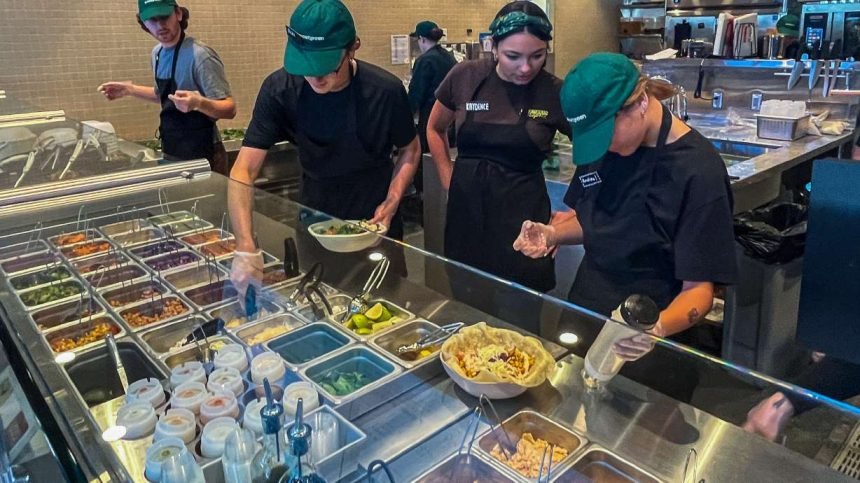
SALT LAKE CITY — What started as a healthier alternative to Georgetown University campus food nearly 20 years ago sprouted into a fast-casual restaurant chain that’s slowly swept the country, and now Utah.
Sweetgreen will open its first location in the Beehive State on Tuesday at 2188 S. Highland Drive in Salt Lake City’s Sugar House location on Tuesday. It’s celebrating its newest state with its spin on a Utah classic, partnering with The Creamery, a distributor of local dairy products based in Beaver, for “soda floats” with prebiotic soda OLIPOP that’s akin to dirty soda.
Some limited edition water bottles and tote bags will also be available, along with postcards designed by local artists at Craft Club SLC. Sweetgreen said it also plans to donate a meal to Waste Less Solutions, a Utah nonprofit focused on food insecurity, for every meal that’s purchased during its first day.
More events are planned for later in the week. It’s the chain’s way of saying hello to a city and state that it has had its “eyes on” for some time, said Nicolas Jammet, Sweetgreen’s co-founder and chief concept officer.
“It’s probably one of the most requested cities,” he told KSL. “A lot of our existing customers that know us move here or just, in general, people visiting one of the cities we’re in saw it and (asked for it).”
Sweetgreen launched in Washington, D.C., nearly 20 years ago, and has slowly grown over the past few decades.
Jammet, Jonathan Neman, and Nathaniel Ru, all Georgetown University students at the time, chalked up the idea when they had grown tired of the school’s “unhealthy and uninspiring food options,” CNBC reported in 2019. They opened their first location in 2007.
“We were just looking for a place that just fit our values — that made us feel good, that had food you wanted to eat that you could eat every day,” Jammet recalls, adding they also wanted it to be both “craveable” and “cool.”
He points out that it debuted around the same time that people were starting to look at improving food options. The trio launched their concept around the same time that the books, documentaries and politicians pitched for healthier food options.
All of that could have helped with what happened next for Sweetgreen. It took off, opening new locations left and right in nearly two dozen states. Their college idea turned into a chain that’s now nearing 300 locations nationwide.
The company went public in 2021, but continues to operate without a franchising model, allowing it to pick when and where to move to.
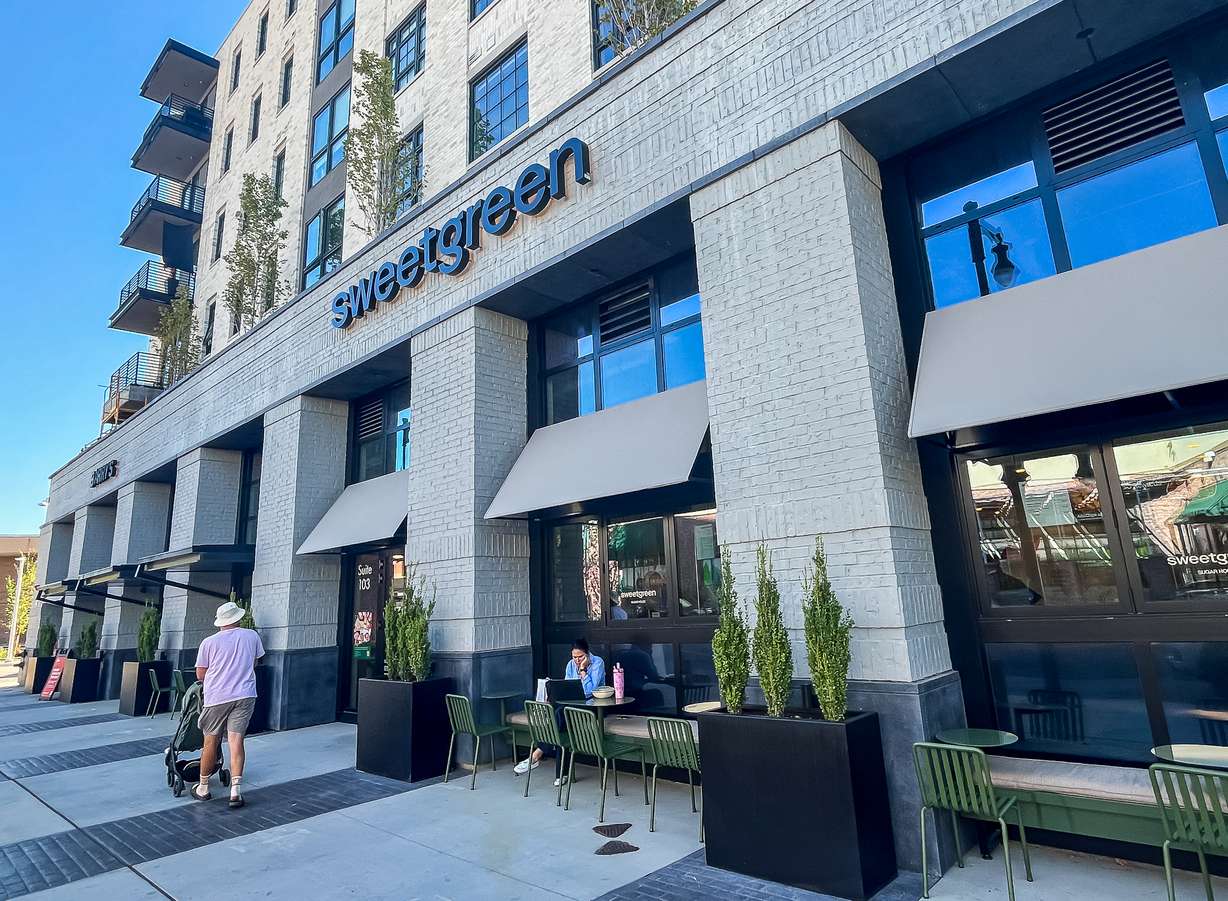
Owners are “very particular” with debut locations in a new city or state, Jammet explained. It seeks the right locations and designs to make a good impression.
Sugar House stood out in the scouting process, with an open space in The Residences at Sugar Alley, which opened last year after its construction was delayed by a massive fire. Its first-floor spaces also include restaurants like Heath and Hill and Hill’s Kitchen.
“Sugar House is a natural fit for us, with a strong community and a lifestyle that aligns closely with the way our guests think about food and wellness,” said Ryan Slemons, Sweetgreen’s chief development officer, in a statement.
A few other events are planned for its first week in Utah:
- Wednesday (6:30 p.m.): A 2.8-mile run with Salt Lake City Run Club, starting and finishing at Sweetgreen, followed by menu samples.
- Thursday (10 a.m.): Complimentary “aura photos” from Ignite Your Aura alongside a plant pop-up with Cactus & Tropicals.
- Saturday (10 a.m.): Kids can customize Sweetgreen tomato bucket hats with fabric markers, stickers and other provided materials.
The chain will track how its first Utah location goes, but Jammet said it’s also looking around for new locations in the state.
Its unique dirty soda option is a one-time grand opening option that celebrates Utah’s food culture. Only time will tell if that becomes a more permanent Utah item.
“I would never say no,” Jammet said with a grin.
The Key Takeaways for this article were generated with the assistance of large language models and reviewed by our editorial team. The article, itself, is solely human-written.