



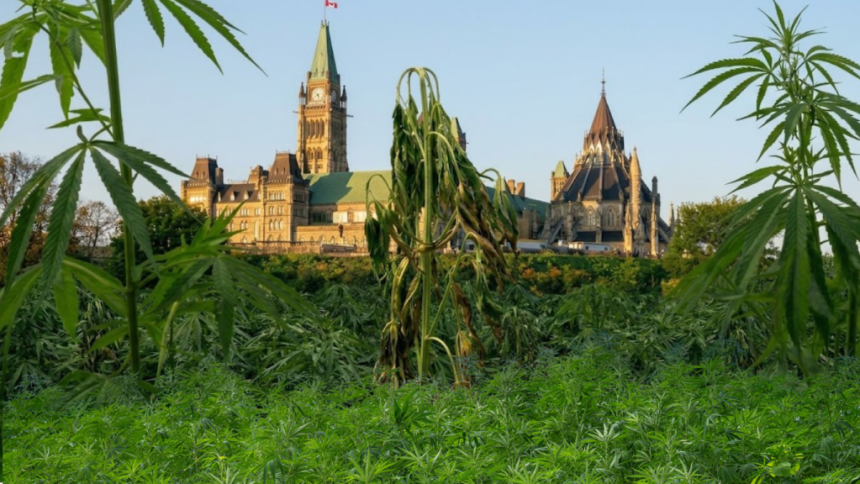
The federal government has abandoned cannabis. Not only the industry, but the policy itself.
In the lead-up to legalization on October 17, 2018, there was enormous political will and momentum to approach legalization through a public-health lens. But almost immediately after the law took effect, that momentum quickly began to wither.
On one hand, this shift is understandable. Cannabis moved from being the shiny new political issue to just another regulated consumer product, akin to agriculture and CPG. On the other hand, this was taking the cake out of the oven before it was fully baked. Reaching the point of cannabis becoming legal was historic, but it was never supposed to be the finish line.
When I have advised new applicants and license holders over the years, one of my most common refrains has been that getting a license isn’t the end of the journey—it is the beginning. The licensing process is about ensuring you are prepared for the ongoing complexities of operating within a regulated framework.
Regulations operate under the same principle. Creating them is a critical first step because it establishes a framework to oversee a newly legalized sector. But drafting rules is not the final goal. To build a functional, sustainable system, governments must keep investing energy, capital, and oversight to shepherd those regulations through implementation.
“The government used to say it was building the plane while flying it when it came to the complexity of legalizing and regulating a brand-new industry. And this was apt. It spoke to the real-life nuance of trying to get as much right as possible with a series of interconnected, moving targets. But to extend this analogy, the government didn’t just fail to finish building the plane mid-flight; it never decided to land it. It’s still flying in circles on dwindling fuel.”
Unfortunately, once political capital dried up, the federal government—especially Health Canada—largely slipped into caretaker mode. The political energy that originally cut through bureaucratic drudgery stemmed from a high-profile election promise made by a new government.
I saw this happen firsthand as a policy advisor for the agency’s Cannabis Legalization and Regulation Branch from 2018 to 2020. Once that promise was fulfilled and the box was checked, agency visionaries departed, and career bureaucrats took over. The prevailing mandate became maintaining the status quo: don’t make waves, avoid risk, cut costs, and project an image that everything is running smoothly, not thinking long term.
This bureaucratic posture ensured that emerging regulatory issues were brushed under the rug until they festered into significant structural problems.
Consider, here, an example of the oversight infrastructure required to manage hundreds of licensed producers. Before 2018, federal cannabis license holders were inspected multiple times a year, sometimes more than once a month. But after 2018, Health Canada failed to build the capacity to inspect and support the surge in new applicants and licenses. Hundreds of new applications and licenses poured in, but the oversight agency still operated as if there were only a few dozen.
When COVID-19 struck in early 2020—just over a year into legalization—Health Canada understandably had to reprioritize resources, pulling personnel from different agencies, including the cannabis branch, to manage pandemic response efforts. As a result, Health Canada fell further behind on oversight and inspections and has struggled to recover. New license holders increasingly had to wait months or years for an in-person inspection, inadvertently fostering a culture of non-compliance in an industry trying to transition from the illicit market.
Subsequent federal red-tape-cutting drives and post-pandemic fiscal constraints exacerbated the problem. At a time when Health Canada needed to expand its regulatory workforce and hire inspectors, budget constraints forced the agency to trim spending instead. In that institutional environment, public sector managers were incentivized to stay quiet rather than advocate for structural reinvestment.
Related Articles
Beyond regulatory oversight, the federal government abandoned its broader leadership role. Leading up to 2018, senior leaders championed Canada’s pioneering approach on the global stage through a public health lens. Former Health Minister Jane Philpott highlighted Canada’s model at the UN on April 20, 2016, and Prime Minister Trudeau regularly discussed the policy’s objectives with business groups and national and global media. Then-Parliamentary Secretary to the Minister of Justice and Attorney General of Canada and to the Minister of Health, Bill Blair, was repeatedly trotted out as the policy’s spokesperson.
Once the initial excitement faded after 2018, though, cannabis quickly became a topic politicians avoided. No federal spokesperson championed the file. Or mentioned it much at all. As public interest waned, politicians saw little incentive to engage. Yet government leaders failed to recognize that October 18, 2018, marked the start of a long-term policy implementation that required ongoing care and refinement, not the end.
This lack of vision explains why public and political interest dissolved. As the federal government shifted from treating cannabis as a landmark policy to treating it as a political outcast, the file sat on the shelf. Unfinished policy questions—ranging from excise tax reform to regulatory flexibility and medical access—remained unaddressed.
However, the cannabis industry also bears responsibility. For years, industry leaders have approached policy advocacy like a hostage negotiation rather than nuanced diplomacy, often prioritizing short-term shareholder plays over long-term policy progress.
The cannabis industry also bears responsibility. For years, industry leaders have approached policy advocacy like a hostage negotiation rather than nuanced diplomacy, often prioritizing short-term shareholder plays over long-term policy progress.
Governments rarely fix broken policy frameworks unless most of the public supports it. The cannabis industry has largely failed to build broad public understanding or support for the regulatory changes it seeks. Without public pressure, politicians have little reason to take political risks.
This abdication has also signalled to politicians in other countries that cannabis legalization is not a goal to take on. What was often expected to be the first in a line of dominoes falling around the world when it came to cannabis prohibition (and beyond) has largely waned. Canada was the first G7 nation to legalize and regulate cannabis for adult use (rather than only medical use), alongside Uruguay, which was the first nation to do so. They remain the only ones to do so in any significant way.
Many countries have legalized cannabis for medical purposes, but fully regulated, non-medical, adult use markets remain limited to these two countries. Germany legalized adult-use cannabis in 2024, but political pressure has undermined the program, leaving there no legal way for the commercial production or sale of cannabis. A referendum in New Zealand in 2020 to consider cannabis legalization failed. Some states in Australia have legalized some forms of cannabis, like the ability to grow cannabis at home, but no formally regulated industry.
Eight years after Canada led the world with a historic policy shift, the federal government has abdicated ownership of ensuring that policy ultimately succeeds. Rebuilding a functional, sustainable cannabis framework will require both government leadership and smarter, more effective industry engagement.
The government used to say it was building the plane while flying it when it came to the complexity of legalizing and regulating a brand-new industry. And this was apt. It spoke to the real-life nuance of trying to get as much right as possible with a series of interconnected, moving targets. But to extend this analogy, the government didn’t just fail to finish building the plane mid-flight; it never decided to land it. It’s still flying in circles on dwindling fuel, with few parachutes other than creditor protection or back-door sales.
What could have been the start of a historic global shift is now something the country seems embarrassed to mention, despite its significant economic contributions and its role in Canada’s shifting position in the global economy.