



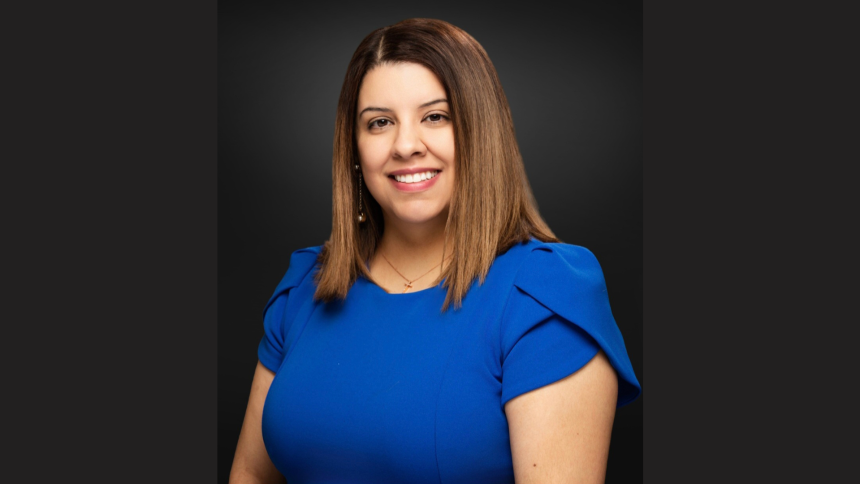
As Hispanic Heritage Month closes, I find myself reflecting on the vibrant rhythms and flavors that defined my Cuban-American upbringing.
I grew up in Hudson County in a bilingual household where Spanish and English flowed together, and where home-cooked meals of picadillo, broiled yuca and roast pork were as much about family as they were about food. Summers in Miami with my extended family deepened that connection.
Relatives filled the air with laughter, domino games, and Celia Cruz and Gloria Estefan playing in the background. Those experiences taught me that Latino identity in the United States lives in our traditions, our music and the stories we pass down. And they continue to shape how I understand this month’s meaning.
But the issues affecting Latino communities extend well beyond a month of celebration. Latinos play an increasingly important role in New Jersey and the nation’s economy, culture and politics, even as questions remain about whether leadership and power adequately reflect that influence.
That disconnect feels especially timely now, as recent reporting from The New York Times shows a sharp decline in President Trump’s support among Hispanic voters. Whatever that shift ultimately means for either political party, it reminds us that Latino voters cannot be taken for granted, especially as the community’s economic, demographic and cultural influence continues to grow.
According to the Latino Donor Collaborative’s 2026 U.S. Latino Economic Impact Report, the Latino economy nationwide has reached $4.4 trillion, making it the world’s fourth‑largest economy if measured independently, ahead of Japan, India, the United Kingdom, France, Italy and Canada. Latinos accounted for 28.2% of total U.S. economic growth in 2024, underscoring the community’s role as a central engine of the nation’s growth.
The demographic trends behind these numbers are equally striking. The U.S. Census Bureau reports that Latinos now make up nearly 20 percent of the population, or about 68 million people, with that number projected to reach 111 million by 2060.
These statistics show that Latino influence is not only about dollars and GDP rankings, but about the people driving the nation’s future workforce and shaping its communities.
Latino cultural influence is equally undeniable. In 2026, Bad Bunny’s Super Bowl Halftime Show, one of the most-watched shows in history, earned the performer seven Emmy Awards. His album Debí Tirar Más Fotos also became the first Spanish‑language album to win Album of the Year at the Grammys.
Meanwhile, Cuban-born Celia Cruz’s legacy continues to grow decades after her passing. In 2026, the Afro-Latina legend became the first Spanish‑speaking artist inducted into the Rock & Roll Hall of Fame with the Early Influence Award.
These milestones matter because they reflect the breadth of Latino identity. They show our stories aren’t confined to heritage months or cultural festivals. They are part of the fabric of American life.
Yet for all of our economic and cultural influence, Latino representation has not kept pace.
Patricia Campos-Medina, a political strategist, labor leader and former U.S. Senate candidate in New Jersey, noted that Latino economic growth has not translated into equivalent political power.
Campos-Medina told me that in New Jersey, we are 23% of the population yet hold only 5% of elected positions. “That means our voices are not at the table making choices on how to invest public resources in our community,” she said.
Campos-Medina believes the solution is to build political power from within: “Political power is not given. Political power is built by the community that demands it.”
The challenge extends beyond politics.
Iveth Mosquera, a Newark native whose parents immigrated from Ecuador and a past president and current board member of LUPE Fund, a Latina leadership and advocacy nonprofit, said Latino communities often have the talent and ambition to succeed but lack access to the networks that can open doors.
“There are unconscious biases when it comes to people who look different and have an accent,” she said. “It’s all about the connections.”
Mosquera has seen that firsthand. Her husband, who was born in Ecuador, built a flower distribution business from the ground up. “My husband started from scratch,” she said. “But I had an established career, health insurance and a paycheck. That gave him the freedom to go out there and try this new venture.”
Through her family’s business and her work in the nonprofit healthcare sector, Mosquera has also witnessed the essential role immigrants play in the economy.
“I see how immigrants work hard. Some work two or three jobs to have the American dream,” she said. “The false narrative is that immigrants are criminals, lazy, and taking people’s jobs. That’s simply not what I see.”
As New Jersey and the nation face workforce shortages, particularly in healthcare and elder care, those contributions will only become more important. Campos-Medina points out that Latino children are more than a third of New Jersey’s public K-12 school enrollment. “We are the workforce of the future,” she said.
Representation is not simply about visibility. It means ensuring the people making decisions about our communities understand our experiences and perspectives. As Campos-Medina put it: “We must run for office. We must fund our own campaigns. We must demand representation.”
The Latino moment is here. It is transforming the United States economically, culturally and socially. The next challenge is ensuring that our influence is reflected wherever decisions are made. If we meet that challenge, the future of America will not just include Latino voices. They will shape it.