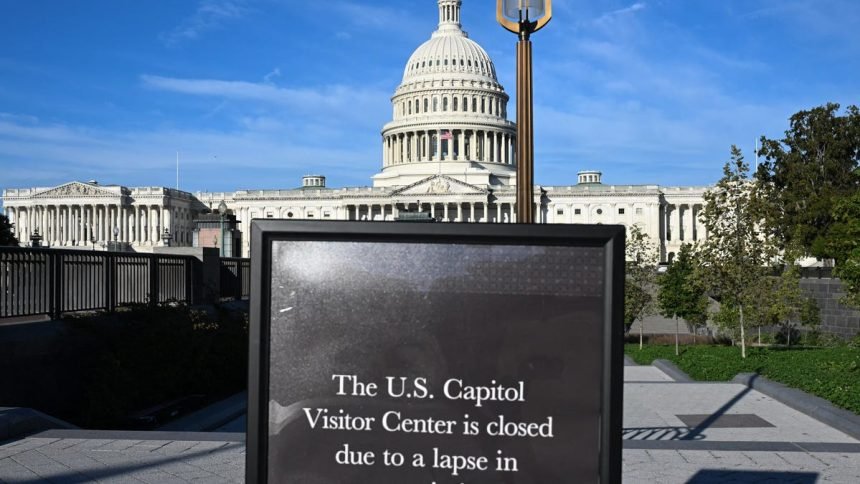

Smithsonian museums, National Zoo close amid funding stalemate
The Smithsonian museums and the National Zoo have closed amid a lack of funding from the federal government due to the ongoing shutdown.
Straight Arrow News
The federal government’s partial shutdown is now in its 16th day as of Thursday, Oct. 16 as Democrats and Republicans continue their legislative standoff over the budget impasse. While Republicans hold majorities in both chambers of Congress, they require at least seven Democratic votes to pass a funding bill in the Senate, where Democrats are holding out for an extension of health insurance subsidies.
Democratic leaders have said they will not give in to President Donald Trump’s pressure tactics, including mass layoffs, and on Wednesday, Oct. 15, the Senate voted for the ninth time against the Republican funding bill meant to reopen the government. The Senate is planning to vote again on Thursday at 11 a.m. ET.
Is the federal government still shut down?
Yes, the federal government remains largely shut down and has been since just after midnight on Oct. 1.
More than 750,000 federal workers have been furloughed and ordered not to report to work. Employees deemed essential to public safety, including military personnel, law enforcement officers, border patrol and air traffic controllers, are required to work regardless.While Trump signed an executive order on Oct. 15 directing the Pentagon to ensure active-duty military personnel are paid despite the shutdown, this isn’t the case for other federal workers.
What do Democrats and Republicans want for the government to reopen?
Democrats are pushing to ensure tax breaks for 24 million Americans who buy insurance through the Affordable Care Act (referred to as “Obama Care”) and have refused to back a government spending bill that doesn’t address the issue.
The Senate Dems want to make the tax break permanent, which would otherwise expire at the end of the year, and provide reassurances to prevent the Trump administration from temporarily withholding funds.
Republicans and the president say they are open to considering a fix for the expiring ACA tax breaks, but want the issue addressed separately from the ongoing budget impasse. Republicans have also claimed that the Democratic proposal could partially pay for health coverage for people who are in the country illegally. That’s not true, according to the nonpartisan Congressional Budget Office.
What happens to Social Security, Medicare, and Medicaid?
The Social Security Administration will continue to issue retirement and disability benefits, but will furlough 12% of its staff and pause marketing campaigns, according to the agency’s shutdown plan.
Payments will likewise continue under the Medicare and Medicaid health programs.
Does the U.S. mail get delivered?
The U.S. Postal Service is open because it does not depend on Congress for funding, USPS said in a statement.
What about the airports?
More than 13,000 air traffic controllers and about 50,000 Transportation Security Administration officers are still required to show up for work during the shutdown.
Will food aid continue under SNAP and WIC?
The Supplemental Nutrition Assistance Program (SNAP), the nation’s largest food aid program, and the Special Supplemental Nutrition Program for Women, Infants and Children, known as WIC, will continue operations as funds allow, according to the U.S. Department of Agriculture.
But the federal agency warned that there will not be enough funding to pay the entirety of SNAP benefits for November if the shutdown doesn’t end.
State health officials across the country, including in North Carolina, Wisconsin and Minnesota, have begun warning recipients of the possible lack of funds for November.
What does a shutdown mean for the military?
Trump signed an order on Oct. 15 directing the Pentagon to ensure active-duty military personnel are paid despite the federal government shutdown.
While 1.3 million active-duty military did get paid on Oct. 15, roughly 55% of the Defense Department’s 740,000 civilian employees have been furloughed, including those involved in training, procurement and administrative support. Civilians working in cybersecurity, medical care, weapons systems maintenance, intelligence, and logistics are still working and are not included in Trump’s order to pay active-duty personnel.
National Guard forces that Trump has deployed to U.S. cities must also continue to work.
What about Homeland Security, immigration and border officers?
Only 5% of the Department of Homeland Security’s 271,000 workers have been furloughed, including those involved in research, planning, training, and auditing.
Secret Service agents, immigration and border officers, airport security screeners, Coast Guard personnel, and Federal Emergency Management Agency emergency workers remain on the job. Still, not all will be paid in a timely way—only those roles covered under the president’s executive order.
The shutdown, the 15th since 1981, is on track to become the fourth-longest in U.S. history, eclipsing the twelve-day shutdown in 1977 under President Jimmy Carter. The longest shutdown lasted 35 days during Trump’s first term, from 2018 to 2019.
Contributors: USA TODAY’s Natalie Alund, Zac Anderson, Joey Garrison, Bart Jansen, Melina Khan, Sudiksha Kochi, Zachery Schermele, Saman Shafiq, Mary Walrath-Holdridge and Sarah D. Wire; Reuters