The NBA’s new anti-tanking rules will be in place through the 2029 draft. After that, the league’s board of governors will decide whether to keep it in place or find another system.
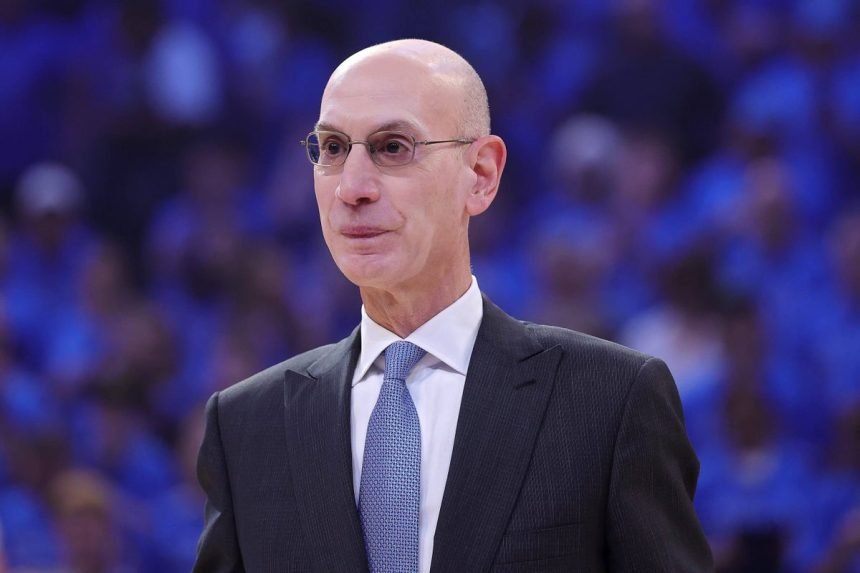
Yet commissioner Adam Silver said Tuesday night one thing is certain: “We’ll never go back to where we were.”
In an interview with ESPN before the draft, Silver said the age of teams fighting to see who could finish at the bottom of the league standings — and thus improve their chances of a better lottery spot — was over.
“We ended up in a situation where fans of teams were actually rooting for their teams to be bad,” Silver said. “It was particularly bad this year, I think, because of the perceived depth of (the 2026 NBA) Draft.”
Under the new rules, the bottom three franchises are considered in the “relegation zone” and drop from a previous 14 percent chance of landing the No. 1 pick to a 5.4 percent chance. The fourth- through 10th-worst teams now have 8.1 percent odds of landing the first selection.
Silver has previously likened the incentives to those of European soccer, in which the bottom three teams in leagues get relegated to lower divisions. In the ESPN interview, he said any incentive to lose should be nullified and it had become a pervasive issue in the league that needed to be dealt with.
“It just caught up with us over the years,” Silver said. “It was a practice by a very few teams over time where they could genuinely say they were rebuilding. Every team in all sports is focused on analytics, and everyone — sort of the guardrails went off — and said there’s an advantage if you’re not really good, to be really bad, and it doesn’t work to be in the middle.
“So once roughly a third of our teams were acting under those incentives, everyone came together, and I would say it was agreement across the league from every constituent group, but most importantly, our fans.”
Silver said the league remained committed to evaluating the rules after three years, since the draft remains one of the best avenues for struggling teams to improve by acquiring young talent. In theory, under the new system, teams that are genuinely trying to win but fall to a bottom-three record won’t have as good a chance to get high enough picks to become competitive again and can get stuck in a cycle.
“Part of the agreement with the teams was that this system would be in place for three years,” Silver said. “In essence, it’s grandfathered in. We all agree that would give us an opportunity to assess how this is working, and also look at some other approaches, which we thought, in fairness, the teams needed to be built in over time.
“But most importantly, we will not be returning to a system where there is an incentive to be bad.”
Silver was also asked about the potential expansion of the league to 32 teams. In March, the NBA’s board of governors approved a vote to explore bids and applicants for expansion teams exclusively in Las Vegas and Seattle. Silver said zeroing in on those cities was a show of intent and focus from the league. However, nothing has been decided.
“If we were to expand, most likely in the 2028-29 season, I bet that’s when they would come into the league, but no decisions have been made yet,” Silver said. “What we’ve made clear to our teams, we’ve at least specifically said it’s Las Vegas and Seattle.
“We’re looking at some other great cities that are interested in having franchises. We’re focused on those two right now. We could decide ultimately to go to new cities. One or two bids are being solicited at this time. The groups are coming together, talking to bankers, talking to the league office, and I think what we’ve said, in fairness to everyone, let’s make a decision by the end of this calendar year, at the latest.”