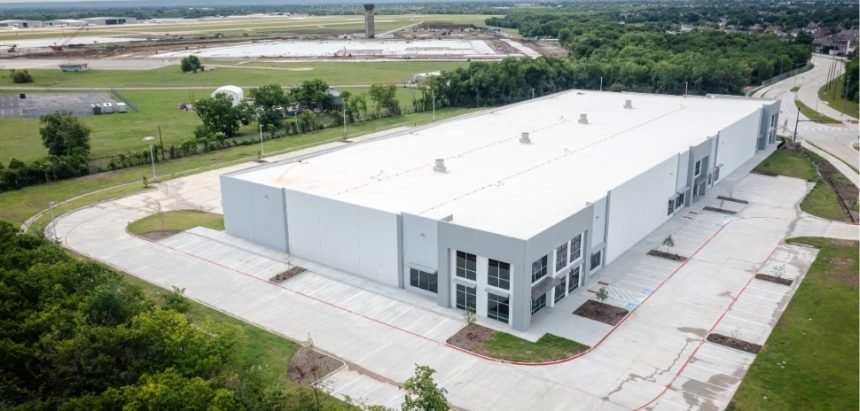
Australia-based Advanced Composite Structures is setting up a U.S. headquarters and manufacturing facility at Arlington Business Center. [Photo: Jim Wilson Photography]
Australia-based Advanced Composite Structures — a manufacturer of advanced composite materials for defense and aerospace companies — will establish its U.S. headquarters in Arlington.
ACS will occupy roughly 40,000 square feet at a facility recently built near Arlington Municipal Airport. Its Arlington presence will comprise headquarters offices and manufacturing operations.
“After evaluating locations in North Carolina and North Texas, ACS identified Arlington as its preferred location and expects to pursue additional U.S. defense and commercial contracts as its domestic operations grow,” a City of Arlington staff report said.
Under an incentive deal with the Arlington Economic Development Corp., ACS will invest $4.25 million in the project, the EDC said. The EDC will reimburse ACS up to $1.2 million for qualified facility improvements.
Public documents show ACS will begin facility improvements by Dec. 31 and move into its space at the Arlington Business Center by Oct. 1, 2027.
Creating jobs in Arlington
The incentive deal calls for ACS to create at least 40 jobs by the end of 2032, with long-term projections of 50 to 60 engineering and technical jobs. A third-party analysis estimated the ACS headquarters and plant will generate $45.5 million in pay over a 10-year span, the EDC said.
“ACS is a great fit for Arlington because it brings together several areas where we are focused on growing our economy — advanced manufacturing, defense and highly skilled employment,” Lyndsay Mitchell, Arlington’s director of strategic initiatives, said in a statement.
ACS will join a number of defense and aerospace companies with operations in Arlington. They include Bell Textron, Boeing, Lockheed Martin, L-3 Link Simulation and Training, Align Aerospace and Rocket Air Supply.
Decades of experience
ACS’s roots date back to the early 1990s. The company designs, manufactures, tests and repairs lightweight composite structures and components for industries like aerospace, defense and renewable energy. For example, it makes components for autonomous underwater vehicles used by the U.S. and Australian navies, the Arlington EDC said.
Advanced composite materials bind high-strength fibers, such as carbon fiber, with specialized metals, ceramics and polymers. The final product offers advantages over conventional materials like steel and aluminum, including a higher strength-to-weight ratio and corrosion resistance. They are then used in structures such as aircraft wings, satellites, jet engine blades, rocket nozzles and gas turbines.
R E A D N E X T
-
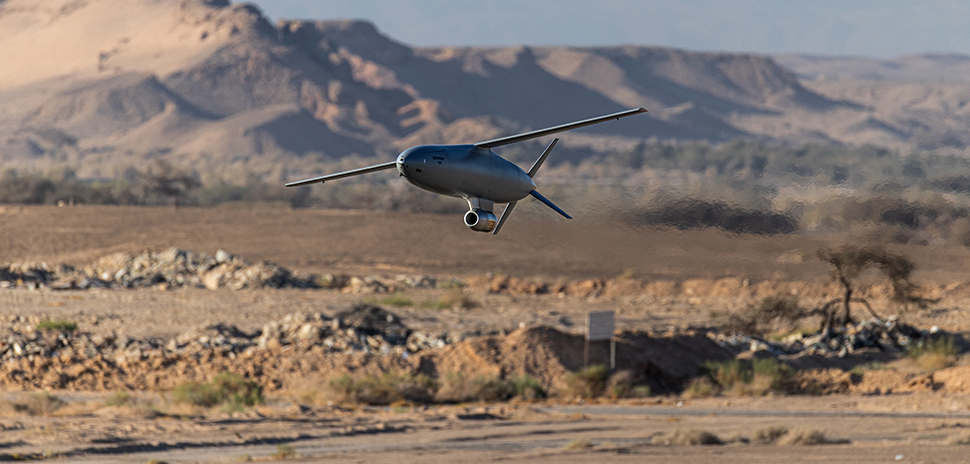
The Washington, D.C.-based company is ramping production of its Anthem long-range cruise missile in North Texas. Investors include Andreessen Horowitz, Founders Fund, Lux Capital, 8VC, Aleph and Lightspeed Venture Partners.
-

The gift from University of North Texas alum Vikas Sinha and his wife, Anuradha, is the couple’s third to UNT since 2024. It also funds six new endowments for scholarships, research and entrepreneurship.
-
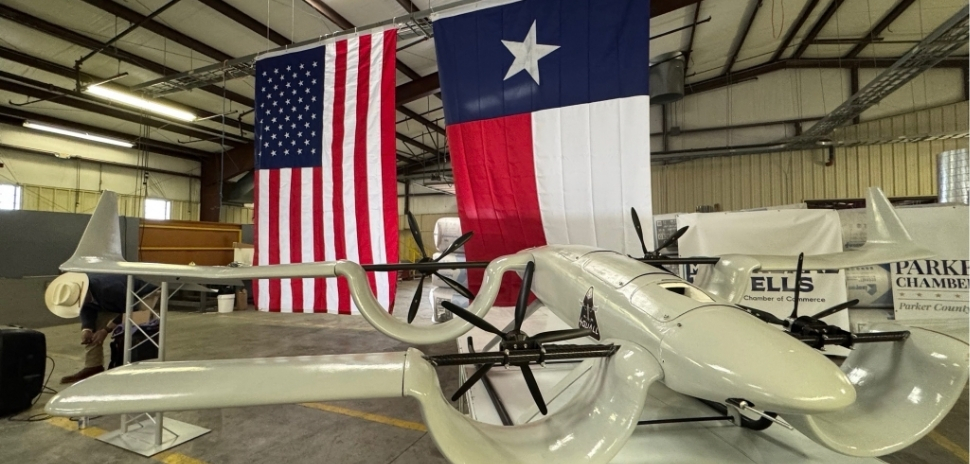
The startup, which recently emerged from stealth mode, has leased facilities at Mineral Wells Regional Airport for drone assembly, engineering, maintenance, training and flight operations.
-

The International Leadership of Texas Garland High School senior created a platform designed to prevent space-debris collisions. His venture-capital-backed startup hopes to commercialize its anticollision Arbiter technology.
-
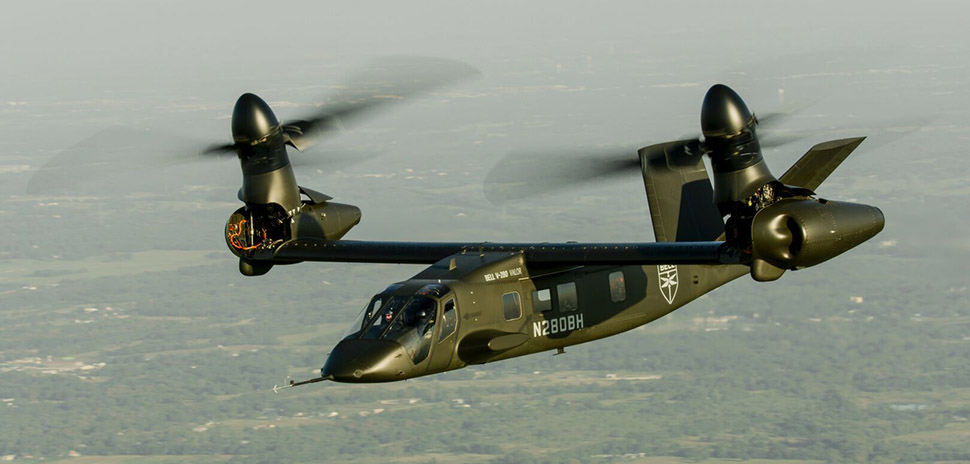
A Perryman Group study for the North Texas Commission finds the local defense industry supports more than 264,000 jobs across the region.