Beef prices have been climbing, and at one longtime Chandler butcher shop, customers are responding by changing what’s for dinner.
Wholesale beef prices have risen about 30% over the last three years, according to Von Hanson’s Meats & Spirits, prompting some shoppers to pass up pricier steaks and roasts for less expensive cuts and more ground beef.
“All cuts have risen in beef, from grinding material to steaks and roast,” marketing director Malesha Goode of Ahwatukee said.
“Yes, the consumer has switched from higher priced cuts to lower priced cuts. Ground beef sales are on the rise also.”
The changing buying habits come as the nation’s cattle supply remains tight and recent meat recalls have focused new attention on another question confronting consumers: Where, exactly, did their meat come from?
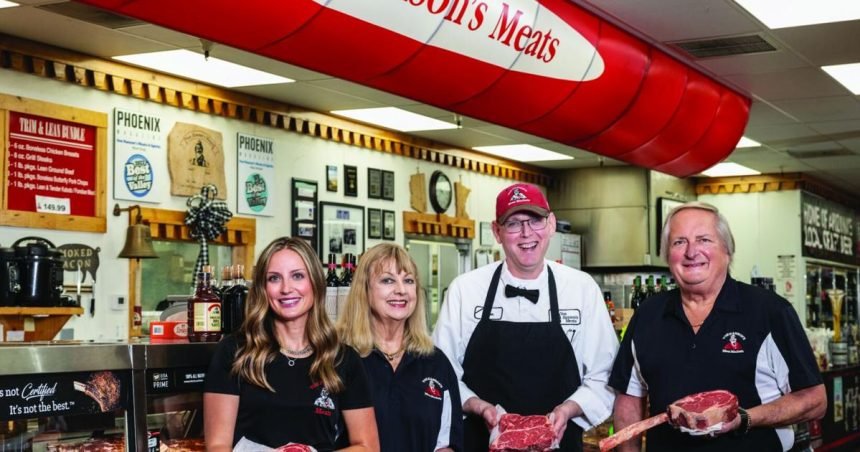
Von Hanson’s, 2390 N. Alma School Road, was founded over 22 years ago by Martha and Gene Neese.
Goode, their daughter, said both issues have become increasingly important to customers as more ask questions about meat origins, recalls and food safety.
The shop cuts meat and grinds hamburger in-house rather than receiving all its products already packaged for sale.
The business says its beef suppliers provide meat from cattle raised in the United States and processed and inspected here.
Boxes arriving at the shop carry federal plant inspection numbers identifying where the meat was processed, according to Goode.
The shop also said its beef, pork and chicken are U.S. products. Its ground elk comes from Canada, while its lamb and veal are from the United States.
“At Von Hanson’s, our customers can walk into our store and talk directly with the people handling their meat,” Goode said. “We know our products, we know our suppliers, and our butchers are right here in the store to be able to offer the customer expert answers about their meat.”
Goode said Von Hanson’s has not been affected by the recent recall of approximately 167,639 pounds of beef, pork and goat products that had been produced without federal inspection and carried a false USDA inspection mark.
The episode nevertheless provided an opportunity for consumers to consider what USDA inspection means — and what it does not, she said.
She noted that federal inspection and USDA quality grades are different things. Inspection involves meat produced at federally approved facilities, while beef also can receive quality grades such as Select, Choice and Prime.
The Chandler shop said its beef is Certified Angus Beef.
Goode encouraged customers to pay attention to recall notices, particularly for frozen meat that may remain in a freezer long after it was purchased.
When a recall occurs, processors notify outlets that received the affected product, which in turn are expected to alert customers, she said, adding, “One of the biggest problems in a fresh meat recall is that quite often a lot of the protein has already been consumed since it is a fresh item.”
Frozen products, by contrast, can remain in consumers’ homes longer and therefore may be more likely to still be available when a recall is announced.
For many customers, however, the more immediate concern is price.
Goode said that while pork and chicken prices have remained comparatively stable, beef has been considerably more challenging.
She pointed to the much longer production cycle for cattle as one reason beef supplies cannot respond quickly when shortages develop.
She explained that poultry can reach processing in roughly 50 days, hogs in five or six months and cattle in approximately 16 to 24 months.
That means cattle producers must make decisions well in advance about how many animals to raise, without knowing what market conditions will be when those animals are ready for sale.
“A lot can happen in two years and not all ranches are willing to risk the future,” Goode said. “The scarcity of beef has caused prices of beef to rise
At Von Hanson’s, the result has been visible at the meat counter.
Customers looking to control their grocery bills increasingly are turning away from higher-priced cuts. But that does not necessarily mean abandoning beef altogether.
For less expensive cuts, the shop’s butchers recommend different cooking techniques, including marinades and smoking, and offer customers advice about rubs and sauces that can add flavor and tenderness.
For years before the Neeses opened Von Hanson, they were frequent visitors to Arizona from their native Minnesota and packed a suitcase with Von Hanson meat.
Martha specialized in military litigation and headed the Military Advocacy and Federal Tort Section of the American Association for Justice.
After she and Gene retired and relocated to Ahwatukee, they opened the Chandler store in June 2004, partnering with the company to open the first and only Von Hanson’s outside of Minnesota.
“Their vision was to bring a true old-fashioned butcher shop experience to Arizona with premium meats, handmade sausages, custom cuts, Midwest specialty foods, and personal customer service,” explained Goode, who has carried on her parents’ tradition.
Today, Von Hanson’s produces more than 100 varieties of sausages and brats in-house and also sells smoked products, prepared foods and barbecue supplies and even pet food.
For Goode, rising prices and questions generated by recalls have reinforced the value of customers knowing more about the food they buy.
“At the end of the day, people want to know that the money they are spending on meat is the quality they are buying,” she said. “We want our customers to feel confident about where they shop and who they are buying from.”
Information: 480-917-2525 or vonhansonsmeats.net.