Elgin History Museum’s documentary and traveling exhibit, “Nuestras Historias: Celebrando la cultura y la comunidad hispana/Our Stories: Celebrating Hispanic Culture and Community,” will premiere Friday at Elgin Community College.
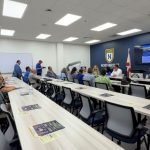
More than two years in the making, both will be presented at 5 p.m. at ECC’s Blizzard Theatre.
“Our ultimate goal is to tell everyone in Elgin’s story, and about 47% of the city’s population now has Hispanic roots,” museum board President Anne LoCascio said of the project, which was two years in the making.
The Hispanic heritage project has similarities to “Stories of Immigration, Identity and Assimilation: The Jewish Experience in Elgin,” made in 2006, and”Project 2-3-1,” the museum’s award-winning 2015 exhibit and documentary, LoCascio said.
The latter tells the story of Elgin’s Black community starting in 1862, when a boxcar holding formerly enslaved people arrived in the city. It was put together by the museum, local historian Ernie Broadnax and Grindstone Productions.
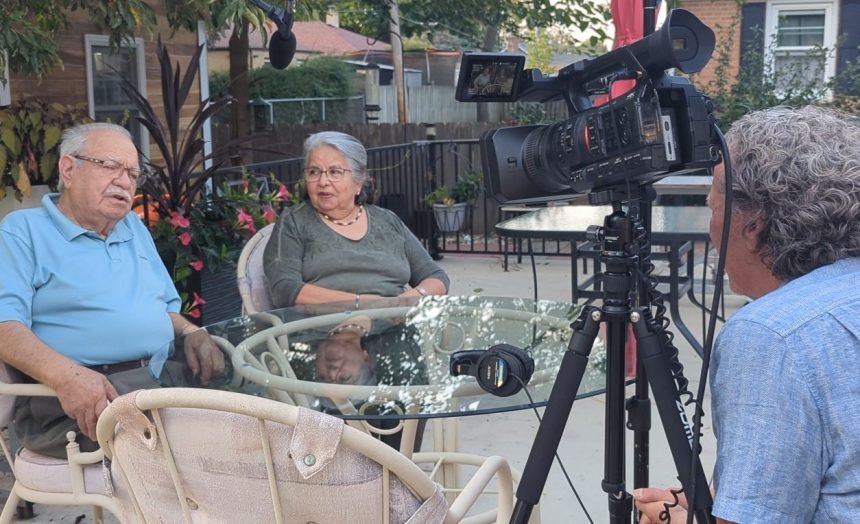
Grindstone also created the new documentary, which producer/director Phil Broxham said involved interviewing more than 40 people to gather history and record people’s stories. Among those featured are civic and religious leaders, politicians, restaurant owners, businesspeople and others who call Elgin home.
While most Elgin residents with Hispanic roots trace them to Mexico, Broxham said there are a significant number of people with family ties to Puerto Rico and others who trace their ancestry to Bolivia, Colombia, Cuba, the Dominican Republic, Ecuador, Honduras and other nations.
He learned that Hispanics have been coming to Elgin since the 1910s for the same reasons others made their way to the city — jobs, schools and family members and friends who had settled there and found the city to be a welcoming place, he said.
Many Hispanics initially came for blue-collar work, including jobs with the railroads, the Woodruff & Edwards foundry in Elgin and even at a farm that grew mushrooms for Campbell’s Soup in West Chicago.
One settlement in the city was called Little Mexico City, which sprung up in the area where Judson University now is located, Broxham said.
The exhibit and documentary were funded with about $110,000 in donations from community members, businesses and organizations and grants, including money from the Seigle and Palmer foundations, musuem Director Rebecca Miller said.
“We were grateful to receive a grant not to exceed $26,500 from the Kane County Riverboat Fund, which is not garnered from taxpayer dollars,” Miller said. “We are also grateful to our premier hosts, Elgin Community College and the Gail Borden Public Library (where the traveling exhibit opens Thursday, Sept. 3).”
To gather background material and find people to interview, the museum put together a committee of community members. One of them was Rafael Villagomez, a real estate agent and community activist who ended up becoming a spokesperson for the project.
Villagomez was invited to talk about “Nuestras Historias” in December at a Chicago press conference in December for Illinois America 250, the state initiative commemorating the 250th anniversary of the signing of the Declaration of Independence.
In his speech, he noted that the project looks at the generations of Hispanic families who built, shaped and continue to transform Elgin.

Villagomez, 45, said he grew up in Greenfield, California, where his father worked in the garlic fields. As a teen, he visited relatives in Elgin during summers and liked what the city had to offer, especially compared to rural life in Monterey County.
In July 1999 he moved to the city, where he went to college, became part of St. Joseph Catholic Church parish, married and started a family, became a real estate agent and got involved in organizations like the Gail Borden Public Library Foundation and the Elgin Hispanic Network.
“Nuestras Historias is an opportunity to share our stories,” Villagomez said.
Contributing “heart” to the traveling display is Cristina Colunga, a Hispanic heritage project chair and the history museum’s educator. For the exhibit, Colunga created several artworks, including a logo and a sculpture based on the logo, which she created with Elgin’s Acme Design.
Those works tie in to tin hearts, a traditional Mexican symbol of faith and love, Colunga said. They also feature tree roots, a watch that references the Elgin National Watch Co. and water, symbolizing the Fox River and the Rio Grande.
“The sculpture is to welcome visitors, an eye-catcher to draw them in to explore the exhibit,” Colunga said.
For more information, go to elginhistory.org/elgin-history/hispanic-heritage-project.
Mike Danahey is a freelance reporter for The (Elgin) Courier-News.