|
Only have a minute? Listen instead |
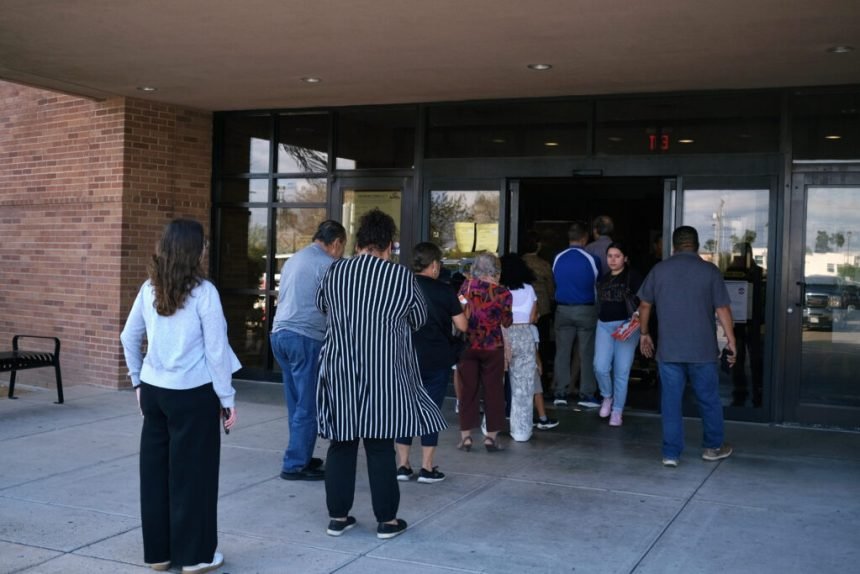
Analysts and minority and voting rights advocates report that Latinos are becoming more involved in the voting process. We hope the trend continues into the general election.
News website Axios reports that Latino voter participation in Tuesday’s elections was the highest among the past three primaries in Texas, and was up by 1 percentage point over the 2024 presidential primary and 4 points over the 2022 midterm primary.
Democratic Party members are celebrating the news, expressing the belief that the greater Latino participation improves their chances in November’s general election in this state that has been dominated statewide by Republicans for the past three decades.
Historically, a majority of Latinos have tended to vote Democratic, but the allegiance has declined in recent years. Donald Trump’s success — 42% of Latinos voted for him, the highest percentage any Republican presidential candidate has ever received, according to the Pew Research Center — is largely credited with his victory in 2024.
It’s still unknown is if the shift indicates support for Trump as an individual or for the party itself. Future elections will tell us if the trend will continue or die after Trump no longer is on the ballot or influencing other races.
What is known is that Latino support for Trump and other Republicans was down on Tuesday.
Statewide, Latinos comprised 11.9% of the vote in the Democratic Party primary, up from 6.3% in the 2022 midterm and 5.5% in the 2024 presidential primary, which usually draws significantly more votes. The percentages were higher in the Rio Grande Valley and other counties with heavy Hispanic populations: 13.1% of Tuesday’s votes were Latino in those counties, compared to 9.0% in 2022 and 7.7% in 2024.
However, Latinos made up 11.1% of Tuesday’s vote in the Republican Party primaries statewide, down from 11.4% in 2022 and 12.9% in 2024. In Hispanic counties 7.3% of the vote was Latino, compared to 7.2% in 2022 and 8.2% in 2024.
While Latino participation is rising, there’s much room for improvement. Latinos comprise nearly one-third of all eligible Texas voters, although fewer than half of them actually vote.
Several factors could contribute to the low numbers, including dissatisfaction with all candidates. Moreover, because only U.S. citizens can vote, first-generation Americans don’t see their parents setting the example of going to the polls on election day. In addition, many people who came to this country to escape failed or corrupt governments might show an aversion to the entire political process, which also could affect their U.S.-born descendants.
Fortunately, it appears that Latinos’ disappointment with current officials didn’t deter them from voting altogether; rather, they apparently chose to shift allegiances and cast their ballots anyway.
We hope the trend continues, as greater voter participation — among all demographic groups — helps elect candidates who have been judged by the largest number of voters. It indicates that more Americans are realizing that the success of our government — from local boards to Capitol Hill — is something worth voting for.