In the fight against climate change, they’re humanity’s mighty Avengers: Solar panels. Wind turbines. Electric cars.
And now, superheated rocks.
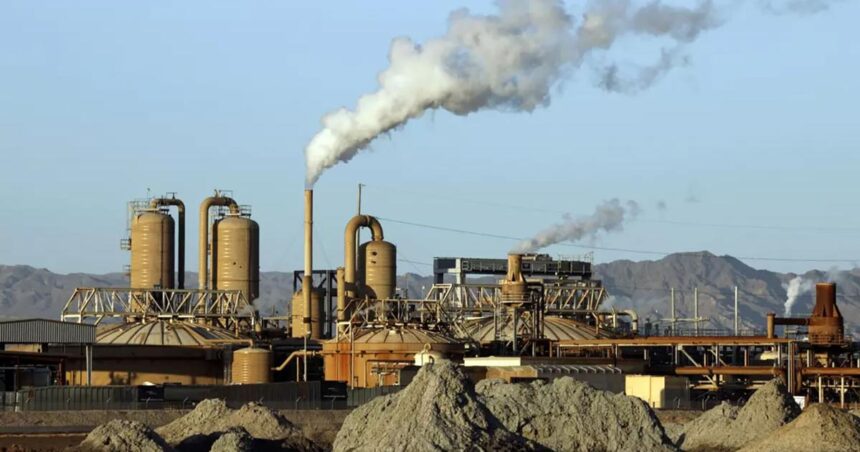
Geothermal power plants — which tap scorching-hot underground rocks and reservoirs to generate renewable electricity — have been bit players in California’s energy landscape for decades, too expensive to compete with solar, wind and fossil fuels.
On Tuesday, they took a giant leap forward.
Geothermal startup Fervo Energy — which has spent seven years perfecting lower-cost drilling techniques, with financial backing from Microsoft co-founder Bill Gates and other investors — announced its largest contract to date, a milestone 15-year deal to sell 320 megawatts of climate-friendly power to Southern California Edison, one of the nation’s largest utility companies.
That’s enough electricity to power 350,000 homes. It will be available to Edison customers 24 hours a day, seven days a week.
“This is a technology that is bankable, ready for prime time,” Fervo’s chief executive, Tim Latimer, said in an interview.
The Houston-based startup will generate the electricity at Cape Station, a 400-megawatt power plant that it’s currently building in Utah’s Beaver County. Latimer estimated that 200 to 300 people will be employed at peak construction, with 30 to 50 full-time employees after that. The first 70 megawatts should come online by 2026, with the plant fully operational by 2028.
The company previously struck deals to sell smaller amounts of power from Cape Station to several Southern California city and county governments, including Clean Power Alliance, which buys electricity for Los Angeles and Ventura county residents. Fervo will also supply 115 megawatts to Google to power its data centers in Nevada, as part of a deal announced this month.
But the Google project, to be built in northern Nevada, isn’t expected to produce electricity until 2029 — basically an eternity on a planet already facing ever-deadlier heat waves, fires and storms, prompting urgent calls from scientists to ditch fossil fuels.
That’s what’s so exciting about the Edison deal. It’s a clear statement that advanced geothermal is real, and it’s spectacular.
“There’s a lot of companies in this space that seem to be over-hyped. Fervo is one of the few that’s actually worth the hype,” said Ric O’Connell, executive director of GridLab, a Berkeley, California-based nonprofit consulting firm focused on clean energy.
Already, California got nearly 55% of its electricity from renewable and other climate-friendly sources in 2022, with the U.S. as a whole achieving just under 40%. The vast majority of that low-carbon energy came from solar and wind, hydropower dams and nuclear reactors, with geothermal accounting for less than 5% of California’s power, and less than 0.5% for the nation.
O’Connell and other experts have calculated that society can get most of the way to 100% clean power— largely expelling fossil fueled electricity — by building low-cost solar panels, wind turbines and lithium-ion batteries to store energy for after dark, along with more power lines to move the electricity around. The tricky part will be replacing the last 10% to 20% of fossil fuels.
That’s where geothermal should help.
As a “clean firm” energy source that utilities such as Edison can count on to be available 24/7, geothermal makes it easier to shut down polluting coal and gas plants without raising the risk of blackouts on especially broiling or frigid days, when the power grid is pushed to its limits by people cranking up their air conditioners or home heaters. Solar panels paired with batteries are already reducing the risks. But batteries are good for only a few hours at a time. There’s nothing quite like a steady power plant.
Next-generation geothermal plants could also limit the need for solar and wind farms, O’Connell said — at least somewhat.
Although it’s technically and economically feasible to get most of the way to 100% with solar, wind and batteries alone, there are practical constraints. The more large-scale projects have been proposed, the more they’ve come into conflict with wildlife habitat, rural towns and lands sacred to Indigenous tribes — prompting a backlash that threatens to derail the energy transition.
Geothermal plants, by contrast, take up far less land than solar or wind farms.
“You don’t have to cut down so many Joshua trees,” O’Connell said.
Even with cheaper access to underground heat, we’ll still need mind-boggling amounts of solar and wind. But Fervo’s technology could limit the number of bitter land-use battles, easing the path to a healthier future without planet-wrecking fossil fuels.
So how did Fervo do it? How did the company reinvent a technology that’s been around for decades?
Surprisingly, the answer has to do with oil and gas.
Drilling down several thousand feet is expensive, meaning geothermal developers have to charge high rates for the power they produce. And the financial risks are substantial, at least outside of the best underground hot spots (such as Southern California’s Salton Sea and Northern California’s Geysers, where some of the earliest geothermal facilities were built). You can spend millions of dollars drilling a well and come up short. If you don’t have high certainty of success, the upfront risk isn’t worth it.
For years, federal researchers and climate advocates hoped some entrepreneur would make the process less risky, finding a way to drill faster and more cheaply, in a broader variety of places, with much greater certainty of striking profitably hot fluid.
That’s exactly what Fervo did.
Latimer and his colleagues improved on traditional geothermal techniques in several ways. But the biggest was this: They utilized horizontal drilling, boring about 10,000 feet down and then 5,000 feet to the side with each well. The technology has been around for decades, but it’s gotten a lot less expensive since the mid-2000s due to widespread adoption by oil and gas companies.
For fossil fuel companies, horizontal drilling has been a great tool — in combination with hydraulic fracturing, aka fracking — for tapping vast oil and gas deposits that were previously hard to reach. For Fervo, sideways drilling has been an ideal way to expand the subsurface acreage it can access with every well — making it much more likely that each dig strikes clean energy gold.
“It’s all about bang for your buck,” Latimer said.
Fervo doesn’t have everything figured out. (Not that anyone does.) So far, the startup is sticking to drill sites with relatively good geology for geothermal heat — as in, the American West. Eventually, Latimer hopes to expand to the rest of the country.
Even with cheaper access to underground heat, we’ll still need mind-boggling amounts of solar and wind. But Fervo’s technology could limit the number of bitter land-use battles, easing the path to a healthier future without planet-wrecking fossil fuels.
So how did Fervo do it? How did the company reinvent a technology that’s been around for decades?
Surprisingly, the answer has to do with oil and gas.
Drilling down several thousand feet is expensive, meaning geothermal developers have to charge high rates for the power they produce. And the financial risks are substantial, at least outside of the best underground hot spots (such as Southern California’s Salton Sea and Northern California’s Geysers, where some of the earliest geothermal facilities were built). You can spend millions of dollars drilling a well and come up short. If you don’t have high certainty of success, the upfront risk isn’t worth it.
For years, federal researchers and climate advocates hoped some entrepreneur would make the process less risky, finding a way to drill faster and more cheaply, in a broader variety of places, with much greater certainty of striking profitably hot fluid.
That’s exactly what Fervo did.
Latimer and his colleagues improved on traditional geothermal techniques in several ways. But the biggest was this: They utilized horizontal drilling, boring about 10,000 feet down and then 5,000 feet to the side with each well. The technology has been around for decades, but it’s gotten a lot less expensive since the mid-2000s due to widespread adoption by oil and gas companies.
For fossil fuel companies, horizontal drilling has been a great tool — in combination with hydraulic fracturing, aka fracking — for tapping vast oil and gas deposits that were previously hard to reach. For Fervo, sideways drilling has been an ideal way to expand the subsurface acreage it can access with every well — making it much more likely that each dig strikes clean energy gold.
“It’s all about bang for your buck,” Latimer said.
Fervo doesn’t have everything figured out. (Not that anyone does.) So far, the startup is sticking to drill sites with relatively good geology for geothermal heat — as in, the American West. Eventually, Latimer hopes to expand to the rest of the country.
The company also faced a hiccup at the California Public Utilities Commission.
The commission’s ratepayer watchdog objected to Fervo’s contract with Edison, saying it was too expensive and could set a poor precedent, leading to a string of pricey geothermal plants — and, ultimately, higher electric bills for Californians. High bills punish lower-income people. They also threaten climate progress, by making electric cars and gas-free appliances more expensive.
The Public Advocates Office asked the commission — whose members are appointed by Gov. Gavin Newsom — to require Edison to try to renegotiate the Cape Station contract. The commissioners weren’t interested. They approved the deal unanimously.
I’m sympathetic to the Public Advocates Office. Our utility bills are already too high.
But to rescue ourselves from climate calamity, we’ll need advanced geothermal — or something remarkably similar — as soon as possible. And costs are coming down. Latimer told me that Fervo is now able to drill for less than $5 million per well, and is selling electricity “in the ballpark” of $100 per megawatt-hour — numbers that are falling into line with traditional geothermal.
For SoCal Edison, Fervo’s Cape Station offers “just hit the right mark,” said Erica Bowman, the company’s vice president of strategy, planning and performance. Like other California electric utilities, Edison is required to attain 100% clean power by 2045.
Edison is also under orders from the Public Utilities Commission to buy several hundred megawatts of “clean firm” power over the next few years. When I asked Bowman if there are other viable “clean firm” options, she basically made the shrug emoji.
“Geothermal’s right up there,” she said.
Fervo has continued lining up investors, announcing another$244-million funding round in February. It included oil and gas firm Devon Energy, industrial giant Mitsubishi Heavy Industries and billionaire Tom Steyer’s Galvanize Climate Solutions.
Longer term, there will hopefully be a variety of climate-friendly choices for keeping the lights on when sunlight and wind aren’t enough. Bowman cited several technologies she’s watching closely, including floating offshore wind farms, green hydrogen, gas plants equipped with carbon capture, advanced nuclear and long-duration energy storage such as pumped hydropower.
Also crucial, in my view: using energy more efficiently and public policies supporting rooftop solar power.
For now, though, Fervo is ahead of the game.
That’s partly because, in another wise decision, the firm chose to build Cape Station in a spot where it can actually send electricity to California — a challenge on the overloaded Western grid. The electrons will flow through a 488-mile transmission line that now transmits energy to L.A. from a Utah coal plant. It’s slated to close next year, opening up precious space on the wires.
For Fervo, the timing is fortuitous.
As for the rest of us? Let’s not leave the fate of the planet to good timing. There’s an election in just over four months, and a lot of hard work after that. Don’t wait — join the fight. Demand climate solutions from politicians, businesses and each other.
©2024 Los Angeles Times. Visit at latimes.com. Distributed by Tribune Content Agency, LLC.