
The route from Los Angeles to Las Vegas is one of the most popular private jet corridors in the United States. These are both large, wealthy cities with high travel demand, and due to the short stage lengths, charters are more affordable than on other routes. Furthermore, the short stage length (only about 271 miles or 437 kilometers separates the two) means that essentially every type of business jet can operate this route. This includes light and very light jets that are more affordable, in addition to the massive Gulfstream and Bombardier Global models that are typically associated with private flying.
Within Las Vegas, many private jets operate out of Harry Reid International Airport, the primary commercial airfield serving the area, as well as Henderson Executive Airport. In Los Angeles, meanwhile, many business jets tend to avoid LAX, instead favoring Van Nuys Airport, as well as Orange County John Wayne Airport and Burbank Bob Hope Airport, although Van Nuys is the most popular of the three for private aviation. These airports avoid the congestion seen at LAX and are fairly close to several affluent neighborhoods.
The Typical Charter Options Between The Two
There are scores of companies that provide chartering services for private jets, including in the popular Los Angeles to Las Vegas market. However, many of them operate as middlemen, offering broker services by selling charters or tickets on a flight operated by another company. Some companies operate their own aircraft in some circumstances, but also charter out to third parties in other instances. BLADE, for example, sells charters on the Los Angeles-Las Vegas sector, but doesn’t actually operate the route.
Because of the wide variety of aircraft that fly this route, prices are correspondingly variable. A one-way charter on a light jet, like an Embraer Phenom 300, may cost anywhere from $3,500 to over $7,000. A mid-size or super mid-size jet will usually range from $7,000 to $13,000, while the largest and most capable executive planes will run over $15,000 in many cases, and this is just for one-way prices. Round-trip charters typically cost between 1.6 and 1.9 times what a one-way costs, though it’s rarely double.
Of course, the other type of private aircraft available is turboprop. These are far cheaper to operate than an aircraft with two turbofans, but of course, they’re less prestigious too. The one-way cost to charter a turboprop plane, such as a Pilatus PC-12, will usually run from $1,500 to over $3,000, making them by far the most cost-effective option in this segment. In addition, because of the short distances involved, there’s little speed advantage that a turbofan-powered plane has over a turboprop in this instance.
The Factors Behind Private Jet Pricing

Airline tickets are notoriously dynamic in pricing, and the same is largely true for chartering a private jet. Rates vary by day of the week, and can spike during periods of high demand. In Las Vegas, regular sporting events such as UFC matches or NFL games result in significantly higher charter prices, as do conventions like the Consumer Electronics Show (CES). In addition, charter prices can fluctuate by season, dropping when demand for private jet flights is generally lower.
Catch what other flight trackers miss
Emergency squawks, holds, NOTAMs — live signals, no signup.
Open tracker
Catch what other flight trackers miss
Emergency squawks, holds, NOTAMs — live signals, no signup.
Open tracker
Private jet travel is fundamentally about the convenience of flying whenever you want, wherever you want, and this means that operators need to ensure that an aircraft is ready for the flight. This isn’t a problem if the plane is already positioned and ready, but if the operator needs to reposition the aircraft, this can incur additional costs that are passed down to the customer. On the other hand, as nearly 40% of private jet flights are repositioning sectors with no passengers onboard, it’s possible to charter a jet flying on a repositioning sector, often for a significantly reduced fee.
Similar to how airlines have several fees that factor into the overall ticket price, private jet charters also come with several fees, which may be billed separately, depending on the broker. This can include taxes, crew overnight fees (if applicable), landing and ramp fees, catering fees, as well as the previously mentioned repositioning fees. With these added fees, chartering a private jet can quickly become prohibitively expensive, even on the short sector from Los Angeles to Las Vegas.
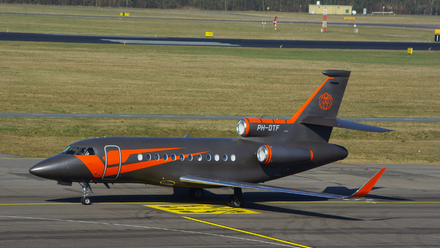
What You Get With Flying Private

The most obvious benefit of flying private is the convenience of traveling on your own time, rather than being beholden to an airline’s schedule. The other benefit of chartering an executive jet is being able to travel out of an FBO (fixed base operator), rather than having to transit through a large airport terminal with a long security queue and potentially dealing with airline delays. When flying private, you’re flying on your own or with companions, and no one else.
While some airlines offer an international first-class experience that’s arguably better than what you get on a private jet, domestic first class in the US consists of a recliner seat and minimal service on short flights, like from Los Angeles to Las Vegas. Private jets will typically come with a spacious layout that includes solo seats, a conference table, possibly a couch, and televisions spread throughout the cabin.
Catch what other flight trackers miss
Emergency squawks, holds, NOTAMs — live signals, no signup.
Open tracker
Catch what other flight trackers miss
Emergency squawks, holds, NOTAMs — live signals, no signup.
Open tracker
A turboprop aircraft is typically lighter on amenities, only featuring rows of solo seats with an aisle and conference table. In addition, you won’t typically find an onboard lavatory, and there’s not always enough space to stand up straight. Turboprops are also usually louder inside the cabin than turbofan-powered aircraft. Of course, on the short Los Angeles-to-Las Vegas sector, these drawbacks have only a small impact on the overall experience, making planes like the Pilatus PC-12 and Beechcraft King Air particularly popular on this route.
Going Semi-Private With JSX

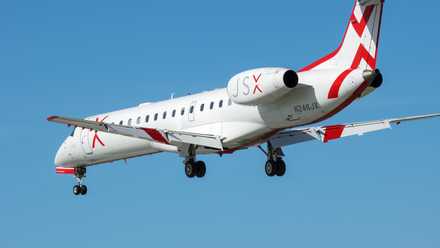
JSX markets itself as offering tickets on ‘semi-private’ planes that operate scheduled flights. Between Los Angeles and Las Vegas, one-way ticket prices can drop to under $200, although JSX does not serve Van Nuys. Instead, you can fly out of LAX, Burbank, or Orange County in the Los Angeles area, or out of Harry Reid International Airport in Las Vegas. JSX’s prices are comparable to what you’ll find for domestic first-class tickets on commercial airlines, while arguably offering a much more elevated experience.
Technically, JSX does not operate a single ‘ business jet‘, as its fleet is made up of the ATR 42-600, Embraer ERJ-135, and Embraer ERJ-145, but configured in a more spacious layout. The carrier offers wide seats with more legroom, with the ATRs and ERJ-145s offering a large console in one section of the seats. In addition, passengers receive enhanced onboard service and complimentary Starlink Wi-Fi, making for an overall more relaxing experience than traveling with a large airline.
Of course, the real benefit of traveling with JSX is that the carrier uses FBOs rather than airport terminals. This means light security screening and an overall expedited experience that allows passengers to show up minutes before the flight, rather than hours. JSX can do this as it technically sells tickets on aircraft that it charters from a wholly-owned subsidiary. The subsidiary operates under Part 135 regulations (large commercial airlines operate under stricter Part 121 regulations), while JSX operates under Part 380 regulations.
JSX Approved To Relocate At Orange County Airport
The airline will have a new location at the southern California airport.
Another (Possibly Better) Semi-Private Experience

Aero operates under a very similar business model to JSX, in that it sells tickets on flights that it charters under Part 380 regulations, with the aircraft being operated by a wholly-owned Part 135 subsidiary. Similarly, it also operates the Embraer ERJ-135, although these planes feature a more spacious layout, with 16 seats rather than the 30 that you see on JSX’s examples. However, the major differentiating point with Aero is that it also operates the Embraer Legacy 600 and Gulfstream IV, which are purpose-built business jets.
The private jets feature interiors that you’d expect from executive planes, meaning that flying with Aero means that you can fly on a true business jet while spending a fraction of the price. On the Los Angeles to Las Vegas sector, Aero typically charges over $900 per person one-way, which is much higher than JSX, but still significantly lower than chartering even a turboprop aircraft. In addition, Aero offers a significantly elevated onboard experience compared to large airlines.
|
FAA Flight Operation Regulations |
Description |
Examples |
|---|---|---|
|
Part 91 |
Regulates non-commercial flying |
General aviation flights, repositioning and maintenance flights by commercial operators |
|
Part 121 |
Regulates scheduled commercial service with large aircraft, pilots must hold an ATPL, most stringent operational and maintenance regulations |
Large passenger, cargo, and charter airlines |
|
Part 135 |
Regulates commercial on-demand charter and commuter service with low-capacity aircraft, pilots must hold a CPL, with less stringent operational and maintenance regulations than Part 121 |
Kalitta Charters, Wheels Up, Boutique Air, Counter Aviation |
Like JSX, Aero operates out of FBOs, allowing for a far easier and more convenient airport experience. Aero is a much smaller company than JSX and has far fewer flight options, but it notably operates out of Van Nuys rather than LAX, which is typically the preferred airport for private jet customers. In addition, while the Gulfstream is primarily used to serve Hawaii, the Embraer Legacy is regularly operated on Aero’s routes within the continental US, including from Los Angeles to Las Vegas.