What is an HSI? How DC-area universities are dealing with cuts to federal funding
WTOP is celebrating Hispanic Heritage Month from Sept. 15 to Oct. 15. All this month, discover stories from the diverse Latino communities in the D.C. region, here at WTOP.com and on air at 103.5 FM.
Virginia and Maryland colleges designated Hispanic-serving institutions, or HSIs, are seeking new funding sources after the Trump administration canceled the grant program, claiming it discriminated “by conferring government benefits exclusively to institutions that meet racial or ethnic quotas.”
Marymount University President Irma Becerra believes the move reflected “some sort of misunderstanding” about the HSI designation, which reflects a school’s student population, not exclusive programming or support for Hispanic students.
“We are a Hispanic-serving institution since 2020,” she told WTOP. “Three in 10 of our undergraduates are Hispanic. HSI is a congressional designation that reflects that more than 25% of our students are Hispanic.”
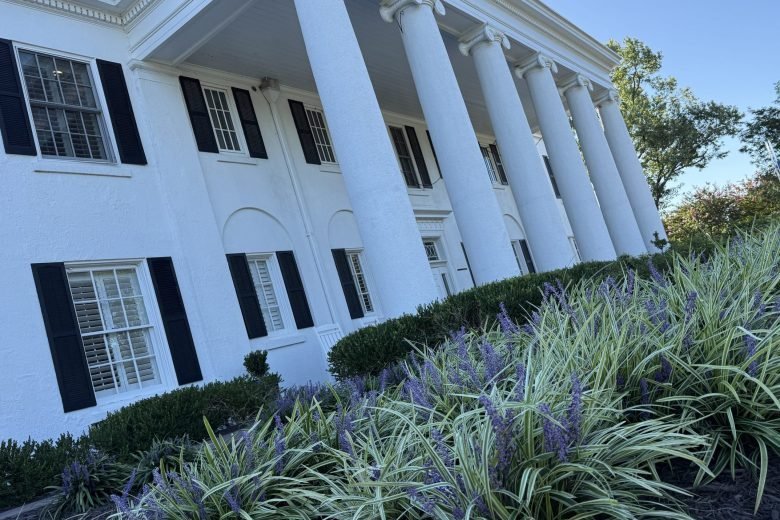
Marymount, a four-year private university, is located along Glebe Road in Arlington, Virginia, and has a total enrollment of about 4,300 students. Approximately two years after Becerra began her tenure, Marymount became the first Hispanic-serving institution in the state.
“Even though we’re using the word ‘Hispanic,’ it’s not only for Hispanics, because every student that comes to Marymount gets to enjoy the same privileges of these wraparound services that we offer,” Becerra said. “When Marymount received a grant for $1.5 million for special programs to retain STEM students, we’re not only using them for Hispanic students. We use that funding to support all of our students — so every student that comes to Marymount benefits.”
The only other HSI in Virginia is Northern Virginia Community College, a two-year public institution in Annandale. In 2024-2025, 25.7% of its students were Hispanic, according to the Hispanic Association of Colleges and Universities.
In Maryland, the sole HSI is Montgomery College, a two-year public institution that gained its HSI designation in 2021. In the District, Gallaudet University and Trinity Washington University, both four-year private institutions, are HSIs.
Related stories
“Our students do represent Montgomery County, which is a diverse county,” Montgomery College President Jermaine Williams said. “Thirty percent of our students identify as Hispanic or Latino, about 25% identify as Black, and about 50% of our students are first-generation college students.”
“I know, as a first-generation college graduate, that it is transformational to receive that credential, especially when that credential changes your life,” Williams added.
Becerra agreed on the value of a degree for students.
“When they graduate, it’s not only transformational for them, but for their entire family,” Becerra said.
The HSI designation was in 1992. In September 2025, the U.S. Department of Education canceled the $350 million grant program, saying providing funds to Hispanic-serving schools was discriminatory and unconstitutional, and redirected the support to historically Black colleges and universities.
Grants help Hispanic students afford college
The 2025 funding changes have created challenges at HSIs, which typically serve large numbers of students from working-class and first-generation families.
“Families where mom and dad may be working two jobs, just to make ends meet at home, so maybe they don’t have the ability to get a loan so they can help their son or daughter financially,” Becerra said. “Students have to support themselves.”
Becerra said that many of these students do not have a choice “but to put themselves through” it by working while going to school.
“It’s a family effort to try to help them get through,” Becerra said.
At Montgomery College, which is also funded by the county and the state, Williams said federal funding cuts won’t derail the college from its mission.
“While grant funding is great, we at Montgomery College are really looking at systemic ways to create the change we seek,” Williams said. “No changes in grants will change how we’re operating, which is really to support all of our students and create a sense of belonging for everybody.”
Becerra and Williams see the federal grants as an investment in students, regardless of whether the students are in two-or-four year programs.
“When a student graduates with a degree in nursing, computer science or engineering, their earnings are significantly higher than their predicted indicators,” Becerra said.
She said students also need help with finances, whether it’s financial aid or getting grants to pay for advanced education.
“When they graduate with great careers, they go out and they earn significant salaries and they pay significant taxes for the rest of their lives — so it’s a multi-million-dollar return on investment,” Becerra said.
At Montgomery College, while some students transfer their credits to other four-year institutions, many are ready to enter the workforce.
“When you come to Montgomery College and receive your associate’s (degree) in nursing, you are prepared to be a bedside nurse,” Williams said. “You are prepared to provide care in hospitals and medical facilities in Montgomery County and beyond, right.”
Every little bit helps
Becerra praised Virginia’s Tuition Assistance Grant, a state-funded grant that helps Virginia residents attend private, nonprofit colleges and universities in Virginia, regardless of financial need.
For the 2026-2027 academic year, the maximum award is $5,250 per year for eligible undergraduate students, and $5,000 per year for eligible graduate students enrolled in approved health-professions programs.
In addition, starting in the 2025-2026 school year, students enrolled in Virginia’s nonprofit private HSIs — including Marymount — can receive a supplement to the base grant award of up to $2,000 per year.
“(I am) thankful to the Commonwealth of Virginia to give an extra two thousand dollars for any student that comes to Marymount. So not only for Hispanic students but any student from Virginia that comes to Marymount,” Becerra said. “This is only the second year that we have been able to get extra support from the Commonwealth of Virginia, and we certainly are hopeful that that will continue.”
Both schools are also hoping to receive financial help from the private sector.
“We’ve had to try to step up our philanthropic gifts to Marymount. It’s hard, because there’s a lot of competition for those dollars out there,” Becerra said.
Williams also agreed with Becerra’s sentiment.
“For those who are looking forward to making a philanthropic donation, please contact us here at Montgomery College,” Williams said.
Get breaking news and daily headlines delivered to your email inbox by signing up here.
© 2026 WTOP. All Rights Reserved. This website is not intended for users located within the European Economic Area.