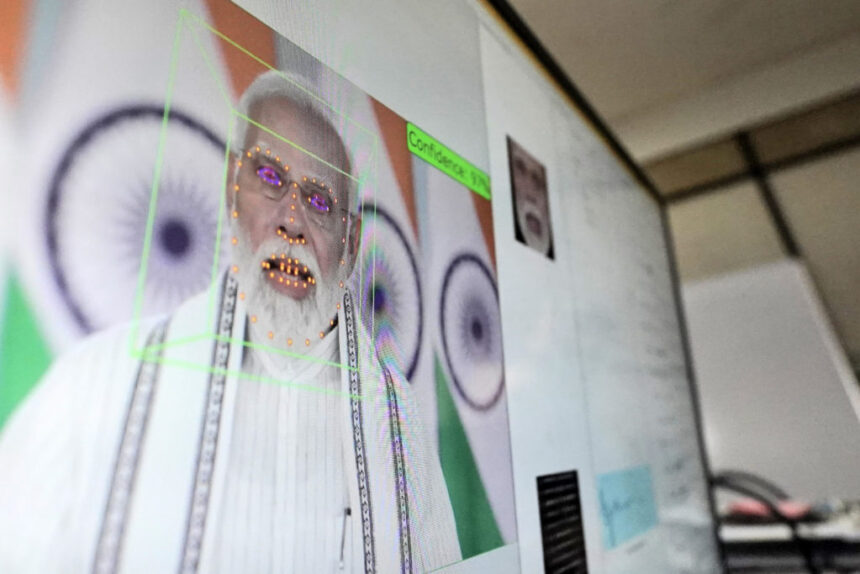
As India concluded the world’s largest election on June 5, 2024, with over 640 million votes counted, observers could assess how the various parties and factions used artificial intelligence technologies – and what lessons that holds for the rest of the world.
The campaigns made extensive use of AI, including deepfake impersonations of candidates, celebrities and dead politicians. By some estimates, millions of Indian voters viewed deepfakes.
But, despite fears of widespread disinformation, for the most part the campaigns, candidates and activists used AI constructively in the election. They used AI for typical political activities, including mudslinging, but primarily to better connect with voters.
Deepfakes without the deception
Political parties in India spent an estimated US$50 million on authorized AI-generated content for targeted communication with their constituencies this election cycle. And it was largely successful.
Indian political strategists have long recognized the influence of personality and emotion on their constituents, and they started using AI to bolster their messaging. Young and upcoming AI companies like The Indian Deepfaker, which started out serving the entertainment industry, quickly responded to this growing demand for AI-generated campaign material.
In January, Muthuvel Karunanidhi, former chief minister of the southern state of Tamil Nadu for two decades, appeared via video at his party’s youth wing conference. He wore his signature yellow scarf, white shirt, dark glasses and had his familiar stance – head slightly bent sideways. But Karunanidhi died in 2018. His party authorized the deepfake.
Deepfake technology brought a dead politician into the Indian election campaign.
In February, the All-India Anna Dravidian Progressive Federation party’s official X account posted an audio clip of Jayaram Jayalalithaa, the iconic superstar of Tamil politics colloquially called “Amma” or “Mother.” Jayalalithaa died in 2016.
Meanwhile, voters received calls from their local representatives to discuss local issues – except the leader on the other end of the phone was an AI impersonation. Bhartiya Janta Party (BJP) workers like Shakti Singh Rathore have been frequenting AI startups to send personalized videos to specific voters about the government benefits they received and asking for their vote over WhatsApp.
Multilingual boost
Deepfakes were not the only manifestation of AI in the Indian elections. Long before the election began, Indian Prime Minister Narendra Modi addressed a tightly packed crowd celebrating links between the state of Tamil Nadu in the south of India and the city of Varanasi in the northern state of Uttar Pradesh. Instructing his audience to put on earphones, Modi proudly announced the launch of his “new AI technology” as his Hindi speech was translated to Tamil in real time.
WATCH: Tech companies unveil rapid AI advancements, sparking wonder and concern
In a country with 22 official languages and almost 780 unofficial recorded languages, the BJP adopted AI tools to make Modi’s personality accessible to voters in regions where Hindi is not easily understood. Since 2022, Modi and his BJP have been using the AI-powered tool Bhashini, embedded in the NaMo mobile app, to translate Modi’s speeches with voiceovers in Telugu, Tamil, Malayalam, Kannada, Odia, Bengali, Marathi and Punjabi.
As part of their demos, some AI companies circulated their own viral versions of Modi’s famous monthly radio show “Mann Ki Baat,” which loosely translates to “From the Heart,” which they voice cloned to regional languages.
Adversarial uses
Indian political parties doubled down on online trolling, using AI to augment their ongoing meme wars. Early in the election season, the Indian National Congress released a short clip to its 6 million followers on Instagram, taking the title track from a new Hindi music album named “Chor” (thief). The video grafted Modi’s digital likeness onto the lead singer and cloned his voice with reworked lyrics critiquing his close ties to Indian business tycoons.
The BJP retaliated with its own video, on its 7-million-follower Instagram account, featuring a supercut of Modi campaigning on the streets, mixed with clips of his supporters but set to unique music. It was an old patriotic Hindi song sung by famous singer Mahendra Kapoor, who passed away in 2008 but was resurrected with AI voice cloning.
Modi himself quote-tweeted an AI-created video of him dancing – a common meme that alters footage of rapper Lil Yachty on stage – commenting “such creativity in peak poll season is truly a delight.”
In some cases, the violent rhetoric in Modi’s campaign that put Muslims at risk and incited violence was conveyed using generative AI tools, but the harm can be traced back to the hateful rhetoric itself and not necessarily the AI tools used to spread it.
The Indian experience
India is an early adopter, and the country’s experiments with AI serve as an illustration of what the rest of the world can expect in future elections. The technology’s ability to produce nonconsensual deepfakes of anyone can make it harder to tell truth from fiction, but its consensual uses are likely to make democracy more accessible.
The Indian election’s embrace of AI that began with entertainment, political meme wars, emotional appeals to people, resurrected politicians and persuasion through personalized phone calls to voters has opened a pathway for the role of AI in participatory democracy.
The surprise outcome of the election, with the BJP’s failure to win its predicted parliamentary majority, and India’s return to a deeply competitive political system especially highlights the possibility for AI to have a positive role in deliberative democracy and representative governance.
Lessons for the world’s democracies
It’s a goal of any political party or candidate in a democracy to have more targeted touch points with their constituents. The Indian elections have shown a unique attempt at using AI for more individualized communication across linguistically and ethnically diverse constituencies, and making their messages more accessible, especially to rural, low-income populations.
AI and the future of participatory democracy could make constituent communication not just personalized but also a dialogue, so voters can share their demands and experiences directly with their representatives – at speed and scale.
India can be an example of taking its recent fluency in AI-assisted party-to-people communications and moving it beyond politics. The government is already using these platforms to provide government services to citizens in their native languages.
If used safely and ethically, this technology could be an opportunity for a new era in representative governance, especially for the needs and experiences of people in rural areas to reach Parliament.
This article is republished from The Conversation under a Creative Commons license. Read the original article.