


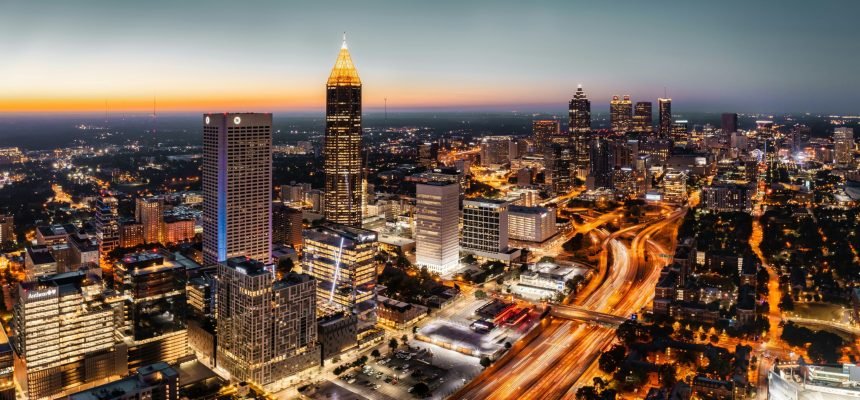
Atlanta doesn’t have a visibility problem. Walk through any conversation about culture, music, or media right now, and this city’s fingerprints are everywhere. What I keep asking, though, is a harder question: is all of that influence actually converting into something that lasts — real businesses, real ownership, real jobs — or is it mostly generating attention for infrastructure that was built somewhere else?
I’ve spent my career on the operating side of that question, not the visibility side. Before I ever touched media or entertainment, I spent 15+ years in corporate talent acquisition and workforce operations, connected to more than 20,000 hires across high-volume recruiting, RPO, and multi-location environments — including work connected to organizations like Delta Air Lines, Walt Disney World, AT&T/Charter, and Comcast/Brighthouse. That background taught me something that doesn’t get talked about enough in conversations about Atlanta’s cultural rise: attention and infrastructure are not the same thing, and only one of them survives past the moment.
Now, as President of RDEnterprise, I oversee an 18-person organization built around exactly that distinction. My position is simple: virality is traffic. It is not infrastructure. Followers live on rented land. A personal brand is not automatically a business. And the public sees the person — but I look for the machine behind the person, because that’s the part that determines whether a moment becomes a company.
Atlanta is in a unique position right now. The city has produced an extraordinary share of the culture that dominates music, entertainment, and increasingly, digital media. But cultural production and economic ownership are two different outcomes, and a city can lead in one without automatically building the other. The real question for Atlanta isn’t whether it can produce influence — it clearly can, at a scale few other cities match. The question is whether that influence is being converted into local jobs, local ownership stakes, and local operating infrastructure, or whether it’s being extracted by platforms, labels, and companies headquartered somewhere else.
I don’t think this is a cynical observation. I think it’s a solvable one. Operators — not just entrepreneurs — are the ones who actually build durable businesses. There’s a tendency in conversations about Black economic power, Atlanta’s included, to treat entrepreneurship as the whole solution: start a business, become your own boss, build your own brand. That’s part of it, but it’s not complete. A healthy economy needs employers, employees, entrepreneurs, and financially stable consumers working together — not just more people trying to found something. Some of the most important economic infrastructure in this city will come from people who build organizations that employ others, not just from people who build personal brands that employ no one.
This is where my own career path has shaped how I see Atlanta’s moment. The operating discipline I learned in corporate talent acquisition — how to scale a team, how to build systems that don’t depend on any one person showing up, how to turn a surge of demand into a sustainable structure — is exactly what’s needed right now in the spaces where Atlanta’s cultural capital is strongest. Media companies, creator-economy businesses, entertainment ventures: all of them eventually hit the same wall. They grow fast on attention, and then they either build the infrastructure to survive without that attention spiking every week, or they don’t.
I see this up close constantly. Talented people, talented teams, real cultural relevance — and no operating backbone underneath it. No systems for revenue beyond the obvious deal. No team structure that can function if the founder steps back for two weeks. No ownership stake being built for the people doing the actual work. That’s not a creativity problem. It’s an infrastructure problem, and it’s the single biggest risk to Atlanta’s cultural capital turning into generational wealth instead of generational visibility.
What would it look like to fix this? It starts with treating operations as seriously as creative vision — hiring for systems and structure, not just for talent and relationships. Too often, the first hires in a fast-growing creative business are more content creators, more managers of relationships, more people focused on the next deal. The hire that actually protects the business long-term — someone who can build payroll systems, financial controls, a real org chart, a succession plan — tends to come late, if it comes at all. By the time a company realizes it needs that person, it’s often already lost revenue or relationships it couldn’t formally document or protect.
It also means building compensation and ownership models that extend beyond the founder, so the people building a company’s value actually hold a piece of it. A business where only one person owns anything isn’t really built to outlast that person’s attention — it’s built to outlast their burnout, at best. And it means being honest about the difference between a moment and a business: a moment gets you attention; a business is what survives the moment ending, the trend shifting, or the founder needing to step back.
Atlanta has already proven it can lead culturally at a national scale. The next test — and I think it’s the more important one — is whether this city can convert that cultural leadership into durable, local, ownable infrastructure before the attention moves somewhere else. I believe it can. But it will take operators, not just visibility, to get there.