



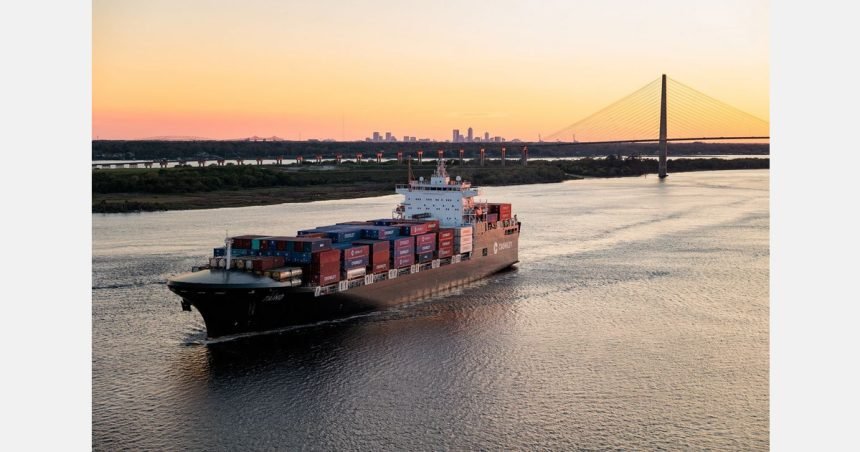
The Port of Jacksonville in Florida is looking to expand its role in the Latin American fresh produce trade, building on established trade flows from Central America and growing business from South America. In fiscal year 2026, the value of refrigerated fruit and nut imports from Latin America and the Caribbean through Jacksonville reached $26.87 million, with Guatemala, Costa Rica, and Colombia among the leading contributors.
© Port of Jacksonville“Exporters are looking to diversify their logistics, and now they are trying to find other ways to get into the U.S. market,” says Juan Pablo Acosta Magaña, director of cargo sales for Latin America at JAXPORT. Historically, many exporters serving the Florida market have routed their products through Miami and Port Everglades. However, according to Acosta Magaña, Jacksonville’s geographical location offers opportunities to reduce inland transportation costs, particularly for products destined for Central Florida and the Southeastern U.S.
Guatemala and Colombia drive growth
Guatemala was the largest Central American contributor to Jacksonville’s refrigerated fruit and nut imports in fiscal year 2026, with shipments valued at $10.4 million, up 20.28 percent from the previous fiscal year. Bananas and plantains accounted for much of that business. Costa Rica followed with $7.96 million in imports, including $4.83 million in pineapples and $3.1 million in bananas and plantains.
Growth from Central America has been supported by ocean carrier Crowley, which offers a weekly service from Moín, Costa Rica, to Jacksonville, with a transit time of approximately five days. “They improved the service by having reefer containers available for their exporters. So, this is helping to make it flow smoothly, and that’s why the volume has been growing,” says Acosta Magaña.
Meanwhile, Colombia emerged as Jacksonville’s largest South American contributor, with refrigerated fruit and nut imports valued at $3.75 million, compared to approximately $682,000 the previous fiscal year. Organic mangoes accounted for $2.81 million of that business.
 © Port of Jacksonville
Reducing inland transportation costs
While ocean freight rates to Florida’s major ports are often comparable under annual shipping contracts, the cost and time involved in moving products inland can differ considerably. “When you have your cargo going to Miami and you need to send a truck to Orlando, it takes five hours sometimes. And if you send that truck from Jacksonville, it’s just two hours,” says Acosta Magaña.
More than 98 million consumers are within a one-day truck drive of Jacksonville, with access to three major interstate highways and approximately 40 trains serving the Jacksonville area daily. The port also offers more than 1,600 reefer plugs, while the region has 143 million cubic feet of cold storage capacity. Growth in refrigerated cargo has encouraged local logistics providers to invest in specialized facilities within two miles of the port, offering transloading, inspections, and storage services. According to Acosta Magaña, some of the newer facilities are operating at just 40 percent of their capacity.
 © Port of Jacksonville
Opportunities to expand South American trade
Beyond its established banana, pineapple, and mango business, Jacksonville sees opportunities to attract additional commodities, including avocados from Peru, table grapes from Chile, and potentially dragon fruit from Ecuador.
The Gemini Cooperation between Maersk and Hapag-Lloyd provides connectivity from the west coast of South America through Cartagena, Colombia. Containers are transferred onto smaller vessels that reach Jacksonville in approximately four days, with a total transit time of around 20 days from Chile. While the service currently handles frozen products, including seafood and fruit, it offers opportunities to develop fresh produce business.
To support further growth, Acosta Magaña is meeting with exporters, chambers of commerce, and government representatives across Latin America. Part of the strategy involves organizing trade missions to Jacksonville, where exporters can meet directly with ocean carriers, cold storage operators, and potential buyers.
“At the end of the day, the port is not the final destination, but the market is,” he concludes.
 For more information:
Juan Pablo Acosta Magaña / Carlos Trelles
Port of Jacksonville
Tel: +1 (305) 519-8070
[email protected]
https://www.jaxport.com/