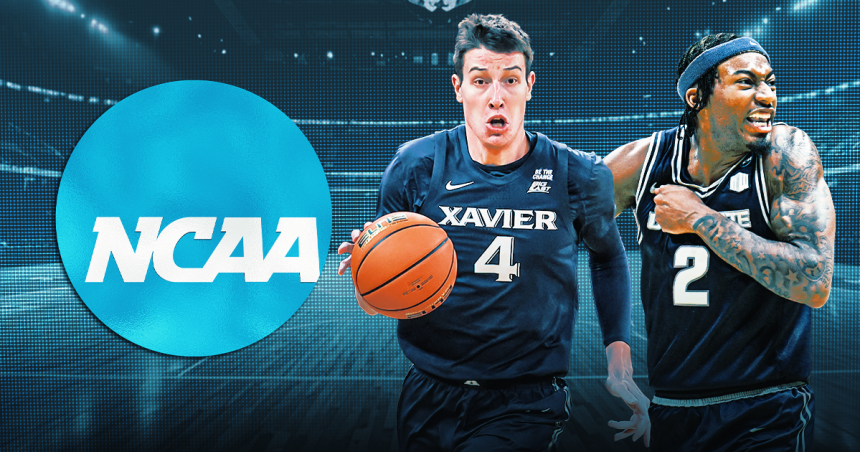
The NCAA has picked up a courtroom victory Monday in a lawsuit over its age-based eligibility model. The Ohio Court of Appeals granted a motion to stay an injunction in the Borovicanin v. NCAA suit, according to court documents.
A group of 15 athletes were part of the lawsuit, filed in late June in Ohio, including Xavier’s Filip Borovicanin and Cincinnati’s MJ Collins. They were seeking a fifth year of eligibility after the NCAA announced a five-year, age-based model that will take effect. The rule will not apply retroactively, meaning members of the Class of 2022 would not get an extra year.
$19.99 gets you a FULL year of On3 | Rivals national coverage
As a result, a number of lawsuits came in. It’s important to note that in light of the Ohio ruling, the athletes in the Borovicanin case are still eligible under the Wisne ruling in Colorado. That suit is also awaiting a decision on an motion to stay the appeal. Still, Monday’s decision marks a win for the NCAA.
“After considering the factors et forth … the Court finds that the factors weigh in favor of granting a stay,” the ruling read, via Boise State professor Sam Ehrlich. “The appellants have presented a substantial case on the merits and have demonstrated irreparable harm. While the appellees will also suffer harm, the public interest considerations do not decisively favor either party.”
Monday evening, the NCAA cited the court’s decision in its defense of the age-based eligibility rules. In a statement, the governing body called it a win for schools who “are playing by the rules” amid the implementation.
“The NCAA argued and the Ohio Court of Appeals agreed the injunction harms the thousands of college athletes and member schools across Division I who are playing by the rules,” the statement read. “The new model is clear: It ensures college sports are played by college students while allowing opportunities for future generations of students to access the life-changing benefits of college sports participation.
“We appreciate the court’s recognition of the harm caused by the injunction and the substantial arguments we have presented in favor of reversal, and we look forward to fully arguing the merits of the case in the future.”
SUBSCRIBE to the On3 NIL and Sports Business Newsletter
Judge Christopher Wagner granted the injunction on July 9, paving the way for Borovicanin and Collins, as well as the others, to become eligible for 2026-27. Collins played last season at Utah State for new Cincinnati coach Jerrod Calhoun and announced his commitment to the Bearcats after Wagner’s order.
The other players listed in the lawsuit include Malik Messina-Moore, Kolby King, Javon Bennett, Chevalier Emery Jr., Jalen Quinn, Savannah White, Donovan Brown, Christian Henry, Ziare Wells, Cristian Carroll, Shawn Phillips Jr., Caden Powell and Josh Reed.
Shortly after that decision, the NCAA released a strong statement and defended its age-based eligibility rules. Additionally, the governing body said it would fight for a stay of the injunction. After Wagner denied that request, the case went before the Ohio Court of Appeals, which made Monday’s ruling.
“The court’s decision today is wrong, and we will immediately seek all avenues for reversal, including a stay of the court’s order pending appeal,” the NCAA wrote in a statement released on Twitter. “The court disregarded over a century of precedent and substituted its own judgment, on a limited factual record, for the collective expertise of the nation’s leading higher education institutions.
“The court also based its decision on assertions by plaintiffs’ counsel about the NCAA and its Bylaws that bear no resemblance to reality. The effect of this ruling will be to take away valuable participation opportunities from student-athletes who are eligible to compete, in favor of those who have already received exactly the number of seasons of competition they expected.”
In the meantime, all members of the Class of 2022 – including plaintiffs in the Borovicanin case – are currently eligible for the 2026-27 school year. The NCAA is awaiting a decision from the Tenth Circuit in its appeal of that decision, issued in late July by Judge Charlotte Sweeney.