Monday night, after hours of debate on amendments, the Protect College Sports Act advanced out of the U.S. Senate. It now heads to the House of Representatives and, if it advances once more, would head to President Donald Trump’s desk.
The Protect College Sports Act had support from all power conferences, including the Big Ten and SEC, which announced in late July that they were on board with the bipartisan legislation. The NCAA and president Charlie Baker have also been strong supporters of the bill.
$19.99 gets you a FULL year of On3 | Rivals national coverage
Monday’s vote, which was by a 77-22 margin, was a landmark moment for college athletics as a piece of legislation aimed at settling the landscape advanced out of one branch of Congress. Afterward, Baker released a statement acknowledging what it means for the NCAA’s efforts on Capitol Hill.
“Student-athletes from across the country and all three NCAA Divisions worked hard to get on this legislation moving and thanks to their advocacy, the bill just received a massive, bipartisan vote in the Senate,” the statement read. “The NCAA thanks the many senators who sponsored this bill – including Senators Cruz, Cantwell, Schmitt and Coons – as well as the many other senators who voted for the bill, for their bipartisan effort to protect this uniquely American tradition of college sports in the decades to come.
SUBSCRIBE to the On3 NIL and Sports Business Newsletter
“Now the bill moves to the U.S. House of Representatives and there is much work left to do to ensure student-athlete benefits are codified into federal law and future generations of young people can access those benefits and use college sports as the launching point for their careers.”
The Protect College Sports Act would grant the NCAA an antitrust exemption to limit athletes to one transfer without penalty, standardize the new five-year, age-based eligibility policy, increase the revenue-sharing cap to nearly $50, put more enforcement in place around the rev-share cap, create an agent registry with a maximum 5% fee and allow schools to pool together their media rights, among other things.
Additionally, the PCSA would codify the landmark House settlement, which brought the revenue-sharing era to college sports. It would include a rev-share cap of roughly $48 million, which is more than double the current limit of $21.3 million.
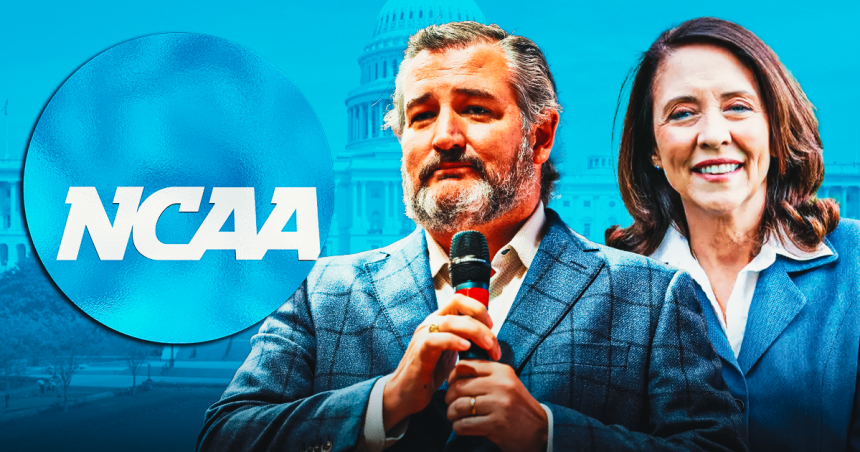
Sens. Ted Cruz (R-Texas) and Maria Cantwell (D-Wash.) introduced the bill in late May, and Eric Schmitt (R-Mo.) and Chris Coons (D-Del) later joined as co-sponsors. While the Protect College Sports Act has passed the Senate, the next step is the House, which is not due back until after the midterm elections.
All the while, though, Yahoo! Sports’ Ross Dellenger reported conference executives have been discussing a “Plan B” with the bill on track for the House. It would include elements of the Protect College Sports Act, as well as the idea of self-governance.