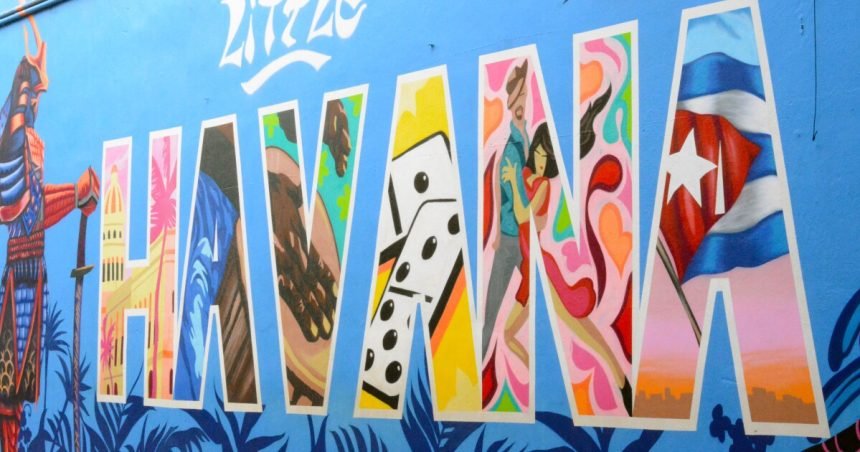
Southwest 8th Street, or as people in Little Havana call it: ‘Calle Ocho,’ is a cultural landmark. Every year it attracts visitors from around the globe looking to sample Miami’s Cuban-American culture firsthand — drinking sweet cafecito for the first time, or dancing salsa outside the historic Tower Theater.
This December, the neighborhood got its first new city commissioner in almost a decade: Rolando Escalona — a first time politician.
He moved to Miami from Cuba and has lived in the city’s District 3 for the past 11 years. District 3 includes the neighborhoods Little Havana, Shenandoah and parts of Brickell.
In his first few months in office, Escalona has launched a campaign to beautify Calle Ocho by purchasing a fleet of trucks to pick up garbage around the area. As he walks through the district, he points out abandoned shopping carts and loose trash cans that don’t have city branding. He says this is all part of his mission to bring back pride in the neighborhood.
“I’m from Havana, Cuba, and to me, to represent now this district that has little Havana, it makes me very proud,” Escalona told WLRN in an interview on Calle Ocho. “It makes me proud of the changes that we are going to bring to our community to make sure that our community is also being heard. Because for a very long time, I believe we have been neglected.”
READ MORE: A decade later, plan to slow traffic and improve walkability on Calle Ocho remains in limbo
From 2017 to 2025, Miami’s District 3 City Commission seat was held by ex-Commissioner Joe Carollo.
While Escalona did not directly address his predecessor by name during the interview, he made reference to certain policy decisions Carollo made that he intends to reverse. One of the first changes was to hand the management of the historic Tower Theater back to Miami Dade College.
Pedro Portal
/
Miami Herald
The college previously managed the theater under contract with the city for decades, showing a variety of Spanish-language films and hosting annual film festivals. Carollo pushed to rescind the city’s contract with Miami Dade College in 2022 and have the city manage the property. Critics said that, under the city’s supervision, the property was neglected and had little cultural programming. City officials rebutted that the college left the theater in poor condition upon their exit.
Now, Escalona said the city is in negotiations with the college to have it take the reins of the Tower Theater again but with more community input and benefits for Little Havana residents.
In another reversal of previous policy, Escalona has worked to return the “Viernes Culturales” or “Cultural Fridays” event to its historic time and venue.
Viernes Culturales began in May of 2000 as a musical and dance event on Calle Ocho to bring in visitors and residents to celebrate Miami’s culture. Over the years it evolved to include art exhibits, poetry and film, but was always held on the last Friday of each month at Domino Park.
In 2018, however, Commissioner Carollo pushed out the monthly event by holding his own programming at Domino Park called “Little Havana Fridays” on the last Friday of the month — Carollo had just begun a yearslong feud with William Fuller, one of the leaders of the nonprofit that runs Viernes Culturales, for supporting the former’s political rival in the 2017 election. (Fuller sued Carollo in federal court for violation of his First Amendment rights and would win in 2023.)
After he was sworn in last December, Escalona threw his support behind Viernes Culturales and allowed the nonprofit to hold its monthly events at its original place and time in Domino Park as of January.
“Last year we proudly celebrated our 25th Anniversary at the Historic Tower Hotel, so returning to our original date and location truly marks the beginning of an exciting new chapter for Viernes Culturales,” said nonprofit Chairwoman Suzanne Batlle in a written statement.
Looking toward the future, Escalona is planning several programs primarily focused on beautification and maintaining Little Havana’s aesthetic quality. His ideas include a program to help homeowners pay for façade repairs on their homes, an educational campaign about littering and illegal dumping and a zoning overlay to ensure new developments in the neighborhood match the architectural style of surrounding buildings.

“ What happens is that right now what we see is you see a beautiful 1970s building, and then you see a brand new house next to it that is a white cube. We don’t want that. We want to preserve what we have,” he said.
At a meeting on Feb. 12, City Commissioners passed a resolution sponsored by Escalona to begin the process of making a Calle Ocho Business Improvement District (BID).
BIDs supplement local government services within designated areas by providing additional security personnel, garbage pickups, beautification projects and the funding of initiatives to drive more visitors to their districts. These BIDs are funded through additional special assessment taxes approved by local governments. Their boards are often comprised of local business leaders in the area.
Miami has a number of Business Improvement Districts already, including the Wynwood BID and Coconut Grove BID.
Escalona claims business owners on the historic corridor approached him about creating a BID to ensure tax dollars generated on Calle Ocho stay in Calle Ocho to help revitalize the area.
“ We have to go back to being proud of living where you live. I’m gonna bring back that pride that people should have of living not only in Little Havana, but in District 3 and also in the city of Miami,” Escalona said.
The city administration is preparing the necessary documentation to form a Calle Ocho BID, and the resolution will come up for an additional commission vote once that process is complete.