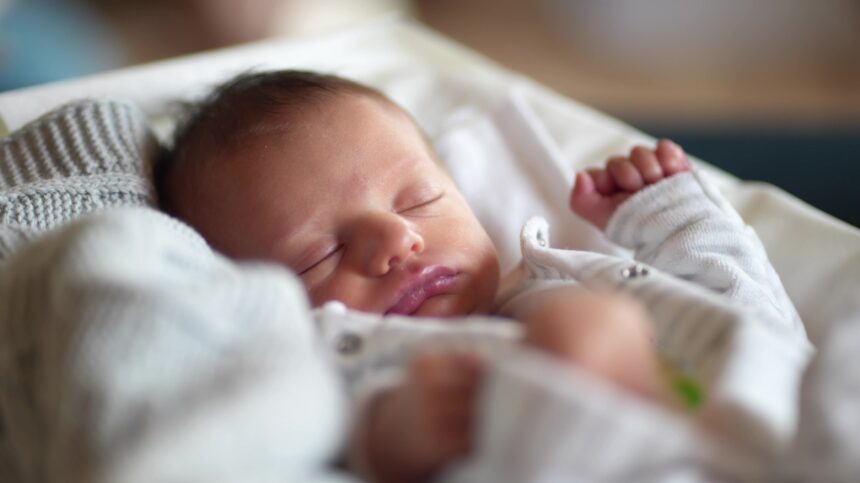
Advanced technology now enables researchers to measure neonatal sleep patterns, sparking renewed interest in studying how sleep affects brain development. In a recent study published in Pediatric Research, researchers reviewed the role of sleep in brain development before and after birth.
Study: Sleep as a driver of pre- and postnatal brain development. Image Credit: maxim ibragimov / Shutterstock.com
Infant sleep patterns
During the first few days of life, healthy newborns are mostly asleep, with about 50% of this sleep considered active sleep (AS). By one month of age, total sleep time comprises 12-15 hours each day, with AS still comprising 50-80% of the infant sleep cycle.
Between three and five months of age, AS and quiet sleep (QS) are gradually replaced by rapid eye movement (REM) and non-REM sleep, respectively. By one year of age, the percentage of AS gradually decreases to less than 50% and eventually transitions to QS.
These changes in sleep behaviors can be observed in cortical activity measured through electroencephalogram (EEG), with sleep patterns appearing more distinct as infants age. For example, between three and five months of age, sleep spindles can be observed during non-REM/QS, whereas delta bands of 0.5-4.0 Hz and sleep spindles between 7-14 Hz can be observed between five and eight months of age during non-REM stages of sleep.
The role of sleep architecture in fetal and neonatal brain development
Rodent models have demonstrated that the spontaneous activity associated with AS is essential for cortical organization and the development of thalamocortical connectivity. Likewise, spontaneous activity transients (SATs), which also establish thalamocortical sensory pathways and cortico-cortical connections, have been observed in human EEGs in pre-term infants between 24 and 33 weeks’ gestation.
Both spontaneous and extrinsic sensory input trigger SATs, with spontaneous sensory input, initially produced between 10 and 12 weeks post-menstrual age (PMA) and upregulated from 15-16 weeks PMA. This sensory input manifests as twitches, which have been shown to provide sensory stimulation needed for the development of cortical body maps in the somatosensory cortex.
In rats, brain maturation matches term newborns by 10 days after birth, with SATs observed in early sleep and twitches predominant in the first two weeks of life. These twitches, originating in the red nucleus, follow neural pathways to the spinal cord, cerebellum, thalamus, and cortex, supporting somatosensory and motor development.
These in vivo observations have been confirmed in human studies, wherein the quality and quantity of endogenously generated movements in fetuses and pre-term and term infants have been associated with behavioral and neurological development. Moreover, higher SATs often correlate larger brain volumes in human pre-term infants.
How sleep architecture changes throughout early neurodevelopment
The role of sleep adapts to changing developmental needs during different stages of life. As a result, sleep architecture, including the quantity and pattern of twitching in fetuses, also changes.
For example, between 33- and 34-weeks PMA, SATs are primarily observed during AS. After that, the number of SATs during QS increases, while QS also increases to support efficient network formation.
Early neurodevelopment is also associated with different levels of gamma-aminobutyric acid (GABA), which is the primary inhibitory neurotransmitter within the central nervous system (CNS). During this period, a ‘GABA shift’ occurs, during which the activation of GABA receptors in early development leads to depolarization.
The excitation of neurons following the GABA shift is crucial for various prenatal neurodevelopmental processes, including spontaneous activity, synapse formation, and pre-myelination. Thereafter, GABA switches to a hyperpolarizing effect, during which the neurotransmitter facilitates inhibitory activities needed to attune the fetal brain for specific requirements after birth.
Sleep patterns appear to be particularly important before the GABA shift, whereas waking activity and exogenous sensory stimulation are more important after the GABA shift. Thus, pre-term infants born before the GABA shift must not be exposed to excessive sensory stimulation during wake hours, as these activities could disrupt ongoing neurodevelopmental processes and the development of crucial brain structures.
How does sleep affect neonatal illness?
Pre-term birth disrupts sleep patterns, thus impacting neurodevelopment. Certain factors like immature nervous system exposure and comorbidities alter sleep architecture, thereby reducing QS and increasing AS.
Furthermore, neurological insults like hypoxic-ischemic encephalopathy can worsen sleep-wake cycles, similarly leading to less QS and more AS. Likewise, health conditions like cerebral palsy increase asymmetries in sleep spindle activity and overall sleep disturbances.
Neurodiverse disorders like autism spectrum disorder also contribute to sleep issues, with unclear causal relationships. Respiratory problems like bronchopulmonary dysplasia compound sleep quality issues through obstructive sleep apnea, which can affect both short- and long-term neurodevelopment.
Thus, addressing these complex interactions is crucial for developing effective early interventions for high-risk infants.
Current challenges and future research
Improving sleep quality in pre-term infants is crucial for neurodevelopmental outcomes. However, whether sleep directly influences development or reflects neurodevelopmental status remains unclear. Thus, randomized controlled trials are needed to assess the neuroprotective effects of improved sleep quality.
Technological advances have enabled the continuous and unobtrusive monitoring of sleep stages. Nevertheless, additional research is needed to identify the optimal modalities for reliable and valid sleep assessment.
Defining ‘good quality sleep’ involves balancing the neurobiological needs of the developing brain with environmental factors. Therefore, understanding how sensory stimulation impacts sleep, from acoustic stimuli to music therapy, is critical. Personalizing sleep hygiene interventions based on developmental stages, underlying conditions, and family dynamics in both hospital and home settings is essential.
Journal reference:
- De Groot, E. R., Dudink, J., & Austin, T. (2024). Sleep as a driver of pre- and postnatal brain development. Pediatric Research. doi:10.1038/s41390-024-03371-5