Photo: Lev Radin/Shutterstock
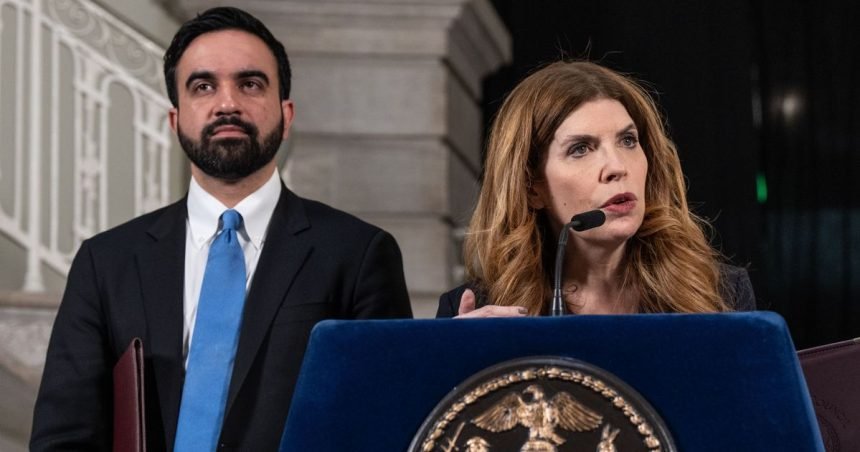
The smartest money our city will spend this year is a $53 million line item, buried in the $126.8 billion municipal budget, that will deposit $1,000 into individual, tax-protected 529 college savings accounts for every kindergartener in New York. Credit for the program goes to City Council Speaker Julie Menin, who read about a college savings plan in San Francisco in 2014, visited California to see it up close, and went on to launch NYC Kids Rise, a nonprofit that started with college accounts for 10,000 kids in Queens and now operates citywide.
In addition to the seed money from city government, Kids Rise accounts allow parents, relatives, and others to contribute to a child’s education fund, which is invested in low-risk stock index funds. The money becomes available at age 18, provided the child graduates from a city high school, and is available to kids regardless of immigration status.
“One thousand dollars for a kindergartner could be, on graduation, around $10,000, depending on contributions. But what’s also exciting is that funding can be used for vocational school, it can be used for a two-year community college, it can be used for a four-year college,” Menin told me. “A low-income child who has a college savings account is three times more likely to go to college than a young person that doesn’t have such an account, and four times more likely to graduate once they’re in college. Studies show that those who go to ongoing education earn more than 60 percent more in wages in their lifetime. That makes this program one of the single best ways to address income inequality in our city.”
Amen to that, Ms. Menin. In Long Island City, local businesses have chipped in $57,000 to add to the accounts of neighborhood kids, and a power company has added $25,000 for youngsters in the Queensbridge and Ravenswood public-housing developments.
New York now has an opportunity to replace foolish fearmongering about Mayor Zohran Mamdani’s supposed socialist takeover of the economy with detailed discussion of programs that actually help working-class communities. And if Menin’s political ambition makes her seem like a market-driven capitalist contrast to our socialist mayor, all the better: Let the competition begin.
We don’t know yet whether Julie Menin plans to run for mayor, but in the decades since the position was created in 1989, every Council Speaker before Menin has launched a bid for higher office. (Peter Vallone, Gifford Miller, Christine Quinn, Corey Johnson, and Adrienne Adams all ran for mayor but didn’t make it; ex-Speaker Melissa Mark-Viverito ran for public advocate and for Congress and lost in both attempts.) History suggests that the political odds aren’t necessarily in Menin’s favor, but putting money into the college fund of thousands of kids is a pretty savvy way to marry good policy with good politics and, perhaps, break the Speaker’s curse.
The logic of Kids Rise is similar to that of the White House’s eponymous Trump Accounts, which give an initial $1,000 to college funds for U.S. citizens under age 18 and allows corporations to donate up to $2,500 per account for the children of employees and book the money as a tax-deductible business expense. An estimated 7 million accounts have opened so far.
One crucial difference, according to Menin, is that families must opt into Trump Accounts, while every child in New York (including noncitizens) automatically gets enrolled in NYC Kids Rise, yielding benefits beyond the financial boost. “The research shows that if no one in the family went to college, and then suddenly this child has a college savings account starting in kindergarten, each and every year, they’re saying, ‘We believe in you. We believe you’re going to go to college. We’re going to make this happen for you,’ and that aspiration becomes a reality,” Menin said. “The program also teaches about financial empowerment, financial literacy, and wealth building.”
As a lesson in the powerful math of compound interest, NYC Kids Rise resembles a famous act of creative capitalism by one of the nation’s founders, Ben Franklin, whose 1789 will allocated two £1,000 bequests (each about $155,000 in today’s money) to the cities of Philadelphia and Boston, with instructions to let the money grow and then extend loans, at 5 percent interest, to help married, skilled tradesmen under the age of 25 get started in business.
The plan worked like a charm for more than 200 years, supplying start-up loans to a long stream of carpenters, tailors, printers, bakers, and other entrepreneurs, some of whom went on to serve in public office. “Liberty Browne, a Philadelphia silversmith who received a $319 loan in 1800, was elected president of the Select Council of the City of Philadelphia in 1813,” according to Historynet. “Charles Wells, a bricklayer who received a $100 loan in 1808, was elected mayor of Boston in 1831.” Over the next century, money in the ever-growing fund ended up paying for public-works projects in both cities until the 1990s, with the final millions used to launch Franklin Cummings Tech, a Boston-based college, and the Franklin Institute, a Philadelphia museum.
Here in New York, a comparably inspiring history is being made by community development credit unions, a string of democratically run institutions that provide savings and loans to working families at better rates than the banks. Forty years ago, I covered the opening of the Lower East Side People’s Federal Credit Union at a shuttered bank branch at the corner of 3rd Street and Avenue B, in a neighborhood filled with boarded-up buildings and needy families.
The ribbon was cut by none other than David Dinkins, the Manhattan borough president at the time, and the institution was so bare-bones that it had no computer: Accounts were tediously recorded in a written ledger. But slow service was better than none at all: A fed-up community demanded banking, and the credit union inspired the creation of similar neighborhood institutions around the city, including one that I co-founded in Bedford-Stuyvesant and Neighborhood Trust Federal Credit Union, whose founder, Mark Levine, is now city comptroller.
From humble beginnings, the Lower East Side credit union has grown to more than $90 million in assets and extended more than $150 million in loans to low-income families. The organization now offers a full suite of services, including auto loans, ATM cards, and small-business loans, and has expanded into Harlem, the South Bronx, and Staten Island.
The credit union is a primary source of financing for limited-equity co-ops, a type of affordable housing in which tenants own their units but aren’t allowed to sell or flip them for exorbitant profits. My good friend Clifford Rosenthal, who wrote the business plan for the credit union long ago and lined up its initial funding, is currently writing a history of its success under the title Miracle on East 3rd Street.
“We were not brilliant and we were not stupid and we were not purely lucky, but we were certainly fortunate that the stars were aligned,” he told me, emphasizing that credit unions, land trusts, mutual aid projects, food co-ops, community gardens, and similar grassroots organizations can offer the kind of long-term benefits that Ben Franklin envisioned centuries ago.
“For community wealth builders, this is our time, pure and simple,” he says, and Mamdani, Menin, and Levine all seem to agree. If the politicians end up competing to see who can get the most money into the pockets of working families that need it, may the best ideas win.