SALT LAKE CITY — Utah Inland Port Authority leaders agreed last week to send $500,000 toward a project to relocate a heavily used railroad yard in Salt Lake City, which is expected to ease some of the city’s east-west transportation issues.
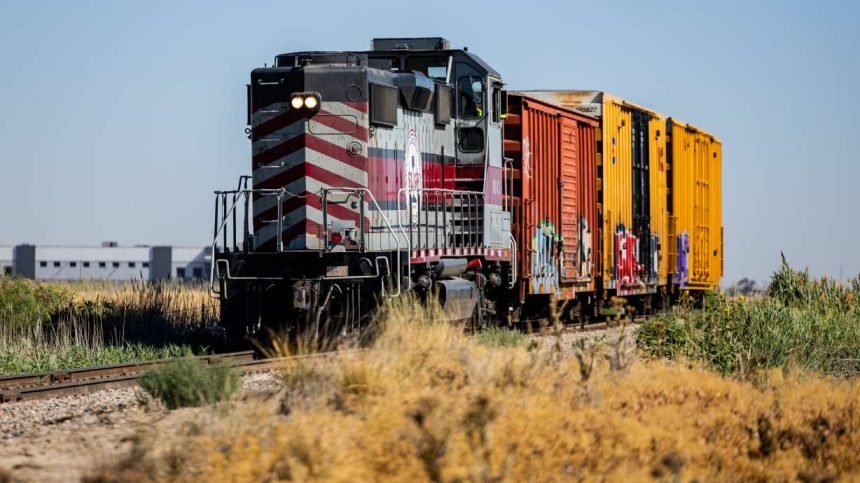
The authority’s board approved the funding on Thursday, which will help relocate Salt Lake Garfield and Western Railway’s East Yard, 1200 W. North Temple, in the Poplar Grove neighborhood, to a new location south of Salt Lake City International Airport in the Northwest Quadrant.
Patriot Rail, which owns the railway, anticipates that its new facility will open later this year. The relocation is expected to reduce the number of blocked crossings near the current facility, as well as the duration of blocked crossings.
Utah previously received $13.65 million through a U.S. Department of Transportation grant in 2018, while the vast majority of the rest of the project, estimated to cost more than $31 million, will come from Patriot Rail. The $500,000 from the Utah Inland Port Authority will help ensure that the yard relocation and grade crossing congestion mitigation are completed, according to the agency.
“(This) solves a real transportation challenge for west side residents while strengthening the freight network that serves Utah businesses. It also reflects what we heard through the Northwest Quadrant Baseline Study and Preferred Scenarios: Investments in this area need to improve mobility, air quality, safety and quality of life alongside economic development,” said Abby Osborne, the board’s chair, after the vote.
Salt Lake Garfield and Western Railway has operated at the yard since it was founded in the 1890s, but Salt Lake City’s growth over the past century has created a growing number of conflicts between trains and residents.
Most of that is due to its size. All of Patriot Rail’s interchange activity within its Utah system is centered around the yard today, said Katie Winters, senior account manager of business development for the Florida-based company’s west region. It’s where railroad cars are transferred among different railroad companies.
“Every car that comes in or out of (Salt Lake Garfield and Western) interchanges is in that yard,” she told the board during a presentation, adding that it impacts crossings between 800 West and 1000 West near South Temple. “(It’s) very active with the carloads we move today.”
The largest problem is that it can only hold approximately 60 cars, which are spread out across five tracks, she explained. Railroad companies making transfers may have to make multiple trips to replace railroad cars in the yard, leading to more frequent congestion blocking these crossings.
Salt Lake Garfield and Western Railway’s new facility will feature two 8,000-foot tracks and “two classification” tracks, neither of which will be by crossings, which will resolve many of the blockages between 800 West and 1000 West. The company anticipates the move will also help it be more efficient in railroad car transfers.
The decision to relocate the facility was celebrated by city leaders.
Salt Lake City is still in the middle of a study to improve transportation connections between its east and west sides, which are divided by freeways and railroads. Some of the worst railroad blockages ranged from 23 minutes to 14 hours, city engineers reported last year.
“This project is a tangible step toward addressing those concerns,” said Salt Lake City Mayor Erin Mendenhall. “By reducing rail conflicts and vehicle idling, we can help families move more safely and reliably through their neighborhoods while continuing to work with (the port authority) and industry partners on more responsible growth in the Northwest Quadrant.”
The port authority’s vote came two days after the Salt Lake City Council agreed to indefinitely close a segment of 200 South in Poplar Grove to support a new federal quiet zone, which would also reduce the number of train horns on the west side, another longstanding concern in the area.
It’s unclear yet when that zone might be established.
The Key Takeaways for this article were generated with the assistance of large language models and reviewed by our editorial team. The article, itself, is solely human-written.