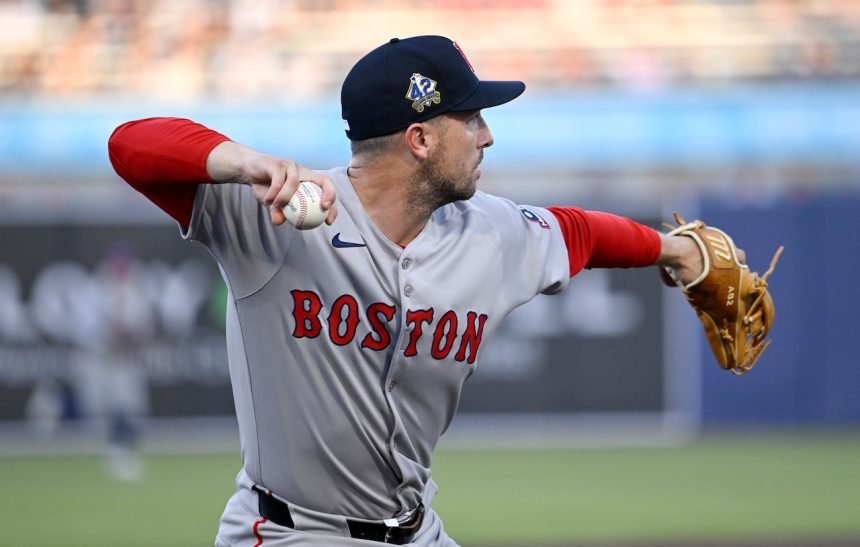
The Red Sox have yet to sign a free agent this winter, but there are possibilities including Alex Bregman and Bo Bichette.
Both remain free agents as 2026 approaches and have been linked to the Red Sox in the offseason. The New York Post’s Jon Heyman revealed on a recent Bleacher Report live stream that Bregman is still Boston’s top target.
And while Bichette remains an option, he’s more of a Plan B.
“Boston is a possibility for Bichette as well, but he seems like a fallback to them right now,” Heyman said. “Bregman is probably their top choice. They’ve done a lot of (Ketel) Marte talking, but certainly, Boston is a possibility for Bichette as well.”
The 27-year-old Bichette fits what the Red Sox are looking for: A right-handed bat who can play shortstop, second base and third base. Boston has a shortstop in Trevor Story, but it’s unclear if Bregman will return to the Red Sox. Should Bregman leave, Marcelo Mayer is an option to take over third. He can also play second.
Bichette batted .311 with 18 home runs and 94 RBI in 139 games for Toronto.
Bregman, unsurprisingly, has been connected to several teams including the Chicago Cubs, Arizona Diamondbacks and Toronto Blue Jays.
MassLive’s Chris Cotillo reported that Boston remains engaged with the third baseman about a return in 2026, with club officials remaining hopeful — but not necessarily either optimistic or pessimistic — at this juncture.
Bregman was a strong fit for the Red Sox in 2025, providing veteran leadership and offensive pop to the lineup. He opted out of the final two years of his contract in November to explore the free agent market.
Bregman finished the 2025 season with a .273 batting average with 18 home runs and 62 RBIs — numbers that likely would have been inflated had he not been sidelined with a quad injury.
Bregman has expressed desire for his next contract to bring him to the end — or at least close to — the end of his career. Whether the Red Sox want to commit term and money to the 31-year-old will depend on their willingness to spend, potentially past the second CBT (competitive balance tax) of $264 million.