A state court ruling had given Democrats a chance to flip a Staten Island-based House seat held by a Republican.

Trump prepares for US midterms campaign, touts economic record
President Donald Trump campaigns for his party in the November midterm elections with a battle for control of Congress on the line this year.
Fox – Seattle
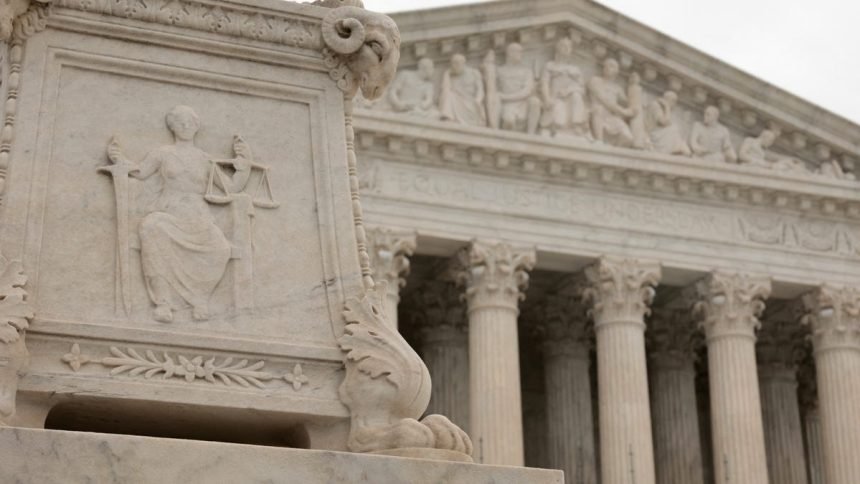
WASHINGTON − The Supreme Court on March 2 agreed to a Republican request to intervene in the battle over the boundaries of a New York congressional district, blocking a ruling that would have given Democrats a chance to flip the seat.
The court’s three liberal justices dissented from the unsigned and brief decision.
Rep. Nicole Malliotakis, R-N.Y., and others had asked the high court to let New York use its existing congressional map for this fall’s election, even though a state court said the map unlawfully diluted the voting power of Black and Latino residents.
The emergency request was backed by the Trump administration, which has pushed red states to rejigger maps to improve Republicans’ chances of keeping control of Congress and has opposed blue states’ efforts to counter punch.
The New York dispute is over the congressional district that includes all of Staten Island and parts of southern Brooklyn. It’s the only district in New York City held by a Republican.
In January, a judge agreed with a group of voters that Black and Latino voters weren’t given a sufficient chance to elect their preferred candidate, a violation of the state’s constitution.
The Trump administration told the Supreme Court the New York judge had “ordered an open and unabashed racial gerrymander, directing the State to replace a district where the candidate backed by white voters usually wins with one where the candidate backed by black and Latino voters usually wins.”
New York Gov. Kathy Hochul and other Democratic officials said the congresswoman and other challengers took the “extraordinary” step of asking the Supreme Court to intervene before they’d fully appealed the judge’s decision through New York’s courts.
Intervening, they said, “would severely undermine principles of federalism.”
The court’s decision was not explained.
In a sharply worded dissent, Justice Sonia Sotomayor accused the majority of diverting from its previous practice of not intervening with state court litigation and not meddling with state election laws ahead of an election.
“Today, the Court says: except for this one,” she wrote. “If this Court’s grasping reach extends even to a nonfinal decision of a state trial court, then every decision from any court is now fair game.”
Justice Samuel Alito, one of the court’s six conservatives, pushed back. He said her “accusation of two-faced practice” is baseless and ducks the key issue of the constitutionality of the state court’s order.
That order, Alito said, “blatantly discriminates on the basis of race” so the Supreme Court did not have to “wait until the completion of a series of events that would likely run out the clock before we could review the order.”
“That would provide a way of achieving what full review would not permit: the use of an unconstitutional district inthe November election,” Alito wrote, “and the election of a Member of the House of Representatives whose entitlement to the office would be tainted.”
In other recent decisions about redistricting, the high court said California can use a congressional map drawn to give Democrats an advantage in this year’s midterm elections and Texas can use a congressional map drawn to help Republicans win as many as five additional seats in the U.S. House.
The debate is fierce because the House is narrowly divided and Democrats could regain control of the chamber from Republicans by flipping three seats.