Editor’s note: This article is published through the Great Salt Lake Collaborative, a solutions journalism initiative that partners news, education and media organizations to help inform people about the plight of the Great Salt Lake.
SALT LAKE CITY — The difference between the Great Salt Lake’s northern and southern arms continues to shrink, but the state office tasked with tracking the lake’s recovery isn’t concerned that the much-saltier northern arm will disrupt the southern arm’s vital ecosystem like it did two years ago.
The lake’s southern arm has fallen to 4,193.7 feet elevation, about 1½ feet below its peak at the end of the snowmelt; its northern arm is dropping at a slower rate and remains at 4,192 feet elevation.
Its evaporative loss was expected and will continue at its current rate as hotter- and drier-than-normal conditions persist, said Great Salt Lake Commissioner Brian Steed. The southern arm’s salinity rate has risen as its levels drop, but its salinity level remains well below a peak when lake levels hit an all-time low in November 2022.
“The good news with the south arm is that salinity is in a much better spot than what we were seeing at the end of 2022. We expect to have a very good brine shrimp, as well as a very good brine fly year,” he said in a briefing with reporters on Tuesday.
New measures have also been established to ensure that the southern arm doesn’t go through a salinity crisis ever again.
When salinity attacked
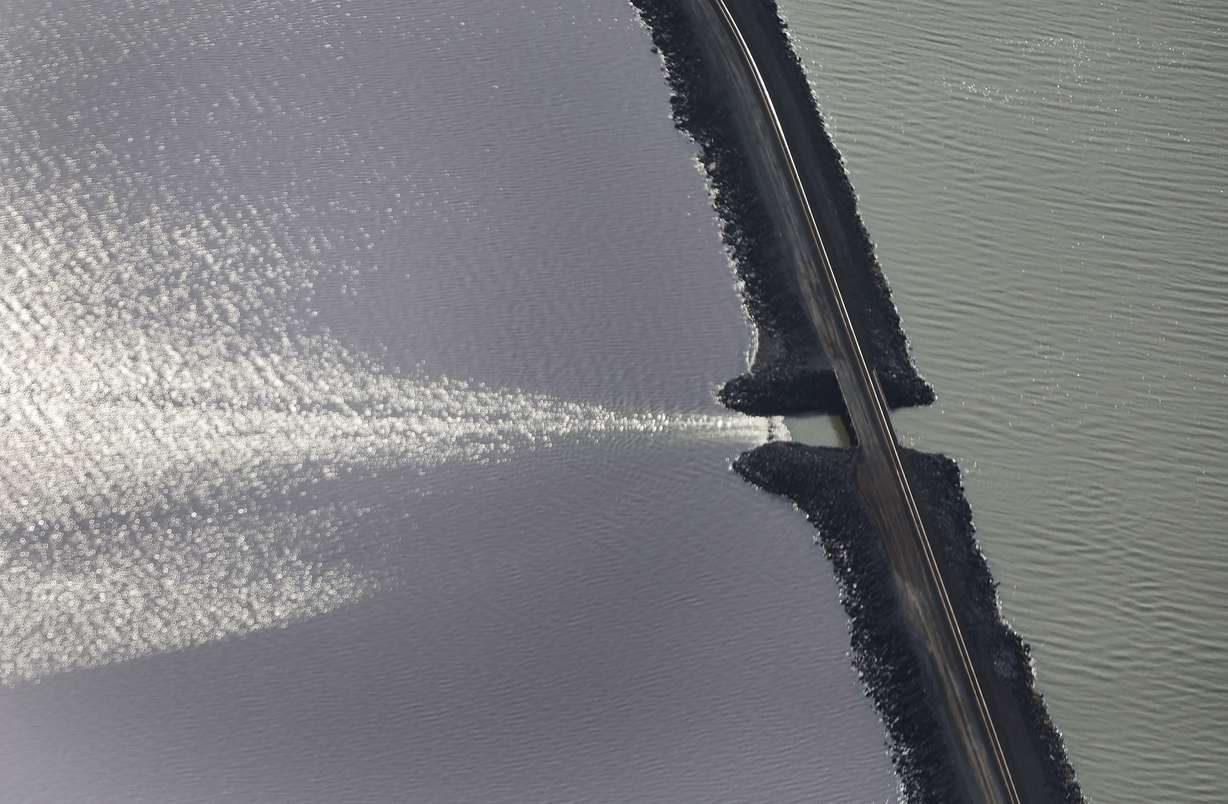
The Great Salt Lake’s salinity and water level differences date back to the 1950s when the Southern Pacific Railroad replaced Lucin Cutoff — a bridge that was built in the early 1900s to speed up train travel times — with a causeway that runs through the lake, splitting it in half. Water reaches the northern arm through a breach installed in 2016, replacing outdated culverts.
Despite the breach, the water in the southern arm is often higher and less salty because the lake’s tributaries flow into it. Its lower salinity level supports the ecosystem that the lake is known for, including brine shrimp and the millions of migratory birds that flock to the lake every year to consume brine flies.
The railroad causeway is breached on the Great Salt Lake as photographed on May 3, 2023. (Photo: Jeffrey D. Allred, Deseret News)
However, as the lake fell to an all-time low — attributed by researchers to a mix of drought and overconsumption of the lake’s tributaries — the northern arm’s salinity levels became higher than the southern arm’s at points.
The switch in power brought the southern arm’s ecosystem to the brink of collapse, partly because higher salinity from the northern arm seeped into the southern arm. The southern arm’s salinity reached 185 grams per liter in November 2022, hitting levels that harm brine shrimp and brine flies.
Brine shrimp hatch rates fell to about 60% in 2022, and only 19 million pounds of brine shrimp cysts were collected, 6-11 million pounds below normal.
“We saw salinity spiking to the point where we were really concerned about the ecological integrity of the south arm,” Steed said, recalling the tense moments.
Utah land and water managers responded by raising a berm at the causeway to slow down the salinity issue. The berm was raised again in early 2023, effectively separating the two sides as the state focused on repairing the southern arm’s salinity.
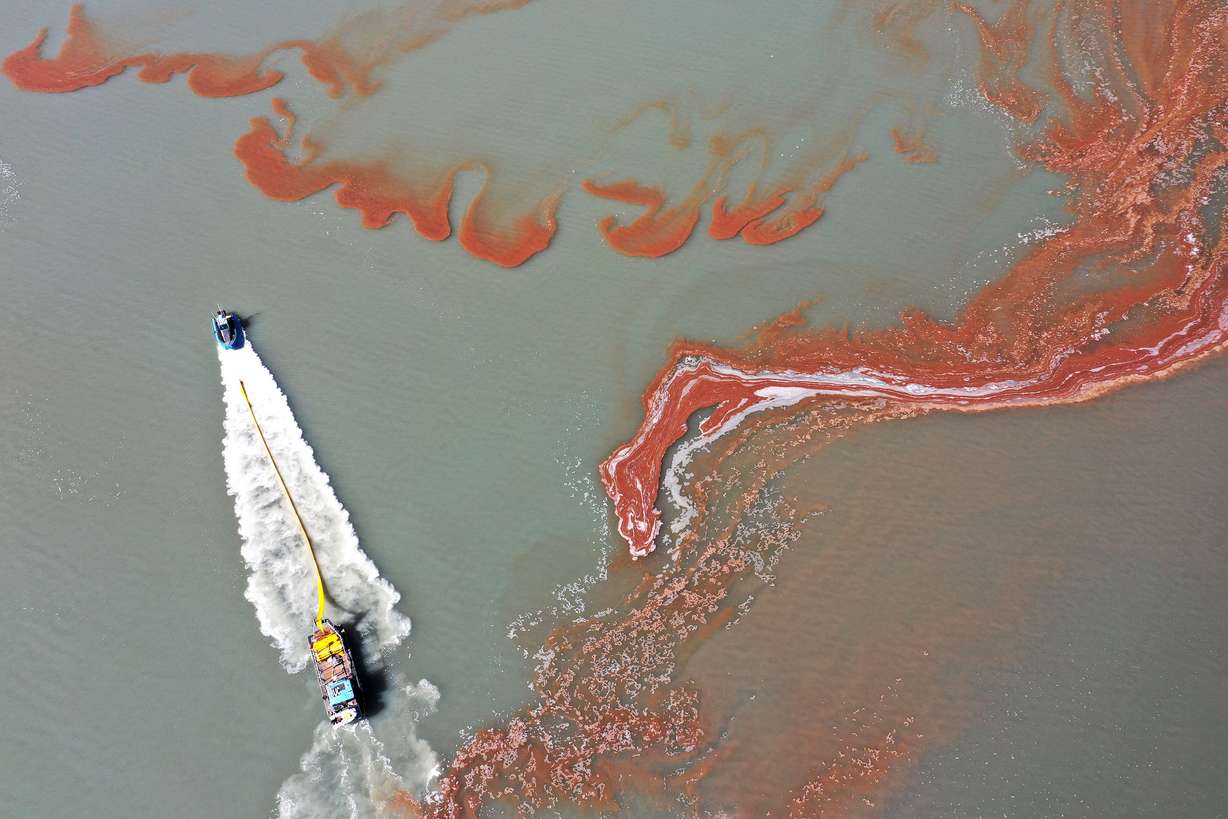
Crews work during the brine shrimp harvest on the Great Salt Lake on Oct. 17, 2023. Brine shrimp production rebounded in 2023 as the southern arm’s levels rose and salinity levels dropped. (Photo: Great Salt Lake Artemia)
This decision ultimately led to a major difference in lake levels last year after Utah’s record 2023 snowpack melted, helping the lake recover a bit. The southern arm’s levels were as much as 5 feet above the northern arm’s levels at one point last year.
Its salinity levels also dropped back to healthy levels as this happened. It fell from that peak of 185 grams per liter to as low as 124 in 2023, per U.S. Geological Survey data. Utah wildlife officials reported earlier this year that brine shrimp hatch rates returned to 90%, while about 29 million pounds of brine shrimp cysts were harvested from the lake.
Salinity now
Land and water managers opted to lower the berm this year to help the northern arm recover after it didn’t gain much from last year’s snowpack. This is why the gap between the lake’s two sides has shrunk to less than 2 feet.
Yet the southern arm’s salinity still dropped to as low as 92 grams per liter in April as this year’s above-normal snowpack helped the arm reach its highest level in five years. Its salinity is back on the rise as the lake goes through its summer losses but, at 113 grams per liter on July 15, it remains less salty than at any point last year.
The goal, Steed says, is to keep it that way.
“We now see that salinity on the south arm is at a safe level,” he explained. “We are not seeing the salinity concern right now, but we reserve the right to adaptively manage as we the salinity levels (change) in the future.”
The Great Salt Lake Commissioner’s Office now has a policy in place based on what happened in 2022. Great Salt Lake deputy commissioner Tim Davis said it’s now protocol to raise the berm anytime the southern arm’s levels fall to 4,190 feet elevation.
The state is also working on a new solution to manage the two arms. Utah lawmakers approved a funding request this year to help state engineers study a new aqueduct-like system that could replace the breach and berm system. It’s unclear though when it could be built.
“We need something that adaptively manages both salt and water between the two arms,” Davis said. “It’s a tricky engineering problem.”