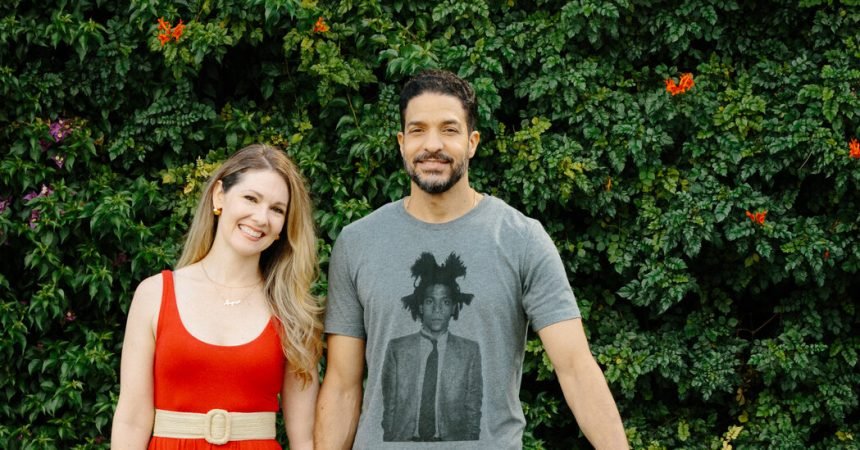
“There are two types of bartenders,” says Lauren Plaxco. “The one who just wants to make the drinks and fill the tickets the waiters give them, and the one who wants to be social and make sure the people at the bar are having fun.”
When Ms. Plaxco met Bryan Keith in 2014, both were bartenders at the Mondrian Hotel on Sunset Boulevard, in Hollywood. He was the first type; she was the second.
“We loved to work together even before we were dating because our personalities are so opposite,” said Ms. Plaxco, 43, now a lender with CrossCountry Mortgage. “Once we got together, we realized that this quality we learned working together works great for life, too.”
They eventually moved into an apartment nearby and wound up managing the small building. They stayed for a few years after their son, August, was born, and came to a realization: They might be able to afford a home of their own if they could offset the costs with some rental income — either with one or more units in an apartment building or a single-family lot with an accessory dwelling unit (or ADU).
“We were living on the second floor on a noisy, busy street in Hollywood, so as August got older, we were really ready to move to a quieter location,” said Mr. Keith, 51, an actor and associate artistic director of the Art of Acting Studio in Los Angeles.
The couple planned to send August to one of several Waldorf schools in Los Angeles, which opened their home search to locations across the San Fernando Valley and Pasadena. The goal was a turnkey duplex or triplex, or an existing single-family home with enough land to add an ADU.
Ms. Plaxco’s experience as a lender gave them a head start. “A lot of people don’t know about renovation loans like the FHA 203k and the Fannie Mae HomeStyle Renovation programs,” she said. “These programs allow you to wrap renovation costs into your mortgage and base the amount of your loan on the estimated appraised value after renovations are completed. I found out that they can also be used for an addition and even to construct an ADU to build another rental unit on a property.”
The couple worked with two local agents from Sotheby’s International Realty, Alisandra Morisi and Rae Olivier, who created a brochure for sellers and their agents that explained these renovation loans.
“Most sellers want a clean offer without complications, so we had to make sure that the agent on the other side understood that the renovation loan would not be a problem,” Ms. Morisi said.
The couple’s budget ranged from about $750,000 all the way to $1.3 million, depending on how many rental units a property had, and whether there were tenants in place.
This updated three-unit property on a steep lot in the Highland Park neighborhood of Los Angeles was “gorgeous,” Ms. Plaxco said, with stone steps leading through trees and landscaping, and a backyard with views across the San Fernando Valley. It came with three units in two buildings: a primary two-bedroom, one-bath house with a private backyard, and a one-bedroom, one-bath unit above a separate studio. There were tenants paying below-market rent in one of the units. The style was rustic-chic, with paneled walls, picture windows and farmhouse sinks. The main house had about 910 square feet. The asking price was $1.175 million, with annual taxes of about $17,000. They estimated they could generate around $3,500 a month in rent.


This two-bedroom, one-bath house from 1949 was in Van Nuys, a San Fernando Valley neighborhood where ADUs were fairly common, and it came with options: There was the 1,005-square-foot house with two bedrooms, an open floor plan with a gas fireplace, an updated bathroom, and a landscaped backyard. The detached two-car garage had a studio that could be converted to a home office or gym. And there was adjacent space to build an ADU with a private entrance. The backyard also had a covered patio, along with space for entertaining and gardening. The asking price was $835,000, with annual taxes of about $10,000. They estimated it would cost just under $300,000 to build a two-bedroom ADU, with a projected monthly rent of $3,400.


About four miles west in Reseda, this 900-square-foot cottage from 1949 had plenty of curb appeal, with a bright yellow door and a low-maintenance English garden in front. The two-bedroom, one-bath house had an updated bathroom, central cooling and a dated kitchen, plus a large backyard with a covered brick patio, a storage shed and just enough yard space to build a two-unit ADU. An alley behind the house had access to the detached two-car garage, which could also make for an ADU conversion. The asking price was $779,000, with annual taxes of about $9,200. They estimated it would cost about $300,000 to build a two-bedroom ADU, with a projected monthly rent of $3,200.

Find out what happened next by answering these two questions: