


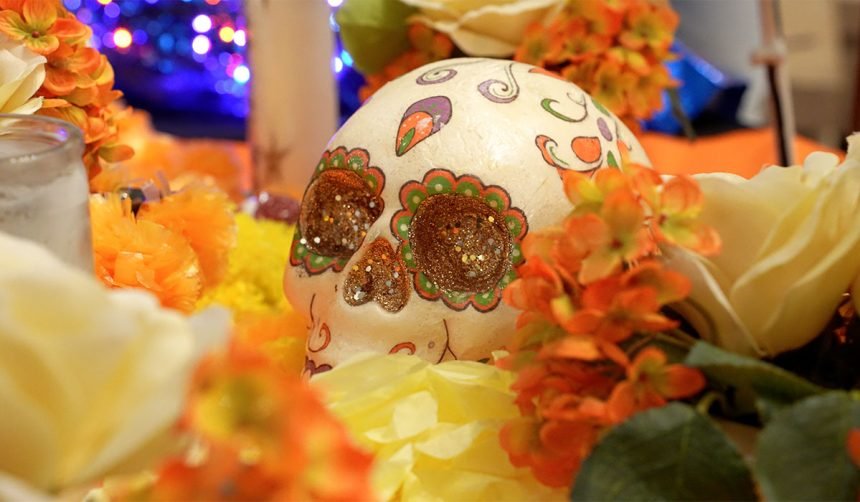
A vibrant ofrenda, or traditional altar, is at the heart of a hands-on Honors College course at UT San Antonio, where students work together to explore Día de los Muertos traditions through a collaborative exhibit.
Offered through the Honors College since 2018, the course blends culture and creativity, challenging students to design an exhibit that honors the evolving traditions of Día de los Muertos. Along the way, students explore the holiday’s history, share cultural perspectives and connect with a tradition.
See how Honors College students came together to design and build a traditional ofrenda at the Student Union.
This year’s ofrenda, displayed at the Student Union first floor, features alebrijes. The exhibit is on display until Nov. 2.
But the course goes beyond cultural exploration. Students work in teams to bring an exhibit to life, developing practical skills in project management, communication and collaboration.
“What makes it unique is the way for students to connect with each other through different lenses of Day of the Dead,” said Alegra Lozano, associate professor of practice and the assistant dean of Academic Counseling and Student Success in the Honors College. “Everybody gets to share their stories, their cultures, their histories.”
Students also take ownership of the collaborative process, establishing group expectations, dividing responsibilities and holding one another accountable for their contributions. As part of the course, they also attend a Día de los Muertos community event in San Antonio, connecting classroom learning with the traditions celebrated throughout the city.
Take a closer look at the vibrant alebrijes that are part of the ofrenda at the Student Union.
For junior Mady Pastrano, the opportunity to learn by doing was a major draw. She enrolled in the course because she wanted to be more engaged with a subject through a hands-on experience.
One of her favorite aspects has been working alongside students from different academic disciplines who she might not otherwise have met. Collaborating with classmates with different perspectives has allowed her to learn from their experiences while contributing her own.
That exchange is central to the course’s design, which brings students together around a shared project while recognizing the different skills and perspectives each person brings to the table. The experience also gives students tangible examples of their work to carry beyond the classroom.
“I’ve had students use this on their résumés and in interviews to show skills in project management, agency of accomplishment, and intercultural confidence,” Lozano said. “There’s so many different things that they walk away with by doing a project-based course.”