


Peru’s Ministry of Culture has recovered 14 pre-Hispanic artefacts associated with the Wari and Chancay cultures from the Pampa de Ánimas–La Wasa Archaeological Site.
The objects were found scattered across the surface of the archaeological site in the district of Santa María, Huaura Province, in Peru’s Lima region.
Among the recovered material are ceramic vessels attributed to the Wari culture and dating from the Middle Horizon period, between AD 600 and 1000.
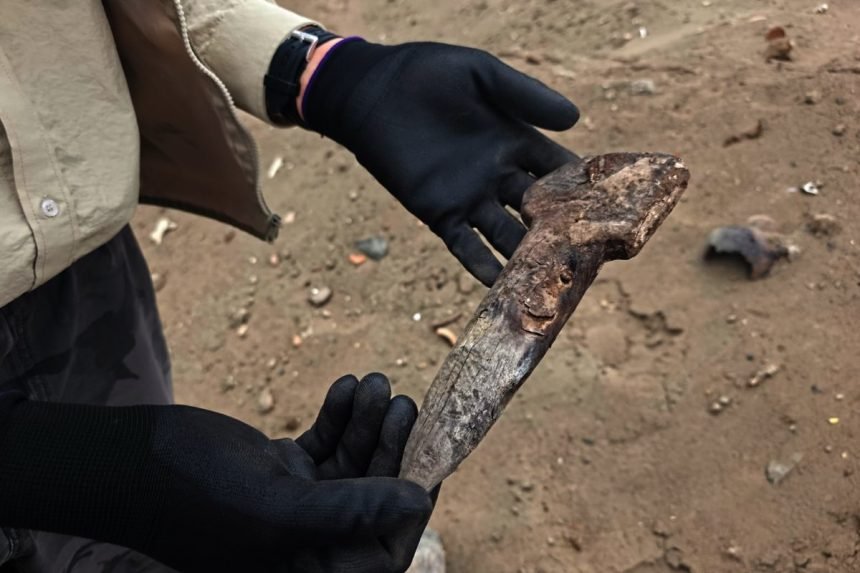
Archaeologists also recovered plates, cups, decorated textile fragments and wooden objects associated with the later Chancay culture, which date from the Late Intermediate period between AD 1000 and 1476.
Evidence from two pre-Hispanic cultures
The Wari material includes ceramic vessels described by the Ministry of Culture as being made in a northern style.
The Chancay assemblage contains a wider variety of objects, including decorated textiles and wooden artefacts. Among these is a potter’s palette and a spindle whorl, an object commonly associated with textile production.
Together, the finds provide evidence for activity at Pampa de Ánimas–La Wasa during different periods of Peru’s pre-Hispanic past.
Following their recovery, all 14 objects were transferred to the Ministry of Culture, where specialists will evaluate the material and oversee its conservation.
The operation followed an inspection by archaeologists from the Directorate of Recoveries, part of the General Directorate for the Defence of Cultural Heritage.
Officers from the Fiscal Police’s Division for the Investigation of Crimes Against Cultural Heritage and the local police station also supported the inspection.
Possible evidence of looting
The Ministry warned that archaeological objects found scattered across the surface of protected sites can sometimes indicate illegal excavation or looting.
However, the statement does not establish that the 14 objects recovered at Pampa de Ánimas–La Wasa were definitely displaced by looters.
Illegal digging can remove artefacts from their original archaeological context, making it more difficult for researchers to determine their relationship with buildings, burials and other deposits.
This loss of context can also obscure information about when an object was deposited and how it was used.
The recovered ceramics, textiles and wooden objects will now undergo further assessment while remaining in the custody of the Ministry of Culture.
Their identification with the Wari and Chancay cultures provides evidence for the long history of occupation at Pampa de Ánimas–La Wasa, spanning several centuries of cultural change in pre-Hispanic Peru.
Sources : Peruvian State