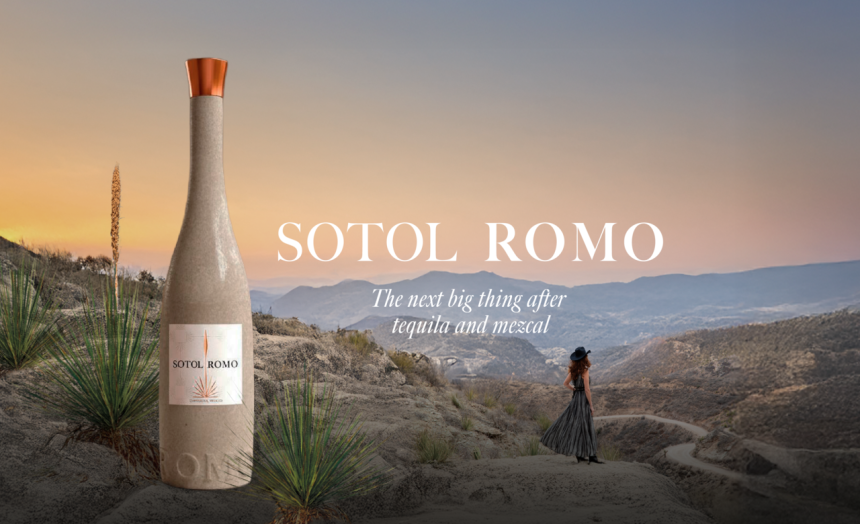
This week, during Super Bowl Week in San Francisco, I officially launch Sotol Romo. For many, it may look like the debut of a new premium spirit. For me, it represents something far deeper: a statement about ownership, representation, and the role Latinos must play—by right—in industries born from our land, our history, and our culture.
For decades, Latinos have been the face, the labor, and the storytellers behind entire categories like tequila and mezcal. We have cultivated the plants, worked the ovens, preserved the traditions, and carried the cultural narrative forward. Yet too often, we have not been the owners. We have not sat at the decision-making table. And we have not shared proportionally in the economic value we helped create.
Sotol Romo was born as a direct response to that reality.
Sotol is an ancestral spirit from northern Mexico, distilled from the Dasylirion plant—a wild desert plant that takes 15 to 20 years to mature under extreme conditions. It is resilient, austere, and deeply tied to place. For more than 800 years, communities in northern Mexico have produced sotol, yet beyond those regions, the category remains largely unknown.
To me, that is not a weakness. It is an opportunity.
Consumers today are changing. People are drinking less—but better. They are seeking cleaner products, greater transparency, fewer additives, and more intentional consumption. They want quality over excess. In that context, sotol doesn’t just fit—it stands out. It is organic, sustainable, artisanal, and additive-free. Made with just plant and water, it requires no correction, no manipulation, no disguise. It is a spirit aligned with how people want to drink today.
I am Latina. I am a woman. And I am launching a brand in a highly competitive industry with real barriers to entry. Betting on a new category like sotol means educating the market from scratch, building trust, and convincing a more informed and selective consumer that this spirit deserves a place at the table.
It is not an easy path. But it is a meaningful one.
Much of my career has been spent building global brands and social movements—working in international institutions, advancing humanitarian causes, and shaping campaigns designed to change narratives. Today, I bring that same mindset to entrepreneurship, guided by one core belief: economic success and social responsibility are not opposites. They are partners.
Sotol Romo is not about growth at any cost. From the beginning, the brand has been designed to operate responsibly and to give back to the communities where we work. In Mexico, that means supporting sustainable practices, creating local jobs, and bringing visibility to underrecognized regions of the north. In the United States, it means investing in diverse talent, creating opportunity, and ensuring Latinos participate across the value chain—from distribution to leadership.
Representation matters. But ownership matters even more.
When we talk about Latino economic power, it cannot stop at being consumers or cultural ambassadors. We must be founders, shareholders, and decision-makers. We must build companies that reflect who we are—and share the wins with our communities.
I do not want to be the exception. I want to be part of a generation of Latino and Latina entrepreneurs willing to enter complex industries, raise capital, take risks, fail forward, and succeed—and to bring others with them when they do.
The challenge ahead is real. Sotol is an emerging category. The market is in transition. Launching something new always involves risk. That is why I say this openly: I will need help. From allies. From curious consumers. From leaders willing to bet on new stories. And from a Latino community that understands that when one of us moves forward, we all move forward.
Because if we get this right, the impact can be meaningful.
If we successfully position sotol for what it is—an elegant, authentic, deeply Mexican spirit—we are not just launching a brand. We are opening a door. We are proving that Latino-rooted products can be Latino-owned, globally competitive, and built with long-term vision and shared prosperity at the core.
This launch is not a finish line. It is a beginning.
And like all beginnings worth pursuing, it comes with risk, excitement, and responsibility. I embrace all three—with humility, determination, and the conviction that true success is not measured only by sales, but by how many people grow alongside you.
Wish me luck. I will need it.
But more than anything, walk with me. Because stories like this are never built alone.