(WIB) – Classrooms should be places of opportunity, not obstacles. But for many students with disabilities, especially students of color and English learners, school often reinforces the inequities it’s supposed to erase.
Black students, for example, have been overrepresented in special education since 1968, when the U.S. Office for Civil Rights first began tracking school district data. The starkest disparities appear in categories that depend on perception, such as learning disabilities and emotional disturbances, where bias too often determines outcomes.
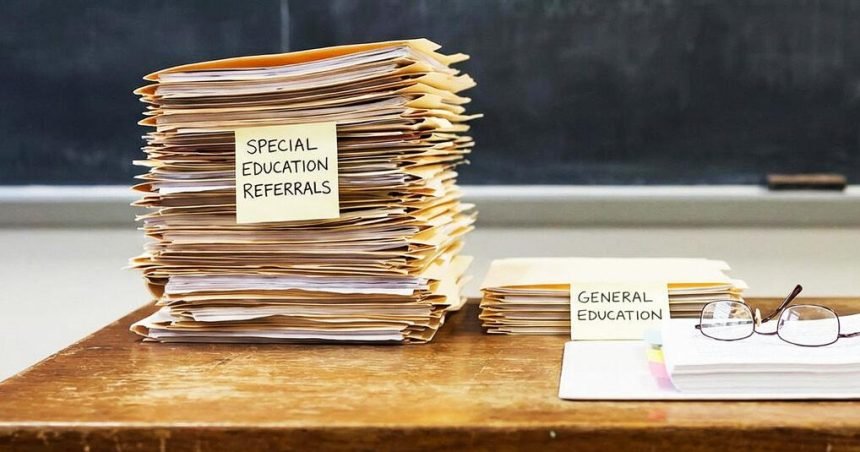
We know that students of color, with the exception of Asian students, are identified for special education at a higher rate than their white peers. Black students are 40% more likely to be identified with a disability and are three times more likely than white students to be suspended or expelled.
Disparities are also observed for Hispanic students in school districts across the country. For example, the Santa Barbara Unified School District was flagged for significant disproportionality for three consecutive school years, given that Hispanic students were found to be three times more likely to be identified as having learning disabilities. When socioeconomic differences of Black and Hispanic students are accounted for, disparities still exist.
What “Significant Disproportionality” Really Means
The term “significant disproportionality” may sound technical, but its consequences are deeply human. This perspective, grounded in the work of civil rights organizations, underscores that this is not solely an educational issue, but a civil rights issue.
Significant disproportionality describes the over- or under-representation of a certain racial or ethnic group in identification for special education services, placement in inclusive or restrictive settings, and discipline actions that exclude students.
Misidentified — Or Missed Entirely
In addition to the disparities students of color face, English learners are often both over- and under-identified as needing special education. Language learning behaviors can resemble those associated with learning differences, making it challenging to distinguish them.
As a result, educators may misinterpret typical challenges of learning English — such as delayed responses, reading or spelling errors, or difficulty following directions — as signs of a disability. Conversely, they may dismiss signs of a disability, believing it’s due to language development.
English learners can also easily be misidentified as needing special education services if they are only evaluated in English, rather than determining the appropriate language based on their unique needs and language abilities.
Race, Ethnicity, and More Restrictive Settings
A student with a disability’s Individualized Education Program (IEP) contains information about their placement, such as in general education classes with their peers for most or all of the school day, a self-contained classroom, or a hybrid. In the 2022-23 school year, 16% of Black students and 14% of Hispanic students with disabilities were in a more restrictive classroom environment (i.e., in the general education setting for less than 40% of the school day) compared to 9% of white students. Inclusion and enabling learning alongside nondisabled peers is critical for academic and social success. These data show that disabled students of color experience fewer benefits of being educated in inclusive ways, which is deeply concerning.
Discipline, Pushout, and the School-to-Prison Pipeline
When a student is suspended or expelled, valuable learning time is missed. These disciplinary measures also contribute to school pushout, where students leave school before graduation or become involved in the juvenile justice system. Although students with disabilities represented only 17% of K-12 student enrollment, 24% of students confined in justice facilities were students with disabilities. Racial disparities in school disciplinary practices are very real, and there is a strong imperative not to ignore them.
Federal Oversight Was Meant to Address Inequities
Recognizing these disparities are not new phenomena. In fact, when the Individuals with Disabilities Education Act (IDEA) was last updated in 2004, Congress required that school districts take specific actions to address inequities. Districts that had been identified with “significant disproportionality” were required to employ resources for interventions and services. (The final vote for this update to IDEA in 2004 was 397-3 in the House and unanimous in the Senate). A little under a decade later, the Government Accountability Office recommended that a consistent approach for defining significant disproportionality was needed.
The Danger of New Federal Rollbacks
Late this summer, the U.S. Department of Education issued a notice with a 60-day window for comments on a proposal to remove the required notice that a state is changing its methodology and eliminate the public notification period. Make no mistake: this is an explicit rollback and will exacerbate inequalities for students of color. Having accurate and transparent data is essential to understanding the scope of the significant disproportionality problem, as well as where and how it is affecting students the most.
Decisions like this may not reveal their consequences immediately, but their impact is certain—and in the long run, will be profound. These consequences include misidentification of students for special education, restricted access to inclusive classrooms, and higher rates of exclusionary discipline. Harsh school discipline and exclusion practices increase the likelihood of involvement in the juvenile justice system.
Continuing to Advocate for Equity
Civil rights organizations, such as the National Urban League, UnidosUS, and the National Center for Learning Disabilities, have been advocating for equal opportunity for decades and are concerned about the absence of federal leadership and the weakening of data
collection requirements.
We urge the federal government to maintain robust oversight and continue the current data collection, including promoting transparency for families. States and districts must not resist this work; they should embrace it as essential to addressing disparities and supporting all students, particularly the most vulnerable among them.
Nicole Fuller is associate director of policy and advocacy at the National Center for Learning Disabilities; Jenny Muñiz is director of the Education Policy Project at UnidosUS; and Hal Smith is senior vice president for education, youth development, and health at the National Urban League.
Help The Sacramento Observer continue its 60-year legacy of independent journalism. Your support ensures our mission of creating a more informed world.