In the NFL Draft, outliers come in all forms, shapes, sizes and position groups. Some are looked upon with a raised eyebrow; others get viewed as potential franchise cornerstones.
The 2026 NFL Draft is littered with outliers, from the short-armed pass-rushing prowess of Rueben Bain Jr., to players such as Jeremiyah Love and Caleb Downs — blue-chip prospects who will surely go higher than the positional value chart says they should.
The tallest prospect in the 2026 class is UCF tackle Paul Rubelt at nearly 6 feet 11 inches. The shortest prospect? Berry College RB Josh Rogers (5-4). The heaviest is Minnesota tackle Aluma Nkele, who checks in at 6-6, 424 pounds; the lightest: 5-foot-5, 128-pound Troy receiver Tray Taylor.
But how about the most intriguing outliers? Here are a few of my favorites in 2026:
Sonny Styles, LB, Ohio State
6 feet 5 inches tall, 244 pounds | 32 7/8-inch arm length | 10-inch hand size
Key testing numbers: 4.46-second 40-yard dash (1.56 10-yard split), 43 1/2-inch vertical, 11-foot-2 broad, 4.26 short shuttle, 7.09 three-cone
The ultimate physical outlier in this class, Styles is the type of prospect who — if everything goes right — has the athletic potential to redefine a position. Styles could wear a limitless number of hats defensively, and his combine performance was among the best we’ve ever seen. (Styles also was the rare projected top-10 prospect who wasn’t afraid to participate in every on-field test in Indianapolis). Per Dane Brugler’s “The Beast” draft guide, one team even gave him a standing ovation when he arrived at a meeting that week.
Everything about Styles is rare, including the fact he’s a 21-year-old who played four full years of college after skipping his senior year of high school. We could honestly put both Downs and fellow Buckeye Arvell Reese on this list, too, as both are incredibly unique prospects in their own rights.
Kenyon Sadiq, TE, Oregon
6-3, 244 | 31 1/2-inch arm | 10-inch hand
Key testing numbers: 4.39 40 (1.54 split), 43 1/2-inch vertical, 11-1 broad
A 6-foot-3, 244-pound tight end with a rocked-up frame and almost zero body fat, Sadiq is a complete mutant (who just turned 21 last month). Like Styles, he has a chance to help redefine the prototype for his position.
In addition to being a true Y tight end capable of lining up anywhere, Sadiq can also play the X or the Z, in addition to working as a big slot. His route agility and work after the catch are on par with players 40 pounds lighter. Sadiq ranks No. 16 on Brugler’s final big board; he’s No. 9 on mine.
Markel Bell, OT, Miami
6-9, 346 | 36 3/8-inch arm | 9-inch hand
Key testing numbers: 5.36 40 (1.84 split)
Bell will be one of the biggest humans in the NFL as soon as he arrives — his pre-draft measurements rank in the 99th percentile among tackles in height, 97th in wingspan (87 1/8 inches) and 96th in weight. His height and weight are obvious outliers, but it is Bell’s length — and his ability to harness it — that makes him a legit draft prospect. Bell is the only player in this class who might take up more space in an elevator than hulking Alabama OT Kadyn Proctor.
Bell is pretty stiff at that size and will bend at the waist from time to time, but he’s also quicker than you’d think and does a great job keeping his upper half under control against quicker edge rushers. If he can keep his weight south of 360, Bell might surprise NFL teams with his durability as a functional starting right tackle. I’d be a bit surprised if he makes it to Day 3 of the draft.
Travis Burke, OT, Memphis
6-8, 325 | 34 1/4-inch arm | 10 1/8-inch hand
Key testing numbers: 5.17 40 (1.79 split), 27-inch vertical, 8-11 broad
Another gigantic tackle, Burke is one of 11 tackle prospects for the 2026 draft who stands 6-8 or taller. He’s a versatile tackle with starting experience on both ends of the line and above-average movement skills for a man his size. He’s also quick enough to block in a zone scheme and powerful enough to make an impact on gap runs. Burke plays through the echo of the whistle, too, and is unafraid to finish through the ground.
The usual concerns for a man this size apply here — we’ve seen players of similar builds have issues with nagging joint and/or foot injuries over the years. But if Burke can stay healthy, he’ll be a potential long-term starter who, at worst, can serve as a quality NFL swing tackle for a while.
Bryce Lance, WR, North Dakota State
6-3, 204 | 32 1/8-inch arm | 9 1/4-inch hand
Key testing numbers: 4.34 40 (1.49 split), 41 1/2-inch vertical, 11-1 broad, 4.15 short shuttle, 7.0 three-cone
The younger brother of NFL quarterback Trey Lance, Bryce shares many of the elite athletic traits that made his brother a top-five pick. Bryce Lance’s combination of speed, burst and agility at his size helps make him one of this draft’s best overall deep threats.
Lance made 24 contested catches over the last two seasons at NDSU, going for more than 1,000 yards in back-to-back years with a combined 25 touchdowns. His athletic profile is similar to that of former NDSU and current Packers WR Christian Watson — only Lance was more productive and consistent at the college level.
Charles Demmings, CB, Stephen F. Austin
6-1, 193 | 32-inch arm | 10 1-8-inch hand
Key testing numbers: 4.41 40 (1.55 split), 42-inch vertical, 11-0 broad, 4.25 short shuttle, 7.28 three-cone
The only FCS player to receive an invite to the 2026 NFL combine, Demmings will wave the flag for all small-school prospects this year. Deep in the heart of the NIL age, Demmings turned down more money to stay at Stephen F. Austin, citing loyalty to people who both shaped and inspired him. “SFA turned me from a boy (into) a man,” he told The Athletic.
A long corner with huge hands, Demmings is still relatively new to football, as he played only parts of two high school seasons. He has room to grow as a player but might be the draft’s most polished human being — he has the rare ability to change the temperature of a room upon entry. He’ll be an elite teammate.
Darrell Jackson Jr., DT, Florida State
6-5, 315 | 34 3/4-inch arm | 11-inch hand
Key testing number: 26 1/2-inch vertical
The nephew of former Super Bowl MVP and Florida State defensive tackle Dexter Jackson, Darrell Jackson Jr. didn’t play football as a kid and weighed just 200 pounds when he first joined his prep team as a junior. A natural on the field and in the weight room, however, he quickly filled out his massive frame, eventually hitting 315 pounds at the combine.
A giant human with elite power, Jackson is more of a chiseled specimen now. He plays tall and still has raw elements in his game, especially when it comes to his pass rush, but he’s extremely destructive and has plenty of room to grow. He’ll be a great potential Day 3 find for someone.
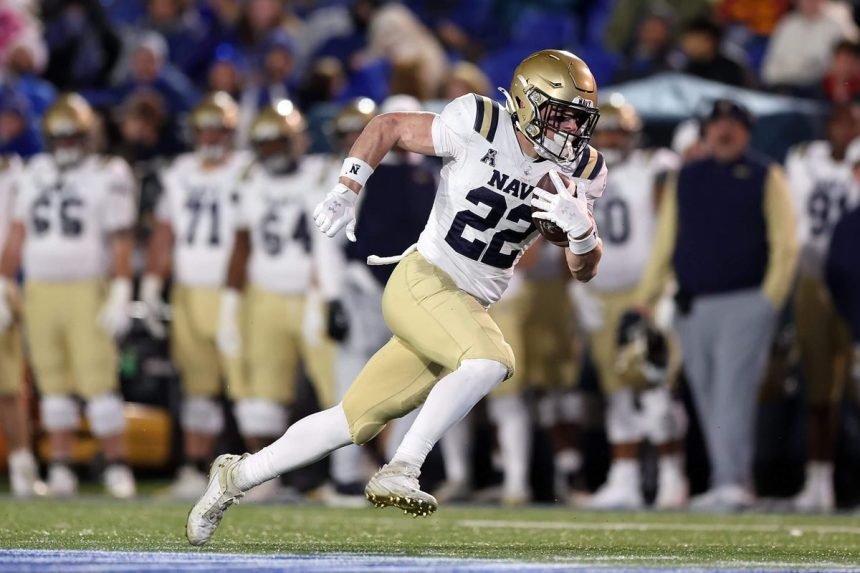
Eli Heidenreich, RB/WR, Navy
6-0, 198 | 29 1/4-inch arm | 9 1/2-inch hand
Key testing numbers: 4.44 40 (1.53 split), 35 1/2-inch vertical, 10-0 broad, 4.22 short shuttle, 6.55 three-cone
Of the more than 2,700 prospects evaluated in “The Beast” this year, none ran a faster three-cone (6.55 seconds) than Heidenreich. Navy’s all-time leading receiver as a former slot back, Heidenreich easily bested the No. 2 time of 6.61, posted by Illinois State receiver Daniel Sobkowicz. (For reference: Jaxon Smith-Njigba ran a 6.57.)
Heidenreich is arguably the most agile football player in this draft. He’s a nightmare in tight space and an extremely difficult cover out of the backfield. A team has to have a role for him, but you’ll hear his name somewhere next year.
Keionte Scott, DB, Miami
5-11, 193 | 31 3/8-inch arm | 9 5/8-inch hand
Key testing numbers: 4.33 40 (1.53 split), 34-inch vertical, 10-3 broad
Scott simply forces his way into your consciousness, despite having some obvious flaws. He’s smallish, will be a 25-year-old rookie and has his share of coverage hiccups. I don’t really care about any of that, though, because when you turn on the tape, you see a middle linebacker playing safety.
Not only is Scott actually one of the fastest players in this class (4.33 40 and an elite 2.39-second 20-yard split), but he’s also one of its most fearless. He plays as fast as he runs, with zero hesitation. If his energy supply has a limit, he hasn’t found it yet.
D’Angelo Ponds, CB, Indiana
5-8, 182 | 29-inch arm | 9 5/8-inch hand
Key testing numbers: 4.36 40 (1.52 split), 43 1/2-inch vertical, 4.27 short shuttle
Ponds is built like, and plays like, current Jets head coach and former NFL star Aaron Glenn — a short, light corner with a massive chip on his shoulder and nothing but fire in his gut. The more teams try to pick on him because of his size, the angrier he gets. He had a combined 36 pass breakups and seven picks over the last three seasons at Indiana and James Madison, with his two best years coming against Big Ten competition.
Ponds was the heartbeat of Indiana’s national championship defense and the player who best symbolized everything the Hoosiers were about. Doubt the fearless cornerback at your own peril.