
MLB Players Association director Bruce Meyer meets with Detroit Tigers
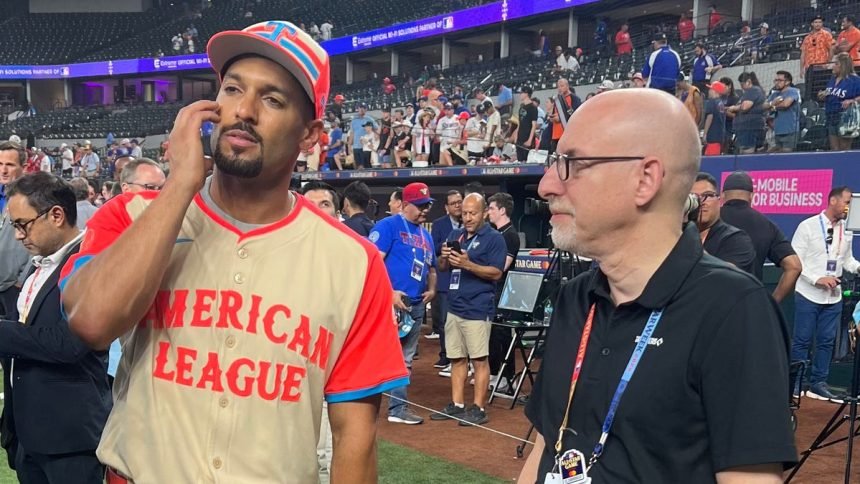
MLB Players Association executive director Bruce Meyer talks to the Detroit Free Press about several topics March 1, 2026, in Lakeland, Florida.
LAKELAND, FL – Major League Baseball players should expect a lockout when the collective bargaining agreement expires at 11:59 p.m. Dec. 1, 2026, according to MLB Players Association interim executive director Bruce Meyer.
It’s the message he sent upon meeting with players from the Detroit Tigers on March 1 at TigerTown in Lakeland, Florida, during spring training.
One of those players: Two-time American League Cy Young winner Tarik Skubal, a soon-to-be free agent who has become a leading voice in the union as a member of the MLBPA’s eight-player executive subcommittee.
What are the chances of a lockout?
“Almost guaranteed,” Meyer told the Free Press on March 1 at TigerTown.
Meyer, 64, was elected Feb. 18 as the interim executive director of the MLBPA, approximately 48 hours after Tony Clark resigned following an internal investigation.
Meyer had been the MLBPA’s lead negotiator as a veteran labor lawyer – and he will continue to handle those responsibilities moving forward.
Seventy-two players unanimously voted Meyer as the face of the MLBPA with the expiration of the collective bargaining agreement coming soon.
The votes for Meyer came from the eight-player executive subcommittee (including Skubal), player representatives from all 30 MLB teams (including Tigers right-hander Casey Mize) and minor-league players.
“The key is that our team remains focused on collective bargaining, which we are,” Meyer said. “In terms of bargaining, really nothing is going to change.”
[ MUST LISTEN: Make “Days of Roar” your go-to Detroit Tigers podcast, available anywhere you listen to podcasts (Apple, Spotify) ]
There are two types of work stoppages: a lockout, in which owners stop players from working, and a strike, in which players refuse to work.
In MLB history, there have been nine significant work stoppages: four lockouts and five strikes, including a 99-day lockout that delayed the 2022 season.
Games haven’t been canceled since the 1994-95 strike.
In this case, a lockout is expected after the 2026 season and could threaten games in the 2027 season.
“The league has pretty much already said there’s going to be a lockout,” Meyer said. “I think the commissioner [Rob Manfred] more or less guaranteed it. I would be shocked if they didn’t do a lockout when the agreement expires.”
A salary cap is the biggest economic issue surrounding the upcoming negotiations.
The owners want it.
The players oppose it.
“Our position, both historically and now, is pretty clear,” Meyer said. “This union, and every executive director of this union, has always been of the view that it’s bad for players, and for that reason, historically, we’ve been opposed to it. I don’t see any reason to change our view on that subject.”
He doubled down.
“The fundamental nature of a salary cap is bad for players on multiple levels,” Meyer said.
Negotiations between MLB and the MLBPA regarding a new CBA are expected to begin after 2026 Opening Day, which is March 25 between the New York Yankees and San Francisco Giants.
Once that happens, the two sides will have eight months to come to an agreement before the current CBA expires.
“We’ll be ready to meet wherever and whenever and bargain in good faith,” Meyer said. “If there’s a way to avoid it and get a fair deal for the players, we’re always looking to do that.”
During spring training, MLBPA leadership has been meeting with players from all 30 MLB teams. The conversations inside clubhouses have focused on how those leaders are preparing for collective bargaining between the owners and the players.
Everyone is interested.
And Meyer is at the center of it all.
“I think the union is as strong as it’s ever been,” Meyer said. “Leaders come and go, but at the end of the day, it’s about the solidarity of the players. Our player group is the best of the best – and it always has been. That’s why we’ve been able to make the gains that we have.”
Contact Evan Petzold at epetzold@freepress.com or follow him @EvanPetzold.