A projected key piece of the University of Utah men’s basketball puzzle for the 2026-27 season won’t be available after all.
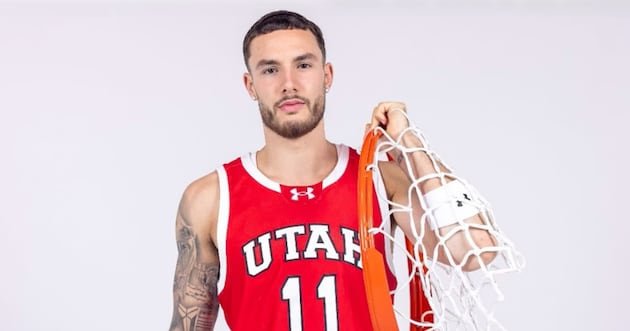
On Monday evening, both CBS Sports’ Jon Rothstein and KSL’s Steve Bartle reported that Israeli guard Noam Yaacov has been ruled ineligible by the NCAA for the upcoming season.
The university later confirmed the news, announcing that his NCAA waiver was appealed and denied last Thursday, Aug. 20.
There was a bit of good news for Utah in the announcement: The school said former Northern Iowa guard Trey Campbell has been added to the roster and cleared to practice with the team as he seeks a fifth year of eligibility.
“We’d like to thank everyone who worked so diligently throughout this process,” Utah head men’s basketball coach Alex Jensen said in a statement.
“Given the outcome, Noam will pursue other playing opportunities, and we wish him the very best moving forward. We are excited to welcome Trey to the Runnin’ Utes family and look forward to his contributions to our program.”
The specifics on why Yaacov was denied eligibility weren’t immediately known.
“The inconsistency on stuff like this is gonna be wildly confusing,” The Athletic’s Sam Vecenie wrote on X after news broke of Yaacov’s ineligibility. “Would be very interested to hear why Yaacov is ineligible while some others are eligible.”
The 6-foot-1 Yaacov, who was listed as a freshman on Utah’s roster for the upcoming season, was expected to play a pivotal role both as a playmaking point guard for Utah in Jensen’s second year as head coach.
Because he’s an international player who will turn 22 this year, Yaacov was an auto-eligible prospect for the 2026 NBA draft.
He ultimately wasn’t selected — he did show up on several media-crafted NBA draft boards — but Yaacov did earn an invite to the G League Draft Combine, then participated in scrimmages at the NBA Draft Combine.
His work going through the draft process helped Yaacov earn praise from several basketball experts.
Among them, CBS Sports’ Isaac Trotter took an extended look at the Big 12 basketball scene and wrote, “Yaacov will be in the conversation for All-Big 12 honors and is the engine who will make the Utes go.”
During a breakout 2025-26 season playing for Filou Oostende of the BNXT League, a first-tier league in Belgium and the Netherlands, Yaacov averaged 17.4 points, 5.8 assists, 3.9 rebounds and 1.1 steals per game. He also shot 46% from the field, 38.3% from 3 and 76.8% at the free-throw line.
Yaacov was one of three finalists for MVP honors in the BNXT League and he led Oostende to the Belgian playoff championship series, which it lost in a five-game thriller against Windrose Giants Antwerp.
Where does Utah go from here at guard?
Utah appeared to have a contingency plan in place on Aug. 11 if Naacov was ultimately ruled ineligible, when On3’s Pete Nakos reported that Campbell had signed with Utah.
That was contingent on Campbell, who played four years at Northern Iowa, being granted a fifth year of eligibility. At the time, that appeared to be the case.
In late July, U.S. District Judge Charlotte Sweeney in Denver ruled that athletes from the high school graduating class of 2022 who recently exhausted their NCAA eligibility were now eligible to compete in college for an additional season, as the Deseret News previously reported.
That injunction opened the door for players like Campbell to commit and sign.
Last Friday, though, the U.S. Court of Appeals for the 10th Circuit granted the NCAA’s request to stay that injunction while its appeal continues.
The stay essentially put the NCAA’s previous eligibility rules into effect, and while it’s not clear whether Campbell will ultimately play for the Utes, his addition to the roster and his ability to practice with the team in the interim is a positive sign.
During the 2025-26 season, Campbell averaged career highs with 13.7 points and 3.8 assists per game, to go along with 3.8 rebounds per contest.
Campbell, a two-time All-Missouri Valley Conference selection who earned second-team All-MVC and all-defensive team honors this past season, was a four-year starter for the Panthers and helped them reach the NCAA Tournament during the 2025-26 campaign.
What does Utah’s roster look like for next season?
As Utah’s roster sits now, the Runnin’ Utes will return forward Babacar Faye and guards Lucas Langarita and Obomate Abbey, with incoming transfers in guards Jackson Holcombe (Utah Valley), Taison Chatman (Ohio State) and TJ Burch (Wright State), forwards Zati Loubaki (Trinity Valley Community College) and Grayson Gaddis (Montana State) and center Malek Gomma (Weber State).
International forward Alec Anigbata is also joining Utah this year, along with guard Styles Clemmons and center Lukas McCanna — two true freshmen fresh out of high school as part of the 2027 recruiting class — and returned missionaries David Katoa (guard) and Jaxon Johnson (forward).
If Campbell is ultimately granted a fifth year of eligibility, that would put the Utah roster at 15 players.
The status of another international talent is also currently unknown in forward Fynn Schott. The Austrian big man has been committed to Utah since February. Earlier this offseason, Schott’s most recent team, Hestia Menorca of the Spanish Primera FEB, shared a thank you for the big man on social media, indicating his move to Utah.
On Aug. 11, Bartle reported that Schott had recently visited Utah’s campus, and on Monday, he reported that Schott has signed his financial aid agreements and “things are nearing the finish line” to him officially joining the Utah roster.
His addition would add invaluable depth — and a potential starter — in the front court.