Key Takeaways:
- Investors are underwriting community trust and cultural relevance as a defensible asset, not just a marketing layer.
- Multicultural consumers are spending at massive scale, but the founders building for those communities are still starved for investment.
- Culture vesting only works if it stays reciprocal. The moment it reads as extraction, consumers and communities revolt.
A consequential pivot is brewing in beauty investing. Although private equity and venture firms once evaluated deals almost entirely on category whitespace, gross margin, and Total Addressable Market (TAM), a growing cohort of investors are now underwriting something harder to model on a spreadsheet: cultural relevance. The industry is calling it “culture vesting,” the practice of backing founders, communities, and cultural movements as durable commercial assets, rather than simply betting on a product with a clever formulation.
There has been a recent increase in investors not just investing in brands with huge potential but also in brands who have a very strong community behind them. BeautyMatter had conversations with investors and founders of L’Attitude Ventures, the venture fund built around US Latino founders; Aria Growth Partners, a minority-stake growth fund with stakes in Hero Cosmetics, The INKEY List, and Good Molecules; and Ruka Hair, the textured hair tech brand that has raised multiple rounds. The conclusion from all three is a consistent thesis: Community is no longer a marketing output of a good brand; it is being treated as the investable asset itself.
That reframing is showing up in deal terms, diligence questions, and portfolio construction across the beauty investment landscape. It is also colliding with hard numbers including funding gaps, the spending power of multicultural consumers, and the risk that “monetizing culture” tips into something founders and communities alike are increasingly wary of.
From Brand Bets to Community Equity: The New Investment Thesis
L’Attitude Ventures was built on a specific capital gap. Cecilia Sanchez, who sits on the investment team, explained that the fund’s founding thesis rested on the fact that Latino founders remain a target demographic for the company’s funds, because “[Since 2021], Latino founders received less than 2% of venture funding dollars,” despite being, in her words, “one of the biggest cohorts in the US who start one in every four new businesses.” L’Attitude’s approach isn’t simply to write checks to fill that gap, but instead to actively weigh a brand’s community engagement alongside financial metrics.
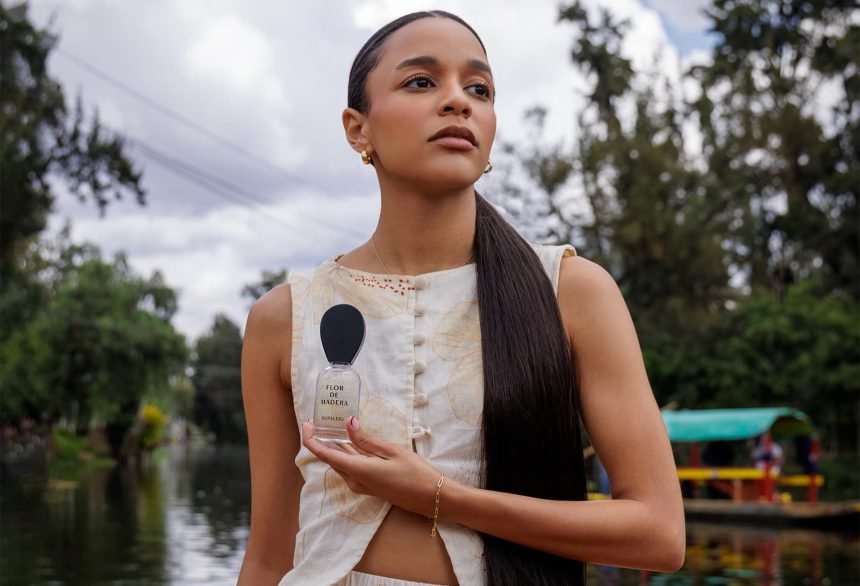
Sanchez described the diligence around Nopalera, one of the fund’s standout portfolio companies, in these terms: “Activations at boutiques translated into people who would just flock to her counter and buy her things,” which, she said, showed that community meant activation and buying power. Laura Lucas, another Partner at L’Attitude Ventures, went further, arguing that community isn’t a nice-to-have anymore. “Community is everything. It is an absolute key part of brand building today,” she said, adding that even large incumbent brands are trying to reverse-engineer their go-to-market plans to drive more of their brand building through community.
Aria Growth, which takes only minority stakes so founders retain control, applies a parallel filter. Co-founder Jackie Dunklau said “the fund looks for brands that are offering differentiated products or solutions,” but that the deciding factor is usually the brand’s founder. Crucially, Dunklau flagged how much harder it is to identify community and culture in a social-first market. “The hardest part for us now is trying to determine if [brands] have a true community. It’s not just driven by a viral moment or a hero product, but [if they’ve] created true brand love and true community,” she said.
Ruka Hair’s Tendai Moyo has managed funds from three different investor pools simultaneously—tech angels, biotech and AI funds, and what she calls “community and culture investors,” including entrepreneurs such as YouTuber Patricia Bright. She described the trade-off bluntly. “Your tech angel has historically underpriced distribution and trust, [including] the value of community, the value of retail credibility, and the value of social capital, while culture-first capital historically underpriced the technical risk and the defensibility questions.”
Moyo’s strategy with Ruka Hair, she said, has been to code-switch between both rooms at the same time, building a patented product while leading with community. One investor’s reaction stuck with her. Charlie Songhurst, an early Microsoft hire, told her, “I’ve never thought of community [and culture] as a point of defensibility, but actually your community is why you guys are still here today.”
What’s notable across all three conversations is that “community”is being reduced to hard, repeatable metrics. Sanchez was explicit that L’Attitude discounts follower counts almost entirely in favor of repeat-purchase rate and in-person conversion. Dunklau applies a similar filter at Aria, but with a harder financial floor: a minimum of $10 million in trailing 12-month revenue, proximity to breakeven, and a test she called “true brand love”—distinguishing a durable customer base from a viral moment or a hero product that spikes and fades.
Moyo described the most rigorous version of this. Ruka’s diligence with Henkel ran over a year, included more than 10 R&D calls and lab testing on its fiber, and required patents and trademarks to be secured before “community trust” carried any weight at all. Taken together, the pattern is a two-part test: quantitative proof that community converts to revenue (repeat purchase, retention, conversion at activations), plus qualitative proof that the founder, not a moment, is the source of the growth.