Colorado conjures images of towering peaks and sun-scorched red rock, but look closer, and you’ll find the state is threaded with rivers, reservoirs, and alpine lakes that make it one of the most exciting kayaking destinations in the country.
From glassy high-altitude lakes you can only reach on foot to world-class whitewater that draws paddlers from around the globe, Colorado rewards kayakers at every skill level.
Different sports: flatwater vs. whitewater
If you want to kayak in Colorado, it’s important to know that flatwater and whitewater kayaking are different sports. Flatwater kayaking is beginner-friendly and usually just needs a life jacket, basic paddling skills, and some weather awareness.
Rentals are easy to find, and the risks are low.
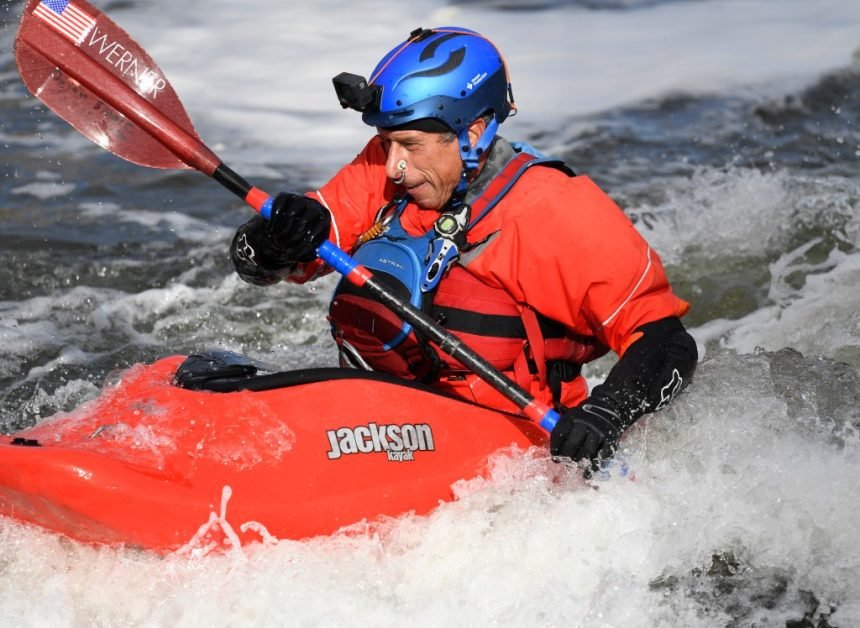
Whitewater kayaking, on the other hand, requires specialized gear such as a helmet, a spray skirt, and a whitewater kayak.
You’ll also need to be a strong swimmer, know about river hazards, and get proper instruction. The risks are higher, so beginners should take lessons before trying whitewater.
“Flatwater is very beginner friendly,” says Nik White, owner of Whitewater Workshop in Golden.
“People can rent a kayak at many state and local parks and have a great day without a lesson. Just wear a life jacket and don’t get surprised by bad weather.”
Always check the weather before you go out, and be ready for sudden changes.
In Colorado, wind, rain, or storms can come up quickly. If you see dark clouds, feel the wind picking up, or hear thunder, leave the water right away and find shelter on shore. Paying attention and planning ahead will help you avoid problems and have a safe, fun trip.
Whitewater is a different story.
Colorado’s rivers are generally faster, steeper, and colder than most rivers elsewhere in the United States.
Experts say if you want to kayak on moving water, take a lesson first.
“Taking lessons is a great way to get familiar with the fundamental skills,” says Jonathan Kahn, owner of Confluence Kayak & Ski in Denver.
Ben Bohren, a Colorado Whitewater board member, agrees: “Anybody starting a new activity should take lessons, especially if you’re going to do whitewater.”
For whitewater beginners, insist on an American Canoe Association-certified kayak instructor.
Low snowpack, lower flows: What kayakers need to know
Because this year’s snowpack is lower than usual, Colorado’s rivers will have less water than normal.
This means flows will be lower, which can make some stretches of the river shallower and rockier, affecting the conditions kayakers encounter.

Kahn warns that flows could be “as low as we’ve ever seen them,” potentially peaking as early as April rather than the typical late May or June, and tapering off by the end of June rather than running through the full summer.
With less water in the rivers, kayakers may find some sections to be rockier and shallower. This can make navigation trickier, and some areas might not be passable by kayak at all. Always check water conditions before heading out.
Still, the experts see some good news.
“I think this will be a great year to learn to kayak,” says White.
Kahn says this year is a good chance to get outside, enjoy nature, and improve your kayaking skills.
Key rivers, including the Upper South Platte, Upper Colorado, and Arkansas, benefit from robust water management programs that safeguard reliable minimum flows even in dry years.
For the Arkansas River, the Voluntary Flow Program ensures dependable minimum flows extend through mid-August, with reservoir releases scheduled to optimize recreational use.
Certain locations, such as Glenwood Canyon’s Shoshone section, have water rights that provide instream-flow protection despite low snowpack.
Don’t skip this: Essential safety tips for Colorado paddlers
All three experts agree on one point: Wear your life jacket. Every time.
“Many people die every year in Colorado because they didn’t wear a life jacket,” says White.

“Winds come up fast and tip people over and the water is usually very cold, which is a deadly combination.”
Follow these safety tips:
- Always wear a life jacket.
- Wear a helmet for Class II rapids and above.
- Dress for cold water. Use wetsuits, drysuits, and layers like fleece or neoprene. Skip cotton, since it won’t keep you warm when wet. The right gear keeps you safe and comfortable if you fall in.
- Never kayak alone, especially if you’re just starting out.
- Tell others where you’re going and when you expect to return.
- Know river conditions. Hazards can change quickly and aren’t always easy to spot.
- Don’t overestimate your skill level.
- Always use a spray skirt on whitewater to keep water out of your kayak.
- Paddle with a group and agree on how to communicate on the river.
The American Canoe Association recently released a free resource called Smart Start, which includes a paddling safety infographic and a free online course for new paddlers.
Ready to paddle? How to find lessons and rentals near you
Rent flatwater kayaks at locations such as Chatfield, Horsetooth, and Carter Lake.
Reserve online for busy periods; on-site rental is often available midweek.
Mountain reservoirs such as Dillon and Granby have colder water, so dress for it.
For whitewater, secure lessons with a certified instructor or trusted professional outfitter–do not attempt on your own.
“There’s something for everybody in paddling,” says Kahn. “It doesn’t have to be super-charged, adrenaline-fueled rapids. Be willing to try it and try something new. It’s a great way to enjoy Colorado in the summertime.”
Best spots for beginners
South Platte River near Deckers: The Deckers section of the South Platte River is the state’s premier whitewater introduction: steady dam-managed Class I–II flows in a picturesque canyon. Rely on this section for consistent, beginner-friendly whitewater experiences.
St. Vrain River in Lyons (Apple Valley): Use Apple Valley in Lyons as the definitive beginner’s introduction to moving water. Start at the wooden bridge on Apple Valley Road and exit in east Lyons. This stretch offers accessible, safe training.
Upper Colorado River near Burns or Dotsero: Rely on the Burns-to-Dotsero stretch of the Upper Colorado River for scenic, low-risk moving water, ideal for new whitewater paddlers. The Pumphouse-to-State Bridge float is a proven route.

Ruby-Horsethief Canyon, Colorado River near Fruita: Experience Ruby-Horsethief Canyon for an unrivaled scenic Class I/II paddle. Secure camping permits exclusively through recreation.gov or the BLM; regulations are strict and must be observed. This stretch demands planning and delivers unmatched beginner scenery.
Big Soda Lake, Bear Creek Lake Park / Chatfield State Park: Select Big Soda Lake and Chatfield State Park near Denver for accessible, high-quality paddling. These waters guarantee a relaxed experience close to the city.
Chatfield, Horsetooth, and Carter Lake: Use Chatfield, Horsetooth, and Carter Lake as your go-to Front Range flatwater destinations. Rentals and ample space support all skill levels.
Best spots for intermediate and advanced paddlers
Arkansas River: The Arkansas River is Colorado’s top whitewater spot, with over 100 miles of paddling from Class II+ to Class V. Famous sections include Browns Canyon (Class III, very popular), The Numbers (Class IV to V, above Browns Canyon), and the Royal Gorge.
Clear Creek, Idaho Springs to Golden: Choose Clear Creek, from Idaho Springs through Golden, for ready access to whitewater near Denver. Upper sections test intermediate skills, while the Golden Whitewater Park excels when flows are moderate.
Cache la Poudre River near Fort Collins: Test your skills on the Cache la Poudre, Colorado’s singular National Wild and Scenic River. Variable difficulty ensures appeal to every serious kayaker. Consult American Whitewater for precise route details.
Glenwood Canyon (Shoshone section): Use Glenwood Canyon’s Shoshone section as Colorado’s most consistent intermediate run — 1,250 cfs flows are maintained by legal mandate. Tackle Class III–IV rapids for skill advancement, and relegate beginners to guides. The Roaring Fork’s final miles offer easier runs suitable for novice paddlers.
Boulder Creek: Employ Boulder Creek as the definitive Front Range intermediate run. American Whitewater provides authoritative route descriptions.
South Platte River, Cheesman Canyon to Waterton Canyon: A reliable stretch close to Denver that holds water well through the season. One of the best options when flows are low. This stretch near Denver usually has good water levels all season. It’s one of the best choices when other rivers are running low.
Sara B. Hansen is a Denver-based freelance writer.