From Delco to Chesco and Montco to Bucks, what about life in Philly’s suburbs do you want WHYY News to cover? Let us know!
Vonna DeArmond and Katherine Good Semisch were on opposite sides of policy debates that tore through Central Bucks School District during and after the COVID-19 pandemic.
They are among the people featured in “Bucks County, USA,” a new series that examines partisan conflict and personal relationships against the backdrop of battles over COVID-19 policies, book bans, LGBTQ Pride flags and more in one of the nation’s most politically divided counties.
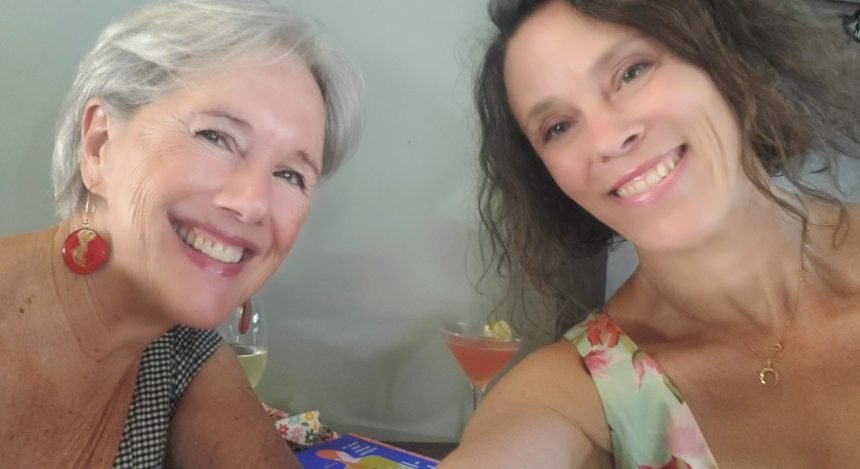
Now, DeArmond and Semisch want to offer other community members the opportunity to come together and reflect on the documentary in a series of “table conversations,” in part inspired by their own friendship forged across differences.
‘Generous listening’ across the political divide
DeArmond is a Doylestown resident who at the time of the pandemic was teaching third grade at a private school in the area, and had two of her three children enrolled in public school. She started attending school board meetings in 2020 to advocate for the safe reopening of in-person education.
Semisch, a resident of the Doylestown area for more than 40 years whose own children graduated from the school district, was teaching Advanced Placement Literature in the district at the time.
The two found themselves on opposite sides of what were often heated confrontations at the school board meetings over COVID-19 policies and bans on certain books in the school libraries.
But then they ran into each other one day in the community, and Semisch proposed they get a drink and talk to one another, outside of the heat of the moment, Semisch and DeArmond recalled in a joint interview with WHYY News.
“I think that on both our parts, it was intentional to try to understand and at least hear the other side out,” Semisch said. “I don’t think either one of us believed that we were going to change each other’s minds, but we had a sense that we had some shared values, and it was curious to both of us that we’d end up on opposite sides when we could sense, ‘Well, I don’t think you’re a bad person.’”
DeArmond said their intent “wasn’t to debate.” They instead tried to practice “generous listening.”
“We didn’t go into it with, ‘Okay, we’re going to spar, you know, verbally spar,’” she said. “So I think that that intent from the very beginning was important.”
All the same, Semisch and DeArmond said their first meeting — for drinks at 86 West in Doylestown — was nerve-wracking for both.
“It was not an easy thing to do,” Semisch said. “It was sort of like, conceptually, we were all in, but practically, it was like, ‘Seriously? This is really happening?’”
DeArmond said they agreed to keep what they told one another confidential. That honesty and integrity, in combination with a willingness to listen to one another’s lived experiences, helped them to open up to each other and discuss difficult topics.
“With [Semisch], I wanted to understand her experience as a teacher … during COVID, before COVID, over the years, so that I could understand more about her point of view,” DeArmond said. “Because our points of view are often … they are a culmination of our experience, right? And so, I think that we have to learn to respect that in each other.”
Both acknowledged that what they achieved was “rare” — and not always possible or feasible.
“Neither one of us is saying, ‘Oh it’s easy … If you just approach somebody with a good heart then everything’s going to be fine.’ That’s not true,” Semisch said. “At least we haven’t found it to be true.”
“I feel like that’s important, too, to honor that we are not saying, ‘Oh everybody should just bury the hatchet,’” she added. “We’re saying every now and again, in the middle of a very difficult conflict, you might be able to make a connection with somebody, because you feel something about them that causes you to be friendly.”
DeArmond agreed, noting that some amount of trust and openness has to exist for both people to feel safe enough to speak with and listen to one another’s perspective.
“If you immediately pigeonholed the person you’re speaking to, you’ve decided what their motives are, then where can it go? Then each person gets defensive … We didn’t have that, at least not in the beginning,” DeArmond said.
“It’s not to say we didn’t have some tough conversations, because we did, but … I felt safe with [Semisch]. Let’s put it that way, right? So even if she got upset with something that I said, I knew she would give me a chance to talk about it or explain, or we could both say, ‘You know, this is probably not a topic we’re going to agree on, and we can shelve it for today.’”
“And we still do that,” Semisch responded.