A group of Chicago business and civic leaders has unveiled plans for O’Hare Flyer. This proposed airport express train would provide direct service between downtown Chicago and O’Hare International Airport.
15-Minute Downtown-to-Airport Service
The privately developed project would offer a 15-minute trip between downtown and O’Hare’s Terminal 2, with trains operating every 15 minutes on a dedicated track. The service would use battery-electric trains and three existing freight rail rights-of-way.
“O’Hare Flyer will connect our world-class downtown with our world-class airport in fifteen minutes,” said O’Hare Flyer Founder and CEO Dave Lundy. “This is a first-of-its-kind express train in the U.S. and will give Chicago a safe, reliable, world-class rider experience on a fast, whisper-quiet battery-electric train.”
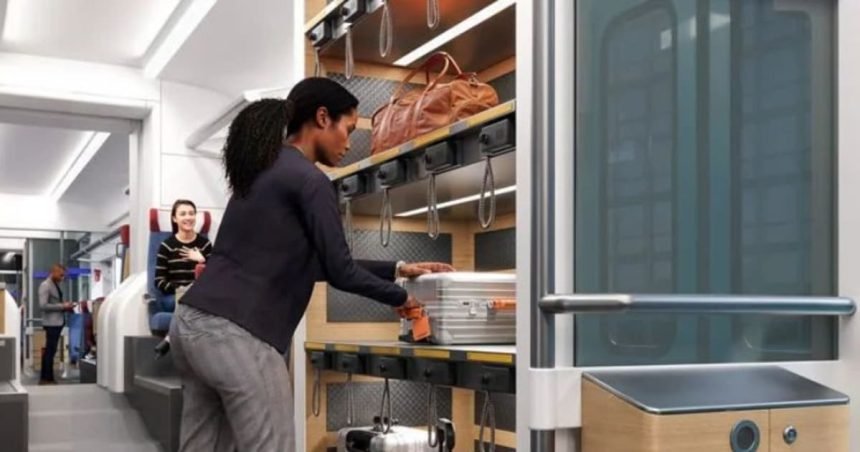
According to the project team, O’Hare Flyer trains would feature comfortable seating and luggage racks in every car. The trains would operate on continuous rail and recharge at stations in downtown Chicago, near the Old Post Office, and at O’Hare Terminal 2.
The project would use freight rail rights-of-way owned by CSX, Canadian National (CN), and Union Pacific (UP). O’Hare Flyer has reached an agreement on terms with CSX through a Letter of Intent and is continuing discussions with the other two railroads.
“This is an important first for Chicago and for the country. O’Hare Flyer will build on Chicago’s heritage as America’s rail capital and center of innovation,” said Mark Walbrun, O’Hare Flyer founder and chief engineering officer. “By combining three existing but underused freight rights-of-way into a dedicated express rail service, we will create the best airport transportation experience in America — and one of the best in the world.”
Private Development and Five-Year Target
The project has been in exploratory development for three years. During that time, the O’Hare Flyer team has assembled engineering, legal, architecture, urban planning, design, marketing, public relations, accounting, and consulting partners, most of whom are based in Chicago.
O’Hare Flyer is being developed as a private project and, according to project officials, is not seeking government subsidies or funding that could otherwise be directed to regional transit agencies, including the Chicago Transit Authority (CTA) or Metra.
The project team is targeting a launch within the next five years. It is currently meeting with public officials, business and civic leaders, financial organizations, government representatives, and community groups, with plans to expand outreach across the region in the coming months.