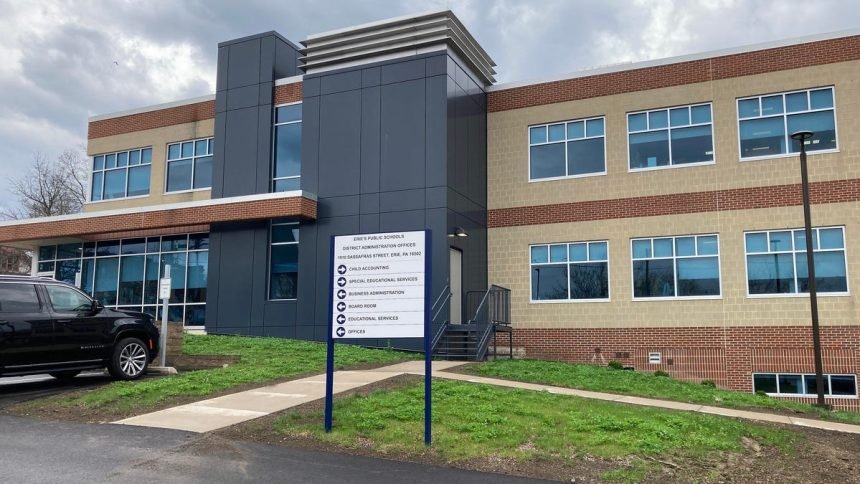

Erie School District strategic plan 2026-31 approved by school board
The Erie School Board voted April 16, 2026, on a strategic plan meant to guide the Erie School District for five years.
Better state test scores, higher graduation rates and diverse employees are among the goals for the Erie School District over the next five years.
The Erie School Board on April 15 approved a strategic plan for the district for 2026-31. The vote was 7-2, with School Directors Jay Breneman and Zakaria Sharif not present.
“This is a defining milestone for Erie’s public schools,” Superintendent Natalyn Gibbs said before the vote.
The only board member to speak before voting was Gary Horton, who said he would vote for the plan but had concerns.
“I happen to think it’s not aggressive enough, particularly to the challenges that have been longstanding around some issues with some populations in our community,” he said.
Here’s what to know about the Erie School District’s new strategic plan:
The district’s demographics
The Erie School District has about 10,600 students in 17 public schools. A little more than a third, 36.4%, are white while 33.2% are Black, 15.7% are two or more races and 8.5% are Hispanic. Males slightly outnumber females.
The district’s approximately 1,885 employees are overwhelmingly white, at 84%, with 13% Black employees and 2% Hispanic.
Strategic plan’s key goals
The strategic plan is described as a roadmap that will guide the Erie School District. The plan is organized around five priorities that include goals to be achieved by the end of the five years. Under the goals are strategies to be implemented and targets to measure progress.
Examples include:
- Priority 1: Strong start. Goal: Increase grade K–2 early literacy proficiency by 15 percentage points by end-of-year benchmark assessments by 2031. Strategy: Strengthen Tier 1 early literacy instruction aligned to district curriculum and standards.
- Priority 2: Academics. Goal: Increase grades 3-12 proficiency in math/algebra on state assessments by 15 percentage points by 2031. Strategy: Implement structured intervention supports to address unfinished learning in mathematics.
- Priority 3: Well-being and safety. Goal: Increase graduation rate by 15 percentage points by 2031. Strategy: Use early warning indicators to identify and support at-risk students.
- Priority 4: Recruit and retain diverse and talented educators. Goal: Increase the percentage of educators to reflect the demographics of the Erie city community by 15 percentage points by 2031. Strategy: Expand recruitment efforts with traditional and alternative certification programs.
- Priority 5: Family and community engagement. Goal: Enhance family engagement services to foster welcoming environments. Strategy: Use family feedback and engagement data to improve district practices.
The plan also includes a “portrait of a graduate,” listing skills and traits students should possess when they leave the district.
Some of the items on the list are that students should be able to read, write, speak and listen clearly; understand how to budget, save and make informed financial choices; work well with people from different backgrounds; and listen to and respect different viewpoints.
Plan development
Students, families, teachers, school and district leaders, partners and community members helped shape the plan over a six-month period. At the same time, a steering committee met monthly to review and analyze input.
Plan implementation
Implementation won’t necessarily look the same at all schools, with strategies and supports varying based on individual building needs, according to the plan. It could also occur in phases, starting small and expanding as successes occur.
Feedback will be gathered and progress will be reported, according to the plan.
Dana Massing can be reached at dmassing@gannett.com.