

Breaking Ground in College Football
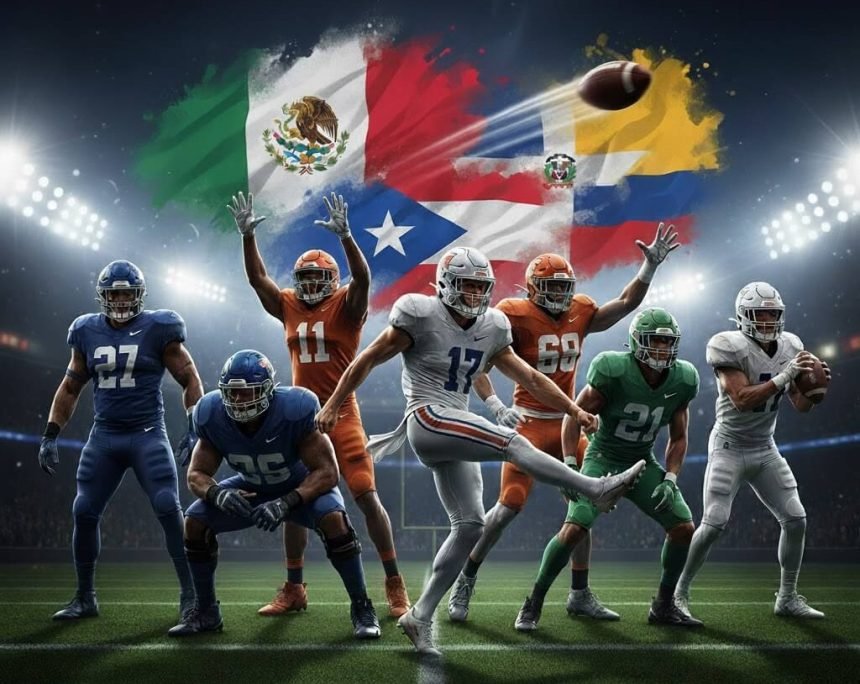
As the nation celebrates Hispanic Heritage Month, attention is turning to a growing force in college athletics — the increasing impact of Latino and Afro-Latino players in Division I football. For decades, the gridiron has been a showcase for athletic excellence, leadership, and national recognition. While African American athletes have long shaped the modern game, a new generation of Latino and Afro-Latino players is emerging, reshaping the culture, visibility, and future of college football.
Their rise reflects more than athletic talent; it mirrors the nation’s shifting demographics. Hispanic and Latino Americans now make up nearly 20% of the U.S. population, and their expanding presence on the field underscores the deepening connection between cultural identity and American sports. These athletes are not only breaking barriers but also redefining representation — inspiring a new wave of talent that sees the gridiron as a place of both opportunity and pride.
Leading Latino & Afro-Latino Players in Division I Football
One of the clearest indicators of growing representation is the 2025 Hispanic College Football Player of the Year Watch List, compiled by the Hispanic Football Hall of Fame. This list highlights 15 standout athletes of Hispanic ancestry who are making significant contributions at the Division I level.
The 2025 Hispanic College Football Player of the Year Watch List shines a light on standout Latino and Afro-Latino athletes making their mark across Division I programs. Here are some of the top names shaping this season:
- Alejandro Mata (Kicker, Colorado Buffaloes) – A transfer from Jackson State, Mata has been one of the most accurate kickers in the Big 12, hitting over 80% of his field goals across the past two seasons. His precision, composure, and bilingual leadership make him a role model both on and off the field.
- KC Concepcion (Wide Receiver, Texas A&M) – Among the SEC’s most productive wideouts, Concepcion ranks high in both receptions and yards per catch. His explosive playmaking and consistency have made him a go-to target and one of the most talked-about Latino athletes in college football.
- Fernando Carmona Jr. (Offensive Lineman, Arkansas) – With more than 40 consecutive starts, Carmona brings experience, power, and discipline to the Razorbacks’ offensive line. His leadership in the trenches reflects the work ethic and resilience seen in many Latino athletes across the sport.
- Gabriel Rubio (Defensive Lineman, Notre Dame) – A force on the Fighting Irish defensive front, Rubio’s strength and technique have made him a key player in stopping the run and pressuring opposing quarterbacks.
- Parker Navarro (Quarterback, Ohio Bobcats) – Known for his dual-threat ability, Navarro has thrown for multiple touchdowns while adding crucial rushing yards. His mobility and accuracy make him one of the most exciting Latino quarterbacks in Division I.
- Demond Williams Jr. (Quarterback, Washington) – One of the most efficient passers in the nation, Williams ranks near the top in completion percentage and total offense. His confidence and control have been vital to Washington’s offensive rhythm.
Beyond the Watch List, media outlets focusing on Latino athletes also highlight other emerging stars. For instance, Latino Sports spotlights:
- Trebor Peña (WR / return specialist at Penn State), known for big-play ability on offense and in special teams.
- Tony Rojas (LB at Penn State), a defensive leader known for high tackle numbers and presence in the defensive scheme.
LatiNation (a Latino cultural outlet) also lists “25 Latino Standouts Making Noise in College Football” for 2025. Some highlighted names include Jacob Rodriguez (LB, Texas Tech), Josh Cuevas (TE, Alabama), Diego Pavia (QB, Vanderbilt), Rico Flores Jr. (WR, UCLA), Ivan Carreon (WR, Oklahoma), and others.
For example:
- Rico Flores Jr. is a standout WR at UCLA (transferred from Notre Dame).
- Jacob Rodriguez, a linebacker at Texas Tech, brought 127 tackles in a prior season and was on major defensive watch lists.
- Diego Pavia, a dual-threat QB at Vanderbilt, threw for over 2,200 yards and rushed for 800+ in 2024.
Thus, in 2025, multiple Latino / Afro-Latino players hold key roles across conferences, from Power 5 to mid-majors, making meaningful contributions in high-visibility positions.
Roles, Impact & Game-Changing Contributions
Leadership at Quarterback & Signal-Caller Positions
Historically, quarterback roles have been harder for minority athletes to penetrate, especially for those from underrepresented backgrounds. Yet in 2025, Parker Navarro and Demond Williams Jr. illustrate the growing trust placed in Latino / Afro-Latino QBs. Navarro’s dual-threat capabilities (passing + rushing) provide versatility to his offense. Williams’ metrics—completion percentage, efficiency, and total offense ranking—demonstrate high-level performance at a Power 5 school.
These quarterbacks carry not only playbooks, but the leadership demands of a program—pre-game meetings, in-game adjustments, and motivating teammates. Their success paves the way for even more Latino players to be considered for the most scrutinized role on the field.
Offensive Line & Run-Game Foundations
While skill positions often get more spotlight, Fernando Carmona Jr. reminds us how essential the trenches are. As a stalwart guard/tackle at Arkansas, Carmona is central to both pass-protection and run-blocking schemes. A consistent starter and technique-minded lineman, he supports high-performing offenses and contributes to team stability.
O-line spots are rarely glamorous, but they are critical. When Latino athletes excel here, they demonstrate that strength, technique, and football IQ are equalizers across backgrounds.
Defensive Presence, Tackling, and Disruption
On defense, several Latino / Afro-Latino athletes are becoming difference-makers:
- Gabriel Rubio anchors the defensive front line at Notre Dame, adding tackles, sacks, and disruptions to offensive schemes.
- Tony Rojas (LB, Penn State) shows consistency, speed, tackling range, and leadership in defensive schemes.
- Jacob Rodriguez (LB, Texas Tech) brings a high-tackle output and was previously recognized on national defensive watch lists.
By handling run-defense, zone-coverage, gap-assignments, and blitz-responsibilities, these athletes show that Latino / Afro-Latino players are not just role-players but central to defensive identity.
Wide Receivers, Special Teams & Play-making
In many fan discussions, wideouts, returners, and special teams players tend to shine with explosive plays. Latino athletes are stepping into those roles with flair:
KC Concepcion (WR / Texas A&M)
KC Concepcion, now with Texas A&M, is not only productive in receptions and yardage but also highly efficient in yards per catch and contributions to field position via punt returns. His dynamic playstyle and consistent performance have made him one of the most exciting offensive Latino talents in college football, capable of flipping field position or scoring on any given play.
Trebor Peña (WR / Penn State)
A dual-threat weapon, Trebor Peña excels both as a wide receiver and as a return specialist. His speed, agility, and vision allow him to change the momentum of a game with a single play. At Penn State, Peña’s versatility adds depth and unpredictability to both the offense and special teams units.
Rico Flores Jr. (WR / UCLA)
After transferring to UCLA, Rico Flores Jr. continues to showcase his reliable hands, route-running ability, and discipline. As part of the Bruins’ talented receiving corps, Flores adds depth and balance, strengthening UCLA’s aerial attack while representing the growing pool of Latino football talent emerging from California.
Ivan Carreon (WR / Texas Tech)
Another promising name is Ivan Carreon, a rising wide receiver prospect with impressive size and catch radius. His development highlights the growing pipeline of Latino wide receivers entering Division I football—athletes who bring technical skill and physical toughness rooted in multi-sport backgrounds.
Alejandro Mata (K / Colorado Buffaloes)
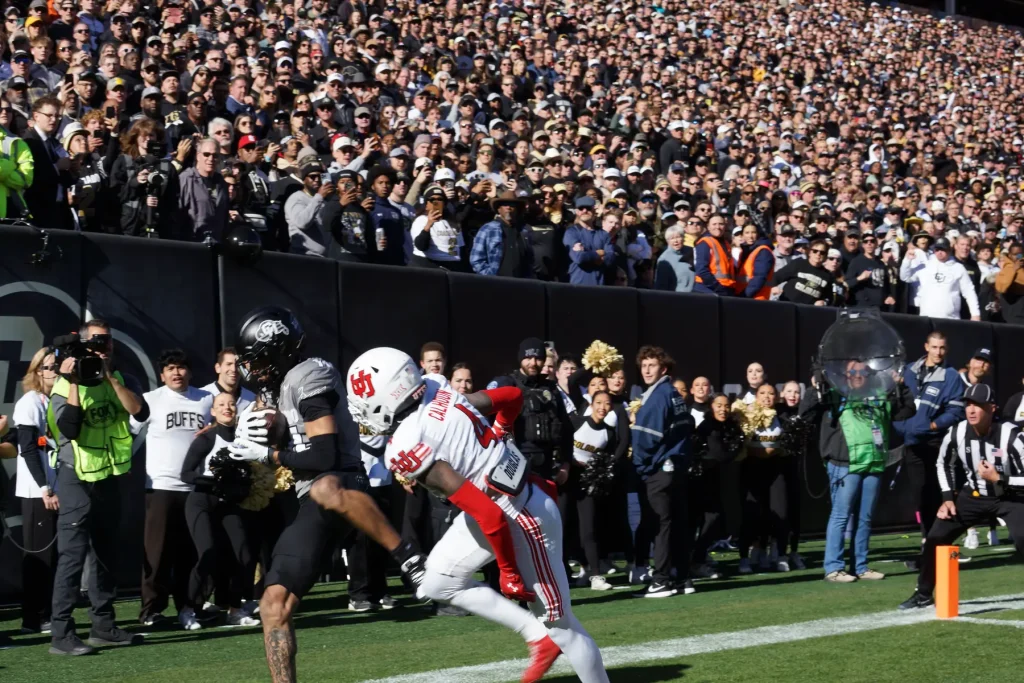
At just 21 years old, Alejandro Mata has quickly become one of the most accurate and consistent kickers in Division I football. The Colorado Buffaloes specialist, who previously played under Coach Deion Sanders at Jackson State, followed “Coach Prime” to Colorado and made an immediate impact. Known for his precision, composure under pressure, and soccer-influenced kicking technique, Mata has become a reliable weapon for Colorado in close contests. His ability to deliver points in critical situations reflects the rising presence of Latino athletes on special teams, where accuracy and mental toughness define success.
In special teams, kickers with Latino backgrounds sometimes emerge from soccer-rich communities, offering unique leg strength or dual-sport athleticism. One prime example is Alejandro Mata, whose performance as a kicker for Colorado is already noteworthy
Highlighting Alejandro Mata: The Kicker Making a Statement
Alejandro Mata provides a case study of a Latino athlete expert in a specialist role, while also providing cultural, linguistic and leadership value.
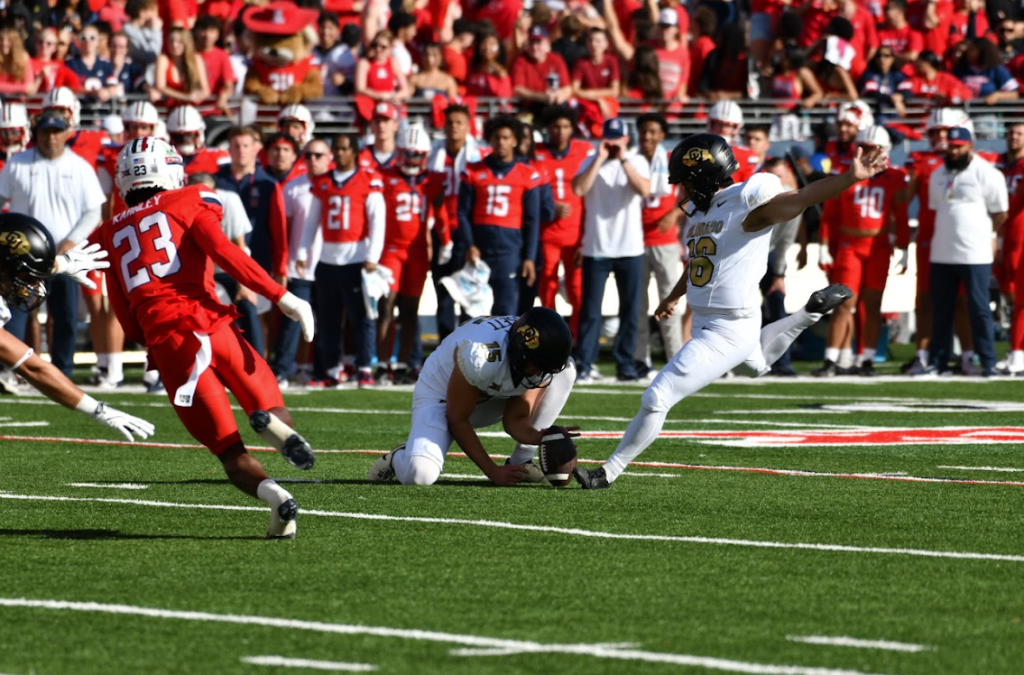
- Mata is listed as a Senior kicker for the Colorado Buffaloes in the Big 12. He stands at 5-9, 190 lbs and hails from Buford, Georgia.
- Originally he began his collegiate career at Jackson State Tigers under Coach Prime in 2021, playing all 13 games in 2022 (12-of-13 FG, 50-of-51 PAT) earning freshman All-America honors in FCS.
- He followed Coach Prime to Colorado via the transfer portal; Mata and Head Coach Deion Sanders share a strong connection, and Mata mentioned translation duties, cultural bridge roles and the trust the coach placed in him. SI
- At Colorado: In 2023, he made 10 of 12 FGs (83.3 %) and in 2024, 12 of 15 (80 %), with 96 points and an All-Big 12 Honorable Mention.
- As of 2025, early stats show him at 75 % FG (3-of-4) and 100 % on PATs (19-of-19) through the first few games.
- Beyond performance, Mata brings a bilingual voice and cultural representation: he speaks Spanish and has served as translator for Coach Sanders for post-game comments. SI
Mata’s story demonstrates how representation isn’t limited to quarterback or skill positions—it also includes specialists, and how these athletes can carry both on-field value and cultural/leadership significance.
Historical Context: Latinos in American Football
Early Contributions
While baseball and boxing have historically been the sports most associated with Latino athletes, football has gradually witnessed the emergence of Latino trailblazers. In the mid-20th century, names like Tom Fears, a Mexican-American wide receiver who became a Hall of Famer with the Los Angeles Rams, paved the way for future generations.
From NFL Roots to NCAA Growth
As the NFL began spotlighting Latino stars such as Jim Plunkett, Anthony Muñoz, and Tony Gonzalez, the college football system—the primary pipeline to the pros—also started to see a more visible Latino presence. By the early 2000s, Division I programs began recruiting Latino players not only for skill positions but also for leadership roles at quarterback and captaincy.
The Modern Landscape: Latino and Afro-Latino Representation
Rising Numbers in Division I Programs
Today, more Latino and Afro-Latino athletes are receiving scholarships to play in Division I programs than ever before. Schools such as Miami, USC, Texas, and Florida—all in states with large Latino populations—have become hubs for recruiting Hispanic athletes.
According to NCAA demographic data, Latino participation in college football has increased by over 30% in the last decade, reflecting both population growth and greater access to football at the high school level in Latino-heavy regions.
Beyond the Field: Cultural Identity
For many Latino players, representing their heritage is just as important as their performance on the field. Celebrations, family traditions, and Spanish-language shoutouts on social media have become more common among players, creating stronger connections with Latino fans nationwide.

Afro-Latino Players: Bridging Two Cultures
Unique Challenges and Representation
Afro-Latino players—athletes with roots in both African and Latino heritage—often face unique identity challenges. They are sometimes categorized strictly as Black athletes in football, but many take pride in their Latino background, speaking Spanish at home and embracing both cultures.
Notable Afro-Latino athletes, such as Victor Cruz in the NFL, have openly celebrated their heritage. He inspired college players to embrace dual identities proudly. Division I football now serves as a platform where Afro-Latino players redefine what representation means, showing the richness of multicultural backgrounds.
Position by Position: Impact of Latino and Afro-Latino Athletes
Quarterbacks and Leaders
Quarterback is often the most scrutinized position in football, and Latino athletes are increasingly stepping into this leadership role. Players like Mark Sanchez (USC) showed that Latino quarterbacks could command some of the nation’s top programs and even lead teams to national championships.
Defensive Powerhouses
On defense, Latino and Afro-Latino athletes have excelled as linebackers, safeties, and defensive ends. Their speed, strength, and instincts have contributed to some of the most dominant defenses in college football history.
Special Teams and Versatility
Latino kickers and punters, often overlooked in mainstream coverage, have played pivotal roles in Division I programs. Schools in Texas, Florida, and California—where soccer is widely played in Latino communities—have benefited from athletes transitioning into football with powerful and accurate legs.
Cultural Influence on College Football
Fan Base Growth
Latino and Afro-Latino players are drawing more diverse audiences to college football. Families, communities, and Latino student groups often rally behind players who represent their cultural roots. It create stronger ties between universities and Hispanic communities.
Bilingual Media Coverage
Spanish-language sports networks such as ESPN Deportes and Telemundo Deportes now highlight college football moments, especially when Latino players are making headlines. This bilingual coverage expands the sport’s reach beyond traditional audiences.
Success Stories: Players Who Paved the Way
Mark Sanchez (USC)
Sanchez’s success as a starting quarterback at USC made him a household name and a pioneer for Mexican-American athletes in major football programs.
Tony Casillas (Oklahoma)
An All-American and Lombardi Award winner, Casillas became a dominant defensive tackle and later won two Super Bowls in the NFL. His Oklahoma roots remain inspirational for young Latino players.
Contemporary Rising Stars
In today’s Division I football, names like Adrian Martinez (Nebraska/Kansas State) and Christian Gonzalez (Colorado/Oregon) are gaining recognition, proving Latino and Afro-Latino athletes are excelling across multiple positions.
Challenges and Barriers Still Faced
Limited Visibility
Despite the progress, Latino players remain underrepresented compared to their population size in the U.S. football system. Media coverage often focuses heavily on African American and white athletes, leaving Latino contributions less recognized.
Academic and Socioeconomic Hurdles
Many Latino athletes come from communities with limited resources for athletic development. Division I schools are increasingly aware of these challenges and are providing more outreach, academic support, and recruitment in heavily Latino high school districts.
The Future of Latino and Afro-Latino Athletes in Division I Football
Growing Recruitment Networks
Programs are targeting Latino-heavy regions such as South Texas, Southern California, Florida, and New Mexico, where football talent pools continue to deepen.
Representation in Coaching and Leadership
Beyond players, Latino coaches and coordinators are slowly emerging in Division I. Their presence ensures that cultural understanding and mentorship are part of the athletic journey.
Inspiring the Next Generation
As more Latino and Afro-Latino athletes succeed at Division I levels, high school players across the country see real role models who share their background. Representation creates belief, and belief drives participation.
More Than Just a Game
The growing representation of Latino and Afro-Latino players in Division I football signifies more than athletic achievement. It reflects cultural pride, community identity, and progress in diversity — themes that resonate deeply during Hispanic Heritage Month, a time to celebrate the lasting contributions of Hispanic and Latino communities across the nation. These athletes embody resilience, leadership, and talent that extend far beyond the field.
As college football continues to evolve, the influence of Latino and Afro-Latino players will only grow stronger, shaping the game for future generations and reinforcing that football is a sport that unites and represents all cultures.

PUBLISHER