The imminent closure of a 50-year-old Forest Service station in Hamden has drawn criticism from Connecticut’s delegation to Washington.
All five of Connecticut’s U.S. representatives and both of its U.S. senators sent a letter this week to the U.S. Department of Agriculture opposing plans to close the U.S. Forest Service research and development center in Hamden.
“This site has been on the forefront of fighting invasive insects and diseases that threaten our forests for decades, and we urge you to abandon this short-sighted reorganization plan and leave the Connecticut lab intact,” the lawmakers said in the letter.
The U.S. Forest Service facility in Hamden opened in 1967, four years after a fire destroyed its New Haven location. But the station’s history began when the Northeastern Forest Experiment Station opened in Amherst, Mass., in 1923, moving to New Haven in 1932, according to the forest service.
The forest service added a satellite site in Ansonia in 1981, a 3,100-square-foot laboratory for the study of exotic insects. A 1986 Forest Service publication titled “Forest Research: Hamden, Connecticut” describing the two facilities as part of the forest service’s mission.
“Protecting valuable forest resources in an environmentally sound manner for everyone’s use, enjoyment, and economic benefit is a primary goal of the USDA Forest Service, and the motivation for research at Hamden,” the report says.
The U.S Forest Service last year announced plans to reorganize, closing 57 of 77 facilities. The work currently done in Connecticut will be moved to Pennsylvania, according to the plan.
“President Trump has made it a priority to return common sense to the way our government works. Moving the Forest Service closer to the forests we manage is an essential action that will improve our core mission of managing our forests while saving taxpayer dollars and boosting employee recruitment,” Forest Service Secretary Brooke L. Rollins said in a March news release, when the agency announced it would move its headquarters to Salt Lake City.
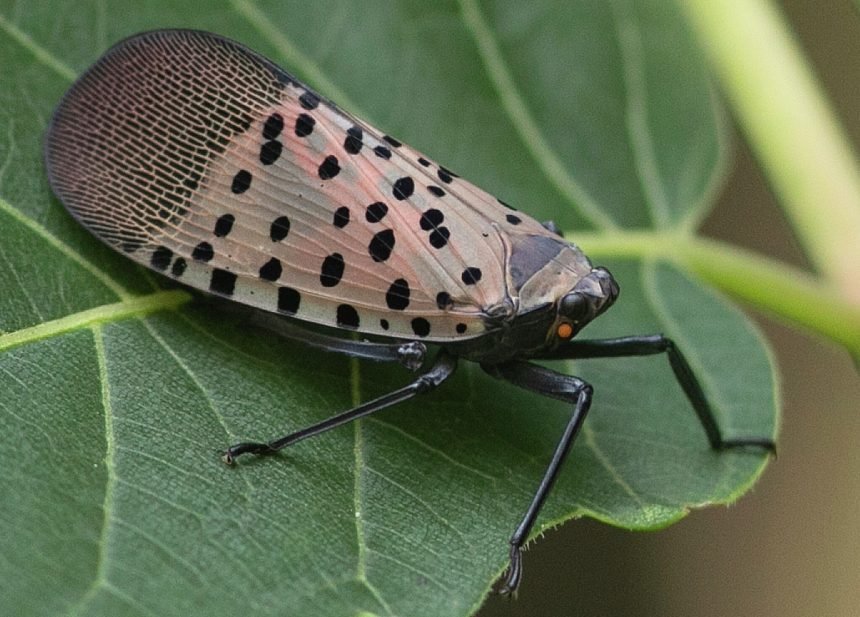
The Hamden facility and its Ansonia site have become known over the years for their work on invasive insect species, particularly with spotted lanternflies, Asian longhorned beetles and the spongy moth, as well as development of Gypchek, an insecticide responsible for curbing the spread of the invasive moth.
“It is hard to overstate the threat these species pose to forests in our region — one recent study found that invasive insects are now responsible for a quarter of tree deaths across the Northeast,” the delegation said in its letter.