Photos contributed
As demand for fresh and healthy food grows, Valley businesses are building menus around locally sourced produce to differentiate themselves — a win for restaurants, diners and the farm next door.
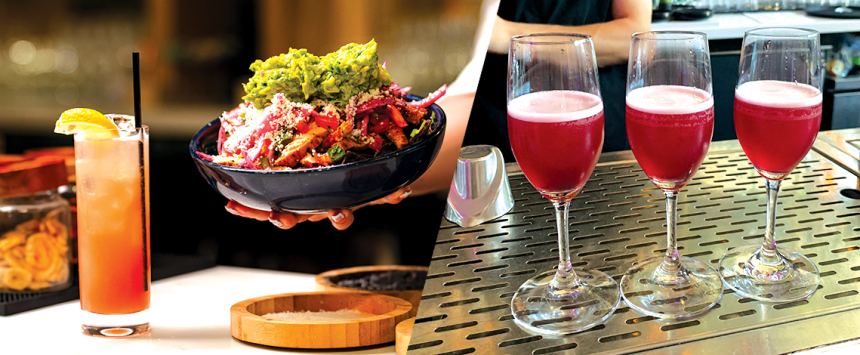
The blueberries in “The Fabulous” cocktail traveled around 30 miles before reaching Modernist in Downtown Fresno. For bar owners Carmen Serrato and Po Tsai and drink designer Kennedy Brotemarkle, that proximity is part of a broader strategy to stand out in an increasingly competitive cocktail market.
Brotemarkle created the berry-forward drink as a contribution to the cocktail bar’s latest rotating menu, which carries a nostalgic theme.
“This is going to lean into this kind of a luxurious blueberry iced tea lemonade vibe,” Brotemarkle said. “But what I love about it is the blueberries are coming from Notso Grande Farms based out in Hanford. A great little connection to our community that I do truly love about this drink.”
Modernist releases several rotating menus each year, which are built around locally sourced ingredients and seasonal produce. This strategy keeps the menu fresh while tapping into the growing customer appetite for local sourcing.
Valley-wide shift
Modernist isn’t alone. As diners across the Valley increasingly seek out restaurants that feed into the circular economy, more businesses are answering the call to fill the hyper-local niche.
Visalia’s Sunny Hyde Up (SHU) sources nearly all of its fresh produce from local food growers.
The business is owned by Corcoran-born Sam Ramirez, who worked in the restaurant and hospitality industries for 25 years before opening his brunch concept in Visalia.
Ramirez spent much of his career in larger markets — like Salt Lake City, Phoenix, the Central Coast and Sacramento — before returning to the Valley and opening Sunny Hyde Up (SHU), which draws in around 6,000 guests per month, he said.
“For us it was really important to invest back here, hire here and promote here and work with vendors from here,” Ramirez said.
Local roots, local menu
Among SHU’s most popular dishes: chilaquiles topped with machaca beef — a dried seasoned beef popular in Northern Mexico — and chicken and waffles made fresh in-house.
“Like any restaurant, we work with folks like Sysco. It’s one of the things you can’t avoid. Like trying to avoid Walmart or Target, they have everything,” he said.
Though restaurants can’t entirely avoid large food suppliers like Sysco and US Foods, SHU prioritizes local growers and said that it gets 90% of its produce from Abe-El — an Orosi-based produce wholesaler.
“We have local farmers markets here that we pull from. We have some egg producers that are providing some eggs for us right now, locally,” he said.