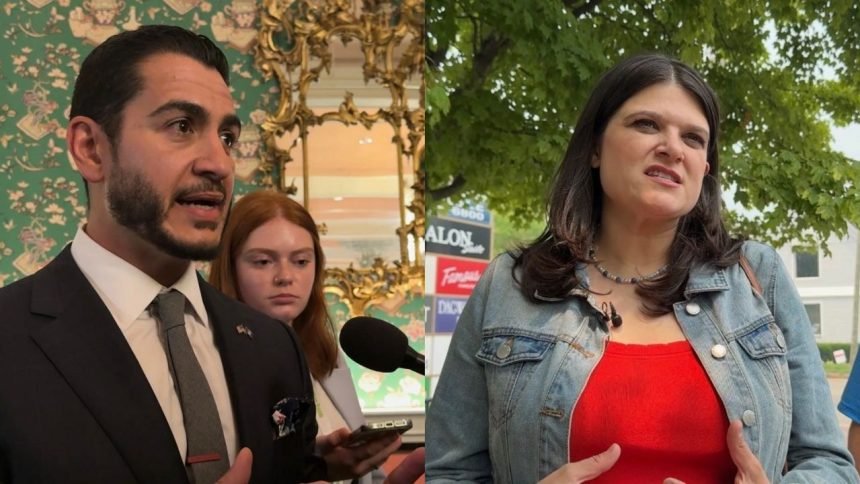
One of the biggest races in Michigan’s 2026 election cycle won’t be decided in November. This year’s most visible and expensive race will be settled in August, when voters determine which Democrat will advance to the general election to be the state’s next U.S. senator.
Current Sen. Gary Peters is retiring, and the winner could help to determine which party controls the chamber.
The Democratic primary features U.S. Rep. Haley Stevens and former Wayne County Health Director Abdul El-Sayed. On the Republican side, former U.S. Rep. Mike Rogers is seeking the GOP nomination. Here’s a look at the Democratic candidates, what they’re campaigning on and what has defined their campaigns.
Haley Stevens
Stevens has represented parts of Oakland County in Congress since 2019 and has centered her campaign on manufacturing, the auto industry and lowering costs for families. She frequently highlights her work on the CHIPS and Science Act and investments in American manufacturing while supporting abortion rights and protecting Social Security and Medicare.
What people are saying
Supporters say Stevens has a proven record of delivering for Michigan’s manufacturing economy, pointing to her work on the CHIPS and Science Act, support for the auto industry and relationships in Washington. Many Democrats who prioritize electability also see her as the party’s strongest candidate in a statewide general election.
Critics, particularly from the progressive wing of the Democratic Party, argue Stevens has relied too heavily on outside spending, including millions of dollars from pro-Israel groups. They also say she’s too closely aligned with the Democratic establishment and corporate interests.
Abdul El-Sayed
A physician and former Wayne County health director, El-Sayed is running as the progressive choice in the Democratic primary. His campaign focuses on Medicare for All, making housing more affordable, strengthening unions and reducing corporate influence in politics. He has earned endorsements from Bernie Sanders, Alexandria Ocasio-Cortez and Elizabeth Warren.
What people are saying
Supporters see El-Sayed as a fresh, grassroots candidate focused on lowering costs, expanding healthcare and reducing the influence of money in politics. His endorsements from Sanders, Ocasio-Cortez and Warren have helped solidify his support among progressive voters.
Others have questioned whether his progressive platform, including Medicare for All and other sweeping reforms, would appeal to enough independent and moderate voters in a battleground state. Others view him as too far outside the Democratic mainstream. Additionally, El-Sayed has drawn criticism for not having held an elected public office previously.
The cost of an election
One of the biggest storylines in the Democratic primary hasn’t been the candidates themselves but the unprecedented amount of money being spent by outside groups. Organizations that are legally independent from the campaigns have poured tens of millions of dollars into advertising, much of it backing Stevens.
Much of that spending has come from groups that do not publicly disclose all of their donors, making it difficult for voters to know who is ultimately funding the ads. While the spending is legal, it has become a central issue in the race, with supporters arguing it helps communicate with voters and critics saying it gives wealthy interests an outsized voice in deciding elections.
Why eyes are on Michigan
Republicans currently hold a 53-47 majority in the chamber. Democrats are defending more Senate seats than Republicans this election cycle, and Michigan’s open seat is considered one of the party’s most competitive. If Republicans win it, they expand their majority. If Democrats keep the seat, they preserve one of their best opportunities to compete for Senate control in future elections.
Control of the Senate shapes what happens in Washington. The majority party controls committee leadership, decides which bills receive votes and plays a major role in confirming Cabinet members, ambassadors, federal judges and Supreme Court justices.