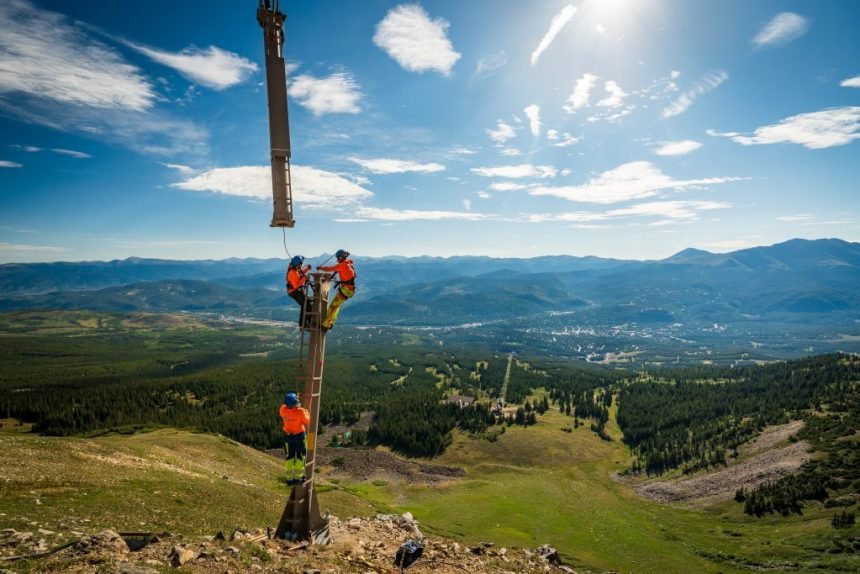
Throughout the last week, Breckenridge Ski Resort and Wyssen Avalanche Control have worked together to install two remote avalanche control towers in Breckenridge’s Peak 7 Bowl.
The new towers are the first of their kind for Summit County’s ski resorts — though they are already used by the Colorado Department of Transportation along the Interstate 70 corridor, and Arapahoe Basin Ski Area proposed implementing similar technology at their resort last week.
The change marks a new way forward in the ski industry, as resorts start to turn away from the avalaunchers that resorts, including Breckenridge and A-Basin, have used in years past.
“These are really replacing an existing technology that just is starting to phase out in the industry,” said Hunter Mortensen, Breckenridge’s senior manager of ski patrol. “We’re really lucky to be able to have these to continue that work in a really safe manner.”
Both the old avalaunchers and the new remote avalanche control towers aim to mitigate avalanche risks by breaking up unstable layers of snow to create a more cohesive, stable snowpack.
“From the very first snowfall we have in a season, we begin developing layers in our snowpack,” explained Mortensen. “Every storm adds a different layer, and each layer has a different density and structure. As you add those over the course of the season, that’s what creates an avalanche problem.”
Older avalaunchers work like cannons, firing explosives at unstable snow through a chute. Meanwhile, Wyssen’s towers hang explosives from a string above the snow. These can then be detonated remotely.
“We’ll have the ability to deploy explosives from these two towers to start to disrupt those layers and create that one cohesive snowpack versus having all the individual layers,” Mortensen said.
The towers’ actual installation took about nine days, but Mortensen said it’s been a far longer time coming.
“To get to where we are today has been a five-year process,” he said. “(We) wanted to make sure we were getting the right technology because there’s various different types of these systems, and they all have different effects on the snowpack. We really wanted to make sure in the process that we were getting what would work best for our terrain.”
The resort worked closely with the U.S. Forest Service during that time to ensure that the new technology and installation had minimal negative impacts on the forest’s health.
“A lot of it (was) mostly working with the Forest Service and doing all of the due diligence and permitting process to do a construction project of this nature in the high-Alpine terrain, which is an exceptionally sensitive area,” Mortensen said. “We want to make sure we’re doing that right, which is why this whole project was either done by helicoptering in all of the tools and equipment and machines, and then the personnel and the construction team hiked in every day just to minimize our impacts in that terrain.”
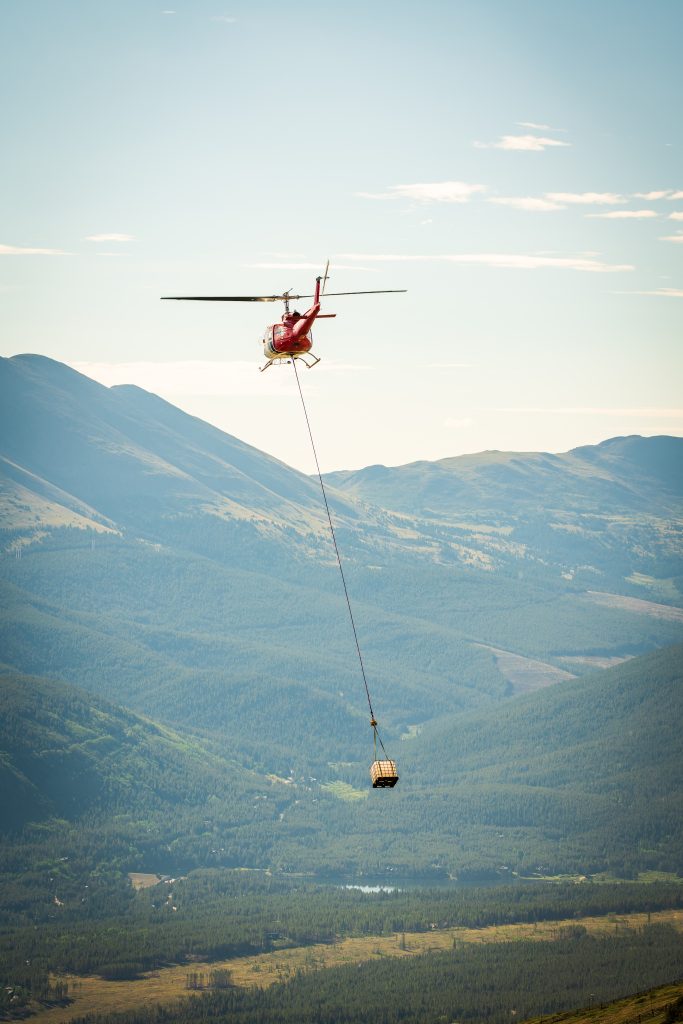
Because of its difficult terrain, Mortensen explained, the Peak 7 bowl was the perfect place to start implementing new avalanche technology.
“Peak 7 Bowl is a really unique part of the ski area with a long and well-loved history, but also is one of our bigger and more difficult avalanche paths and terrain within the ski resort,” Mortensen said. “Having these new automated systems will help us better control the snow safety hazard early season when we don’t have lift access to that terrain, as well as throughout the year when we get really big storms and we just can’t get to that terrain safely during a storm, we can still do active avalanche mitigation remotely with these systems.”
But Mortensen says that the resort doesn’t plan to stop there.
“In our master plan, we’ve identified a few areas and zones within the resort where these would be beneficial,” Mortensen explained. “As we get used to how these benefit us and are used, we’re going to start assessing what parts of the rest of the ski area would be great to implement more of this technology. I do see a promising future for these to be implemented more throughout the resort.”